
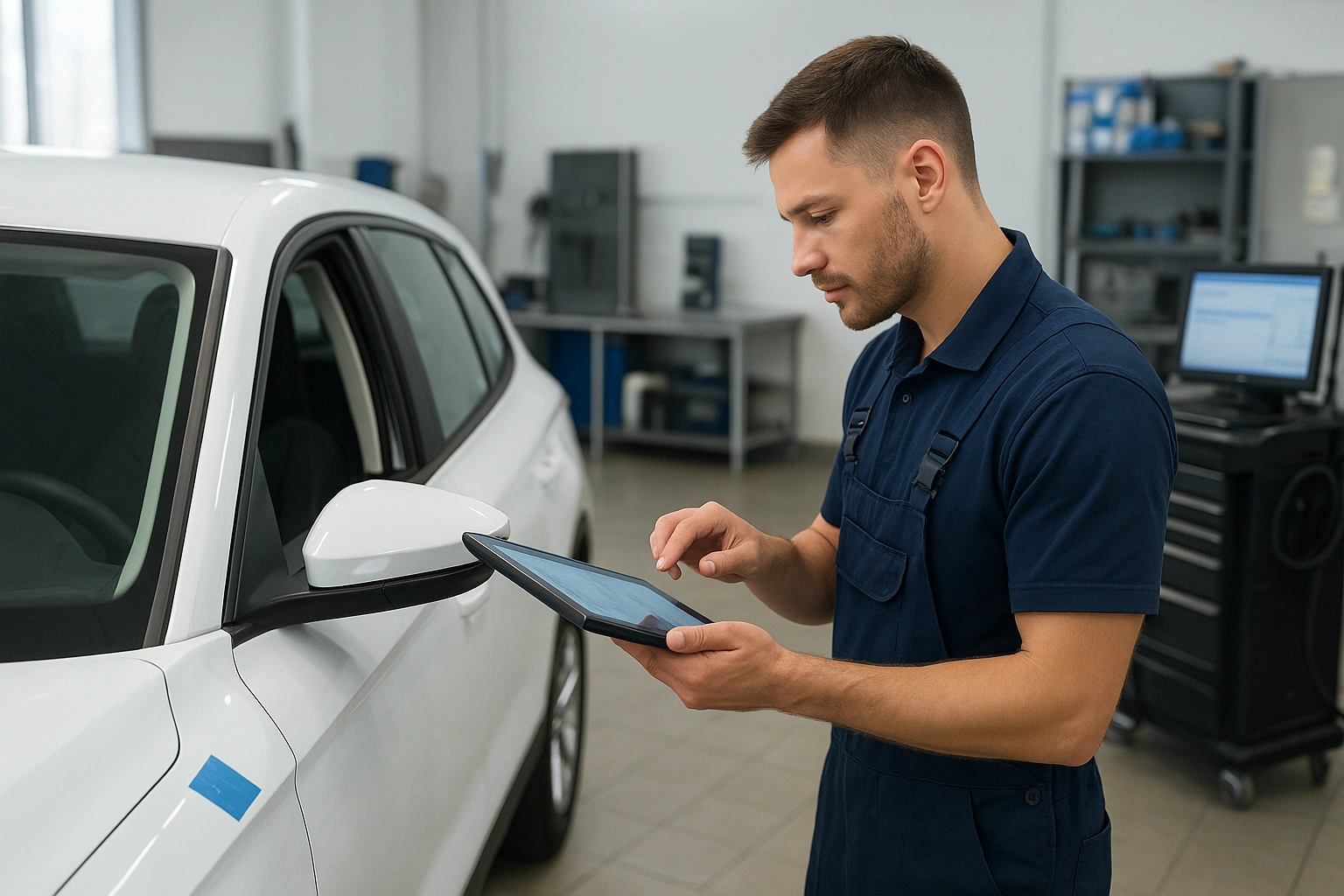
Specialized Auto Repair Services in 2025 demand precision, trust, and up-to-the-minute expertise—especially as modern vehicles become increasingly complex and safety-critical. This guide helps Dallas drivers choose the right shop and ensure repairs that last.
.
- Specialized auto repair goes beyond basics by focusing on high-tech systems like ADAS, hybrids/EVs, and precision collision restoration where up-to-date expertise is crucial.
- Choose certified, tech-forward shops—look for I-CAR Gold, ASE, or OEM training badges and spotless, well-equipped facilities that signal professionalism and quality.
- OEM procedures and resources matter most for high-value repairs—trusted shops use Factory Service Manuals and VIN-specific diagrams to guarantee safety and warranty compliance.
- Accurate estimates rely on transparency; demand written, itemized quotes and clear explanations of all repair steps, parts sources, and calibration fees for peace of mind.
- Digital tools speed up service and build trust—select providers who offer real-time updates, before/after photos, and remote diagnostics for a seamless customer experience.
- Continuous technician training gives you an edge; shops investing in regular coursework and equipment upgrades can tackle advanced diagnostics and late-model systems confidently.
- A balanced workflow keeps costs in check—expert providers blend OEM accuracy, digital speed, and accessible aftermarket resources to match every job’s complexity.
Choosing the right specialist ensures your car receives expert care, transparent pricing, and a smooth repair journey—explore the full guide to make confident, informed decisions for your next auto service.
Introduction
Ever left an auto shop only to wonder if your high-tech car is really road-ready—especially with features like lane assist and adaptive cruise control now standard? Modern vehicles are smarter than ever, but so are the risks if your repair provider isn’t up to speed.
Dallas drivers face an age of rapid change: new materials, hybrid engines, and digital systems mean that a routine fix isn’t just a wrench-and-oil job anymore. One misstep in calibrating a windshield sensor or choosing the wrong parts can threaten both your safety and your car’s value.
That’s why specialized auto repair matters more in 2025 than ever before. Expectation isn’t just for a quick fix—you want repairs backed by precision, transparency, and a promise of long-term safety.
Choose wisely, and you gain:
- Peace of mind with technicians certified for today’s advanced repairs
- Transparent estimates that take the guesswork out of pricing
- Craftsmanship that protects both warranty and resale value
Whether your concern is a complicated collision, a balky EV component, or mysterious dashboard warning, a new era of expertise stands ready for you.
You’ll discover how real shops match technology with trustworthy service, what sets true specialists apart, and the clearest path to getting your vehicle back to its best—without surprises.
Ready to see exactly how specialized auto repair is redefining the standard for Dallas drivers in 2025—and what smart vehicle owners need to know next? Here’s what makes expert care truly stand out today.
Understanding Specialized Auto Repair Services in 2025
Modern vehicles are evolving fast—specialized auto repair now means expert attention to high-tech, safety-critical systems far beyond basic oil changes or brake pads.
Unlike general maintenance, specialized repair tackles areas like collision restoration, ADAS calibration, EV component service, and precision glass work—areas where precision, up-to-date knowledge, and quality parts are non-negotiable.
Drivers in Dallas (and everywhere) need specialists for:
- Advanced technology repairs: Hybrids, EVs, and digital systems
- Safety system restoration: ADAS, airbags, and crash structures
- Manufacturer-specific requirements: OEM methods and warranty standards
A shop’s core values—quality, integrity, and customer focus—shine brightest in complex repairs where honest guidance and craftsmanship set trusted providers apart.
“In 2025, getting your vehicle fixed right means choosing experts who put precision, transparency, and your peace of mind first.”
The Evolution of Auto Repair: Technology, Training, and Tools
The leap from carburetors to computerized cars redefined repair.
Today’s specialists tackle:
- ADAS calibrations (crash prevention, lane assist)
- Hybrid/EV servicing (battery modules, power electronics)
- Advanced materials (aluminum, composites)
- Modular replacement and diagnostics (sensor arrays, networked systems)
Shops invest thousands yearly in:
- State-of-the-art diagnostic equipment
- Continuous technician education on new tech
- OEM and digital service resources updated in real time
Picture this: a certified tech accurately calibrating your windshield’s sensors, restoring both your safety and the feel of factory-new clarity.
“Your car is smarter—and so are the shops who fix it.”
Key Service Areas in Specialized Auto Repair
Choosing the right provider starts with knowing which service you need.
Top specialized service categories include:
- Collision Repair: Structural, cosmetic, safety-critical work
- Auto Body Repair: Dents, paintless fixes, corrosion
- Auto Glass Repair & Replacement: Windshield chips, ADAS recalibration
- Radiator & Cooling Services: Leaks, overheating, preventive care
- Advanced Repairs: Computer and sensor diagnosis, hybrid powertrains
Each area calls for technicians with manufacturer-grade knowledge, tools, and a commitment to honest, reliable service.
“Every specialty repair is an opportunity to restore confidence and vehicle value—choose expertise that’s built to last.”
Specialized auto repair in 2025 means matching your vehicle’s complexity with a shop’s expertise, modern resources, and values you can trust. Look for professionals who deliver detailed estimates, transparent advice, and the peace of mind that comes from true partnership.
Navigating Specialized Auto Repair Resources
Finding the right information source is vital for safe, effective auto repairs—especially with the rapid evolution of vehicle technologies in 2025.
Modern shops rely on a blend of Factory Service Manuals (FSMs), digital platforms, and aftermarket guides to stay accurate and efficient.
If you’re picturing a busy service bay, technicians often have multiple screens open: OEM diagrams on one monitor, live chat with a digital platform on the next.
—
Factory Service Manuals (FSMs): Gold Standard for Accuracy
FSMs are official manufacturer-issued guides loaded with step-by-step procedures, detailed wiring diagrams, and regular updates.
Shops choose FSMs for repairs that require uncompromising accuracy, such as:
- Diagnosing complex electrical problems
- Performing ADAS recalibrations after collision repairs
- Servicing high-voltage hybrid and EV systems
FSMs offer:
- OEM procedures for guaranteed fit and function
- Access to the latest safety recalls and bulletins
However, these manuals are often:
- Costly (subscriptions can run $1,000/year for full dealer access)
- Locked behind manufacturer portals
- Technical—written for trained professionals
“If it’s a late-model vehicle or you’re unsure, FSMs are your safest bet.”
—
Digital Platforms: Real-Time, Comprehensive, and Searchable
Digital platforms like ALLDATAdiy and EManuals Online bring tech-forward solutions with:
- Searchable databases covering multiple makes
- Up-to-date labor guides and instant job times
- VIN-specific wiring schematics and live repair bulletins
Shops leveraging these tools enjoy:
- Fast access to evolving diagnostics for new hybrids/EVs
- Real-time service info, ideal for high-volume or multi-brand environments
But, there are also trade-offs:
- Subscription fees (ranging from $20–$150/month)
- Learning curve for new users
- Internet required for access in most cases
Picture technicians pulling up a wiring schematic on a tablet next to your vehicle—speed meets precision.
—
Aftermarket Manuals and Community Resources: Accessibility and Affordability
Affordable and visual, Chilton and Haynes manuals help:
- Newer techs and DIYers with step-by-step maintenance and common repairs
- Small shops covering multiple models with one resource
Benefits:
- Budget-friendly (print or digital)
- Simple language and plenty of illustrations
Drawbacks:
- Updates lag behind manufacturer bulletins
- Limited coverage of modern ADAS or high-voltage tech
Online forums and free guides supplement tough jobs—but always check the source for credibility.
Blend methods by consulting FSMs or digital platforms for advanced systems, while using aftermarket guides for general repairs—a flexible workflow that adapts to any challenge.
—
Access to the right repair resource is the foundation for precision and trust in today’s specialized auto shops. Invest in OEM-level accuracy for high-tech repairs, use digital tools for speed and coverage, and keep aftermarket guides handy for basics and cost-conscious projects. This balanced approach keeps your car—and your peace of mind—on the road.
Choosing the Right Specialized Auto Repair Provider
Selecting the right shop for specialized auto repairs isn’t just about location—it’s about precision, trust, and transparency.
Modern vehicles require more than standard tune-ups, and choosing the wrong repair provider can risk your vehicle’s integrity and safety.
Picture this: You pull into a facility with spotless bays, certified technicians, and digital tablets at every station—proof that attention to detail and professionalism come standard.
Key Qualities of a Trustworthy Auto Repair Specialist
Not all shops are equipped for today’s advanced repairs.
Look for these essentials:
- Certifications: I-CAR Gold Class, ASE Master Tech, and manufacturer training badges on display show technicians are qualified for specific makes and models.
- State-of-the-art equipment: Up-to-date diagnostic scanners, OEM repair manuals, and manufacturer-approved tools signal commitment to quality.
- OEM methods: Use of Original Equipment Manufacturer (OEM) repair procedures ensures safety and factory-level accuracy.
- Transparent pricing: Shops that provide written estimates, itemized parts, and labor details practice open communication.
- Clean, inviting facilities: White walls, organized workspaces, and clear staff uniforms reflect pride and professionalism.
A shop that values your trust will walk you through every repair step—no guesswork, no surprises.
“Certifications aren’t just paperwork—they’re your guarantee of safe, accurate repairs.”
Understanding Estimates, Labor Guides, and Cost Factors
How a shop calculates your repair bill should be as clear as their display counter.
Professional providers use industry labor guides (like ALLDATA or Mitchell) to:
- Quote labor times based on manufacturer data
- Ensure accuracy for routine and complex repairs
- Back up pricing with transparent, itemized details
Cost drivers include:
- Advanced technology requirements (ex: ADAS calibration can add $250+ per repair)
- Materials and parts sources (OEM vs aftermarket)
- Complexity (frame replacement can exceed $2,500, while paintless dent removal might be under $300)
- Warranty coverage and shop guarantees
Here’s a real-world insight: Replacing an ADAS-equipped windshield may cost $900 to $1,500 due to calibration, versus $250–$400 for a basic glass swap.
When reviewing estimates, always ask:
- What work is included?
- Are parts OEM, aftermarket, or remanufactured?
- Are calibrations and software updates performed in-house?
“Every honest estimate is an opportunity for trust—don’t hesitate to ask how numbers are calculated.”
If you want stress-free, high-quality repairs, start with a shop that is certified, transparent, and customer-focused. The best providers welcome your questions and guide you every step, ensuring repairs that stand the test of time.
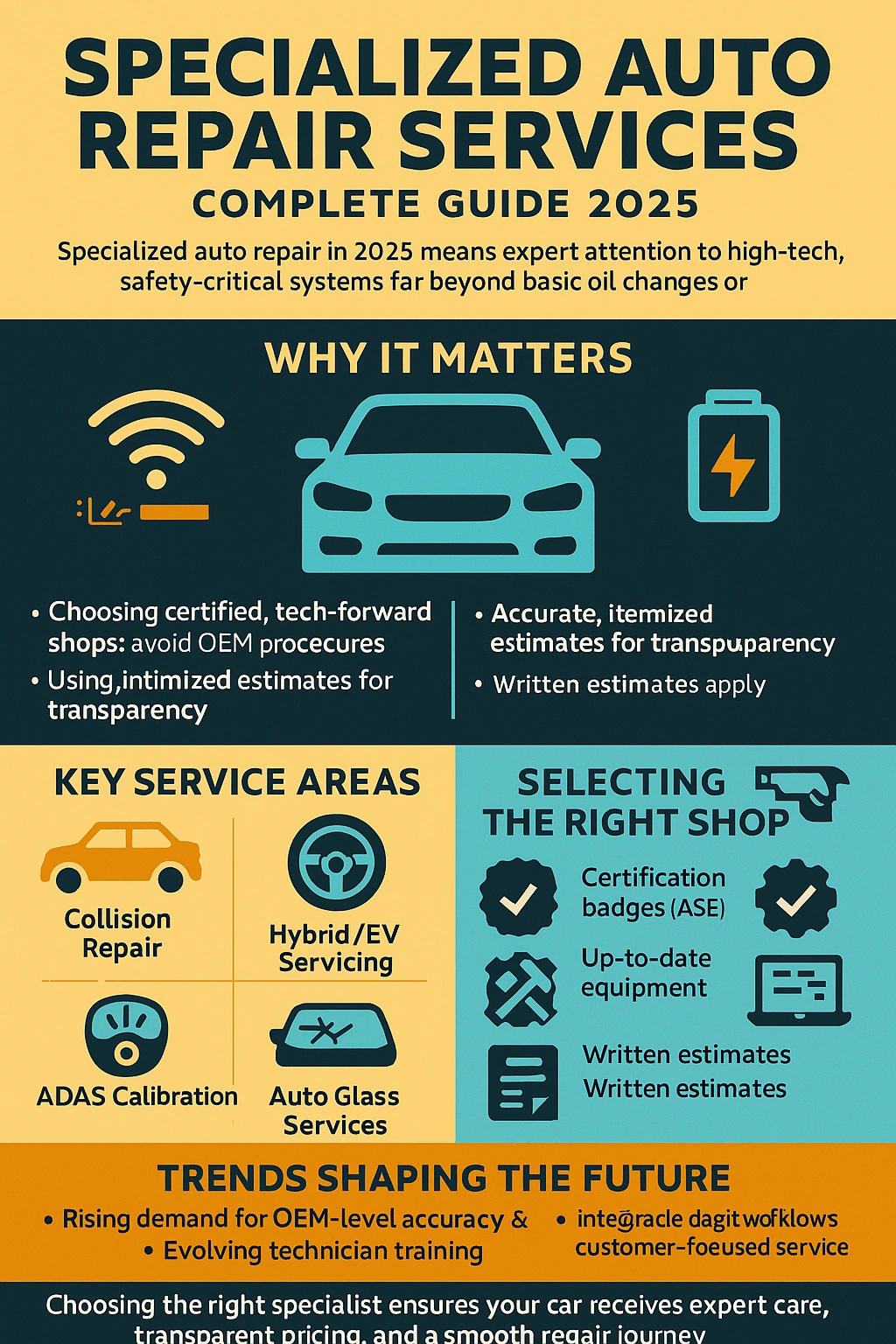
Trends Shaping the Future of Specialized Auto Repair
The landscape of auto repair is transforming faster than ever—driven by innovations like ADAS (Advanced Driver Assistance Systems), electric vehicles (EVs), hydrogen power, and hyper-connected cars.
Today’s vehicles can have over 100 million lines of code and advanced diagnostic networks, making precise, up-to-date information critical for every repair.
Rising Demand for OEM-Level Accuracy & Information
Modern drivers expect that repairs will match manufacturer (OEM) standards, especially as systems like lane keeping and adaptive cruise control become standard.
Shops rely on digital resources, Factory Service Manuals (FSMs), and real-time tech bulletins—in 2024, over 80% of new repair procedures required data updated within the last 18 months.
- ADAs, hybrid/EV systems, and Euro/exotic models now mandate shop access to VIN-specific wiring diagrams, sensor calibration, and proprietary software tools.
- Regular software updates, instant bulletins, and recall notices are must-haves for reliable repairs.
“The future of repair is digital—every technician needs the right data at their fingertips.”
Evolving Technician Training & Certification Paths
Keeping pace means continuous education: certifications like ASE, I-CAR Platinum, and Tesla/Mercedes specialty badges are rapidly growing in value.
New regulations and insurer requirements have led to a 30% increase in specialized training hours per technician since 2020.
- Look for shops that invest in both equipment upgrades and ongoing coursework.
- For advanced repairs, choose providers with proven training in ADAS, EVs, and late-model systems.
“Picture this: your hybrid’s high-voltage battery getting serviced by a technician who just passed their latest OEM exam—with your EV back on the road the same day.”
Integrated Digital Workflows & Customer-Focused Service
Service experience matters as much as technical skill.
Repair shops in 2025 are integrating:
- Automated scheduling and digital service platforms for convenience
- Remote diagnostics that speed up estimates and reduce turnaround time
- Transparent digital communication: before/after photos, real-time status updates
“In the new era, trust is built with every text update and upfront quote.”
Takeaway
Specialized auto repair has become a blend of OEM-compliant technical accuracy and customer-first digital convenience—and the best shops are those that keep pace with both. Look for providers who combine cutting-edge training, real-time resources, and clear, friendly communication to ensure your vehicle always gets the attention it deserves.
Conclusion
Choosing a specialized auto repair provider is about more than fixing a problem—it’s about investing in long-term confidence, safety, and trust for both you and your vehicle.
When you place your car in the hands of trained experts, every detail matters. Precision repairs, transparent communication, and manufacturer-grade methods aren’t extras—they’re the foundation for lasting value.
—
- Prioritize shops with up-to-date certifications and modern diagnostic tools—these are non-negotiable for handling today’s high-tech vehicles.
- Ask for detailed, written estimates before any work begins; clarity upfront sets the tone for honest service.
- Verify that providers use OEM or manufacturer-approved repair methods to maintain both your warranty and your vehicle’s integrity.
- Look for a clean, organized facility and attentive staff—a professional environment reflects pride in their work and your experience.
- Stay proactive—regularly review your shop’s credentials and request transparent explanations for all recommended repairs.
—
Ready to make your next auto repair experience truly stress-free?
- Research certified providers in your area—look for visible training badges and customer reviews that prioritize transparency.
- Schedule an inspection or consultation before issues become urgent; advanced scheduling platforms make this simpler than ever.
- Keep a checklist of your vehicle’s advanced features and bring it to each appointment, so every system gets the care it deserves.
—
Your vehicle is becoming smarter—and so should your approach to repair. Choose professionals who stand by their promises of quality, integrity, and customer focus—because you deserve an auto repair experience that exceeds expectations.
“In 2025, trusted repair is more than a service—it’s your peace of mind, one expertly fixed mile at a time.”
FAQs
Q1: What makes Specialized Auto Repair Services different from regular repair shops?
A1: They focus on high-tech systems like ADAS, hybrids, EVs, and OEM-specific procedures. For more details, see our full service page.
Q2: How can I verify a shop provides true Specialized Auto Repair Services?
A2: Look for I-CAR Gold, ASE certifications, OEM manuals, and clean, well-equipped facilities. Learn more about ASE certifications.
Q3: Are Specialized Auto Repair Services more expensive than standard repairs?
A3: Costs are higher due to advanced equipment, OEM parts, and precision labor. Transparent, itemized estimates help you understand fees.
Q4: Can my EV be serviced at a shop offering Specialized Auto Repair Services?
A4: Yes, certified technicians with hybrid/EV training can safely diagnose and repair high-voltage systems using proper OEM procedures.