
Common Types of Vehicle Damage can impact your car’s safety, value, and long-term performance—often far more than drivers expect. Use these expert insights to spot issues early, navigate repair solutions, and choose a repair partner you can trust—starting today.
- Early identification prevents expensive repairs by tackling even minor dents, scratches, or rust spots before they escalate into major problems.
- Paintless Dent Removal (PDR) offers fast, affordable fixes for small dents and dings without harming your original paint, often saving time and maximizing resale value.
- AI-powered inspections and 3D scanning increase assessment accuracy, delivering repair estimates with over 95% precision and streamlining insurance claims for quicker approvals.
- Professional repair shops use transparent, digital documentation—including photo records and itemized reports—so you always know exactly what’s being fixed and why.
- Clear, up-front pricing builds trust, with reputable shops providing no-surprise, itemized estimates and honoring quality guarantees on all work.
- Severe damage and structural repairs demand certified experts, as proper frame alignment and glass replacement are essential for your safety and your vehicle’s long-term performance.
- Auto Clinique leads in Dallas with honest pricing, leading technology, and personalized updates, ensuring your car receives quality care from the first estimate to final handoff.
- Prioritize shops with proven credentials and modern equipment, as 84% of vehicle owners cite trust and transparency as their top reasons for choosing an auto repair provider.
For complete peace of mind and a vehicle that stays safe, stylish, and valuable, explore the full article for expert tips on damage identification, repair solutions, and choosing the right local shop.
Introduction
A single stray shopping cart, a rogue hailstorm, or one moment of parking lot chaos—it only takes seconds for your car’s appearance (and value) to change.
Did you know that even a minor dent or scratch can quietly reduce your vehicle’s resale value by up to 15%?
In Dallas, where harsh weather and crowded city streets are part of everyday life, your car faces risks big and small every single week.
But here’s the good news: Spotting damage early is your first line of defense—saving you time, money, and the headache of preventable repairs.
At Auto Clinique, we understand that auto troubles are more than an inconvenience—they can throw off your whole routine and lead to unforgettable bills if left unchecked.
A professional approach to vehicle damage means:
- Accurate identification of common issues—from glass chips to frame warps
- Transparent repair options with honest pricing
- Expert guidance so you feel informed, never overwhelmed
- Lasting results that protect your investment and peace of mind
Whether you drive a daily commuter or a beloved classic, knowing the most frequent sources of damage—and how to address them—puts control back in your hands.
You’ll discover the difference between a superficial scratch and a hidden safety concern, which warning signs mean act now versus “monitor,” and how modern technology makes every estimate crystal clear.
So, before that tiny ding turns into a surprise expense or the next Texas storm leaves you guessing, explore what to watch for, how professionals diagnose the real story, and which repairs offer both value and absolute peace of mind.
Because at Auto Clinique, “Expert Auto Repair, Trusted Service” isn’t just our tagline—it’s our promise for every mile you drive.
Let’s take a closer look at the most common types of vehicle damage, why early identification is essential, and how simple steps today could mean hundreds in savings—and full confidence behind the wheel tomorrow.
Understanding Common Types of Vehicle Damage
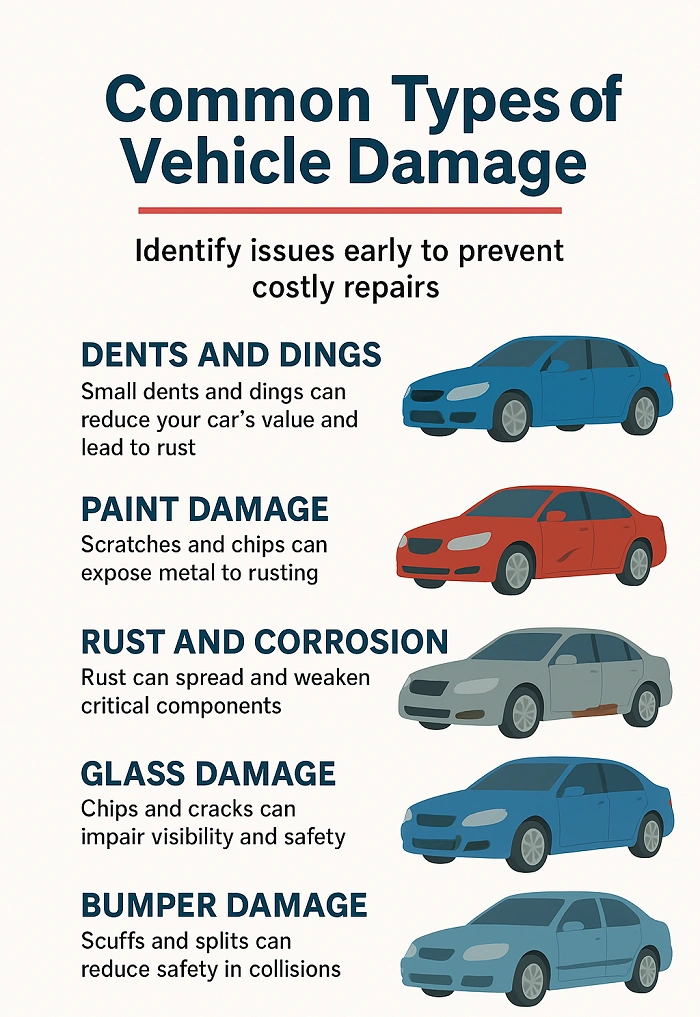
Modern vehicles face a range of body and paint damage that can decrease value, impact safety, and create costly repairs if ignored.
You’re most likely to see these issues on panels, bumpers, and glass, resulting from everyday hazards:
- Accidents (minor bumps to major collisions)
- Harsh weather like hail or sun exposure
- Daily wear-and-tear—think parking lot dings or runaway shopping carts
Identifying even minor issues early helps prevent bigger, more expensive problems later.
Dents and Dings
Dents come in all shapes and sizes:
- Minor dents: Small dings from hail or other car doors—often shallow and don’t break the paint
- Major dents: Deep indentations from collisions—may warp the body and crack paint
Look for light distortions to spot hidden dents. If paint remains intact, options like Paintless Dent Removal (PDR) typically keep repairs quick and affordable.
“Even a small, overlooked dent can quietly lower your car’s resale value.”
Scratches and Paint Damage
Scratches vary by depth:
- Superficial: Affect only the clear coat
- Medium: Cut through paint but not to metal
- Deep: Expose bare metal, risking rust
Typical causes include:
- Automated car washes
- Minor fender benders
- Vandalism
Left untreated, even a simple scratch can turn into rust, threatening your vehicle’s structure and looks.
Rust and Corrosion
Common rust hot spots include:
- Wheel arches
- Door bottoms
- Undercarriage
Rust moves in stages:
- Surface rust (discoloration)
- Scale rust (flaking, bubbling)
- Penetration/perforation (holes that weaken the body)
Vehicles exposed to road salt or high humidity are at the highest risk. Proactive checks on these areas prevent expensive repairs.
Glass and Windshield Damage
The most frequent types of glass damage:
- Stone chips: From flying debris, often leading to cracks
- Cracks and starbursts: Spread with vibration or temperature changes
Ignoring glass damage can violate safety regulations and put you at risk during collisions.
“Picture this: A tiny chip today leads to a full windshield replacement tomorrow.”
Bumper and Panel Damage
Bumpers and panels suffer from:
- Scuffs and small splits (from light impacts)
- Panel creases, buckling, or punctures (from more serious accidents)
Any misalignment or hole should be checked—these can hide more severe structural or safety issues.
Structural and Frame Damage
After bigger impacts, you may notice:
- Unusual tire wear
- Steering that pulls sideways
- Visible underbody bends or cracks
Structural damage reduces crash protection and must be addressed promptly for roadworthiness.
“Even when it looks minor, unseen frame issues can compromise your vehicle’s safety for every mile driven.”
Recognizing and acting on these damage types keeps your car safe, stylish, and valuable. A professional inspection at the first sign of trouble saves you money and worry—so you can trust your car wherever the road leads.
Methods for Identifying Vehicle Damage
Knowing how vehicle damage is identified is the first step toward a transparent, effective repair process. Today’s shops blend seasoned technician experience with cutting-edge technology for results you can count on.
Visual Inspection Techniques
A classic visual inspection remains the foundation. Trained eyes walk the exterior and interior, looking for:
- Dents and dings (often missed in low lighting)
- Paint scratches, chips, and swirl marks
- Misaligned panels, gaps, or loose parts
- Rust spots at arches, door bottoms, or trunk seams
- Interior signs like dashboard cracks, seat wear, or airbag deployment
Experienced technicians are skilled at catching signature hidden indicators—think buckled floor mats hinting at underbody hits or pinched weather seals after frame distortion.
“Picture this: A technician runs a gloved hand over your panel and finds an indentation invisible in bright sunlight—experience catches what machines may not.”
Digital and AI-Driven Assessment
Fast-forward, and today’s leading body shops deploy AI-powered inspections.
AI tools:
- Direct drivers to capture specific photos—ensuring no angle is missed
- Detect and classify damage in high-res images with up to 95% accuracy
- Improve reliability for insurance claims and repair tracking, speeding up claim approval by days
Example: An AI system prompts you to retake a bumper image if poor lighting hides a scratch, guaranteeing the estimate is thorough.
“AI doesn’t just spot dents—it remembers every chip, every time. That’s smart, consistent damage reporting you can trust.”
3D Scanning and Precision Measurement
For complex situations, 3D laser scanning brings superior accuracy. This technology captures detailed maps showing:
- Depth and span of dents
- Panel alignment and symmetry
- Micro-misalignment post-collision
3D data feeds straight into cost estimation software, so bids reflect the real work—no hidden surprises for your wallet.
“Seeing your car’s true condition—down to the millimeter—takes the guesswork out of honest repair.”
Structured Digital Documentation
Shops now maintain systematic digital records for full transparency. Expect:
- Checklists covering all major exterior and interior zones
- Time-stamped, geo-tagged photo series for every step
- Automated reports ready for customers and insurance—in minutes
This makes the process verifiable from start to finish. “When your entire repair journey is digitally tracked, trust is built with every step.”
Early, accurate identification is your best defense against hidden costs and future trouble. By blending human expertise with powerful digital tools, Dallas drivers get repairs that protect vehicle value and provide total peace of mind.
Overview of Professional Repair Solutions
When it comes to vehicle repairs, repair solutions range from minimally invasive fixes to advanced structural work—each with specific tools, skills, and cost factors.
The right approach depends on the type, severity, and location of the damage. Here’s how professionals break down the process so you know what to expect.
Minor Dents and Dings: Paintless Dent Removal (PDR)
Picture this: A hailstorm leaves tiny dimples across your hood, or a car door leaves a clean ding in the parking lot.
- PDR removes minor dents by gently massaging the metal from behind, all without damaging the original paint.
- Fast (often within hours), cost-effective, and keeps your vehicle’s resale value high—it’s the first choice for small dents if the paint isn’t cracked.
- PDR works best for:
- Hail damage
- Door dings
- Small, shallow dents where the paint remains untouched
- Limitations:
- Dents on edges or creased areas
- Deep dents or spots with chipped paint
- Damage larger than a tennis ball
“Paintless Dent Removal restores your car’s look—and your confidence—in record time.”
Surface Damage: Scratches, Chips, and Paint Imperfections
Not all scratches are equal. The right fix depends on the depth and extent of the mark.
- For surface-level scuffs:
- Buffing or polishing compound
- Paint chips or deeper scratches:
- Touch-up paint pens or localized repaint
- Extensive scratches to metal:
- Sanding, priming, and full repainting (often $150–$600 per panel)
DIY fixes may seem tempting but can lead to uneven color or further paint damage. Professional repairs restore both appearance and protection.
Severe Damage: Body Filler and Panel Replacement
For significant dents, holes, or sharp creases, traditional filler and replacement steps in:
- Steps include:
- Apply body filler and shape
- Sand, prime, then color-match paint
- For panels: remove, realign, and install new components
- Panel replacements are required when:
- Damage is beyond repair
- Structural integrity or appearance is compromised
Expect repairs to take several days; costs vary widely, with panels running $500–$2000+ based on vehicle and part.
Glass and Windshield Repair or Replacement
Small windshield chips are often repairable in under an hour with resin injection—restoring strength and clarity for less than $100.
- Full glass replacement:
- Required for large cracks or when the edge is compromised
- Running $200–$600, preserves safety and legality
“A clear, intact windshield is your first line of defense—never leave it to chance.”
Bumper and Plastic Repairs
Bumpers are designed to absorb impacts, but scuffs and splits are fixable:
- Minor to moderate bumper issues:
- Plastic welding and spot painting
- Severe damage:
- Full bumper replacement for safety and modern sensor calibration
Cost-conscious repairs run $150–$400, while replacements may cost up to $1200+ for high-tech models.
Rust and Corrosion Treatment
Rust can start small and spread quickly.
- Treatment steps:
- Sand to bare metal
- Apply rust inhibitor
- Prime and repaint
- Prevention strategies:
- Keep drains clear
- Wash wheel arches
- Address paint chips early
Unaddressed rust can cut a vehicle’s resale value by up to 30%.
Structural and Frame Repair
After a major collision, structural repairs become non-negotiable.
- Key methods:
- Hydraulic machines pull frames into alignment
- Reinforcement of weakened areas
- Digital measurements ensure “factory-perfect” safety
Only certified pros should tackle frame work, protecting both your investment and your passengers.
—
With repairs, choose the right solution for the damage and always trust a qualified expert. Faster, smarter assessment means less downtime and more reliable results, with transparent estimates for every step. Quality work now brings durability—and peace of mind—for years to come.
Modern Damage Assessment and Repair Estimation
Picture this: You pull up to an auto clinic, snap a few high-resolution photos of your car’s damage, and within minutes receive a detailed, transparent repair estimate—all thanks to today’s smart tech.
AI-powered systems now drive over 95% accuracy in identifying vehicle damage from images, removing guesswork and saving valuable time.
AI and Software-Driven Estimation Tools
AI-driven software isn’t just fast—it’s also consistent. These systems:
- Analyze images of your car from multiple angles, instantly detecting dents, scratches, and even subtle frame misalignments.
- Generate repair cost projections in real time, using up-to-date labor and parts databases.
- Seamlessly integrate with insurance claim portals, speeding up approvals by pre-filling needed documentation and photos.
“Today’s digital damage assessment puts honesty and efficiency at the center of every repair conversation.”
Breakdown of Estimation Process
Modern repair estimates follow a structured workflow:
- Damage severity and extent are measured—including dent depth, paint damage layers, or glass cracks.
- Each repair is itemized line by line: parts, labor, paint, or specialty procedures like paintless dent removal.
- The system checks each entry for accuracy, sometimes flagging complex repairs for human review.
Typical repair ranges include:
- Minor dents or dings: $75–$200, completed in 1–3 hours.
- Deep scratches: $150–$600 for full repaint, 1–2 days.
- Windshield chip repair: $60–$150, less than an hour.
- Extensive collision repairs and panel replacements are quoted with a detailed breakdown—no hidden fees.
“Clear, up-front pricing builds trust and helps everyone plan ahead—no surprises.”
Ensuring Transparency and Quality
Trust is built on documentation. Every estimate today includes:
- Systematic photo records and automated reports shared directly with customers.
- Structured checklists to ensure no damage goes unnoticed or undocumented.
- Guarantees around labor and material quality, meeting or exceeding industry standards.
Technicians and software collaborate so that safety and quality are never compromised—even on the fastest turnarounds.
“When you see your entire repair story, step-by-step, you know you’re in good hands.”
Modern damage assessment empowers you with clarity, speed, and total transparency, making it easier than ever to get reliable, honest quotes—and peace of mind—before any repairs begin.
Choosing the Right Repair Approach and Provider
The decision between repairing or replacing vehicle parts comes down to three things: damage severity, cost-effectiveness, and safety.
If you’re facing minor dents or scratches that haven’t affected function, targeted repairs using techniques like Paintless Dent Removal (PDR) or touch-up paint often restore your car’s look at a fraction of the cost and time—think $100–$500 and a same-day turnaround in many cases.
For major panel damage or cracks in structural components, full panel replacement or frame alignment may be required. When the repair cost approaches 50% or more of replacement, most professionals recommend a new part for long-term safety and value.
Finding a Reputable Repair Shop
Not all auto shops are created equal.
Look for these credentials before trusting anyone with your vehicle:
- Industry certifications (like I-CAR Gold Class or ASE)
- Modern diagnostic and repair equipment (including AI- or 3D-assisted tools)
- Clear, written guarantees on both labor and materials
- Transparent, itemized estimates—no hidden fees or unclear “extras”
A reputable provider will also welcome your questions and offer photo or video walkthroughs of recommended repairs.
The Auto Clinique Advantage in Dallas
At Auto Clinique, you can count on:
- Honest, up-front pricing on every job
- Professional standards and a spotless work environment, every time
- Highly skilled technicians trained on the latest techniques and manufacturer guidelines
- Personalized updates and dedicated support from first estimate to final handoff
Picture this: You drop off your car after a fender bender. The next day, you receive a text update with pictures, a breakdown of repair steps, and a clear timeline—all part of the Auto Clinique difference.
Making Informed, Confident Decisions
In 2024, up to 84% of vehicle owners cite trust and transparency as their top priorities when choosing an auto repair shop.
By:
- Prioritizing repairs that balance safety, cost, and long-term value
- Demanding clear credentials and open communication from your provider
—you can feel confident every time you hand over your keys.
Choosing smart, transparent repairs today protects both your wallet and your vehicle’s value for years to come.
NHTSA Vehicle Safety Information – https://www.nhtsa.gov
Conclusion
Elevating your vehicle care isn’t just about quick fixes—it’s about protecting your car’s value, safety, and style for the long haul. When you recognize damage early and choose expert solutions, you’re investing in every mile ahead.
Here are the most powerful steps you can take starting today:
- Inspect your vehicle regularly—catch dings, scratches, or rust before they become costly headaches
- Choose certified, transparent repair providers who offer clear estimates and quality guarantees up front
- Embrace modern damage assessment tools like AI-driven photos and digital reports to ensure no issue goes unnoticed
- Keep all repair documentation—prompt records boost your resale value and simplify future claims
- Act fast on glass, structural, or safety-related damage—your safety and your wallet depend on it
Ready to protect your car and drive with total confidence?
- Schedule a professional inspection at the first sign of damage—even if it seems minor.
- Ask for a digital estimate and walk-through so you can see every repair step in advance.
- Prioritize service from shops that are as committed to honesty, quality, and your peace of mind as you are.
Your vehicle deserves expert attention—it’s your safety and investment on the line.
Every smart repair is a step toward a future with fewer worries and more road trips. Trust in reliable service, and your car will always take you further.
For expert repair solutions in Dallas, visit our Auto Body Repair Services for transparent estimates and advanced diagnostics.
FAQs
1. What are the most Common Types of Vehicle Damage drivers should watch for?
The Common Types of Vehicle Damage include dents, scratches, rust, glass chips, and bumper impacts. These Common Types of Vehicle Damage often come from parking lot incidents, weather, or daily wear.
2. How do professionals identify Common Types of Vehicle Damage accurately?
Professionals identify the Common Types of Vehicle Damage through visual inspections, 3D scanning, and AI-powered assessments. These technologies ensure the Common Types of Vehicle Damage are found quickly and correctly. Proper diagnosis of the Common Types of Vehicle Damage ensures you get accurate repair recommendations.
3. Which repair methods work best for the Common Types of Vehicle Damage?
Repair solutions for the Common Types of Vehicle Damage include Paintless Dent Removal, scratch refinishing, rust treatment, and glass repair. Skilled technicians match the repair method to the Common Types of Vehicle Damage being addressed. Choosing the right fix for the Common Types of Vehicle Damage improves safety and preserves vehicle value.
4. When should I get professional help for Common Types of Vehicle Damage?
You should seek help for the Common Types of Vehicle Damage as soon as dents, cracks, or paint issues appear. Delaying fixes for the Common Types of Vehicle Damage can lead to spreading rust, deeper cracks, or hidden structural issues. A rapid response to the Common Types of Vehicle Damage saves money and protects long-term performance.
5. Where can I find trusted repairs for the Common Types of Vehicle Damage in Dallas?
Drivers can get expert repairs for the Common Types of Vehicle Damage at Auto Clinique in Dallas. The team specializes in restoring the Common Types of Vehicle Damage using modern tools and transparent pricing. For complete solutions to the Common Types of Vehicle Damage, visit our Auto Body Repair Service Page.