
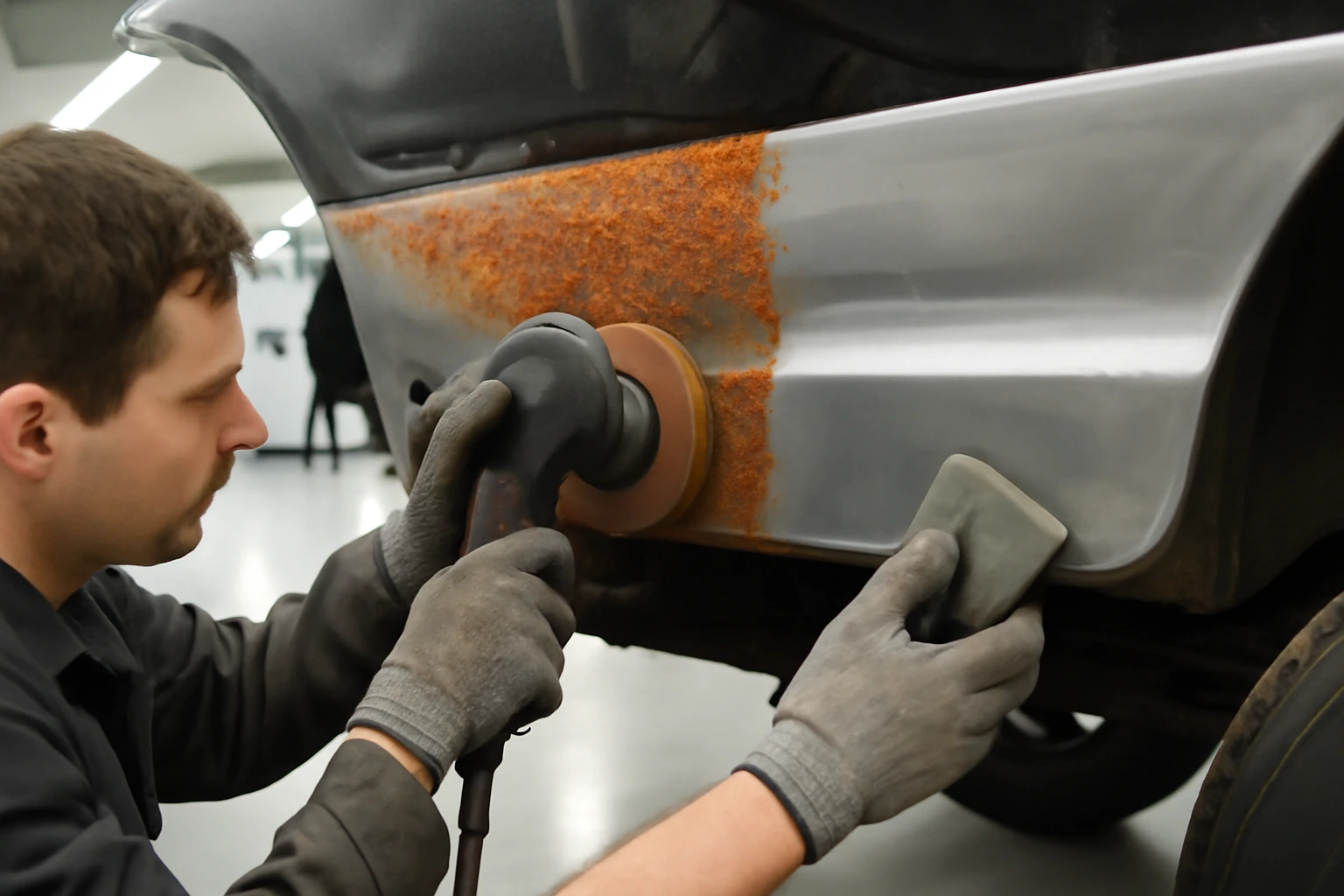
Rust Repair Techniques for Vehicles Explained is essential knowledge for any Dallas driver facing collision damage, hidden corrosion, or long-term structural issues. Accidents—big or small—can expose or worsen rust, weaken your frame, and compromise safety systems you rely on every day. Understanding how proper repair works helps you choose a qualified collision shop, avoid costly mistakes, and protect the long-term value and safety of your vehicle.
- Seek certified collision centers—choose shops with I-CAR Gold Class or ASE certification to guarantee your repairs meet strict industry standards and protect resale value.
- Insist on transparent estimates—demand a detailed, line-item breakdown of all parts, labor, and paint costs so you know exactly where your money is going.
- Ensure advanced safety system checks—top shops perform full computerized diagnostics and ADAS sensor calibrations, ensuring every hidden problem is caught and fixed.
- Prioritize structural and frame repairs—nearly 50% of severe accidents cause frame misalignments; insist on shops using hydraulic and laser tools for true-to-factory realignment.
- Value regular updates and honest communication—expect frequent progress reports, digital status tracking, and clear aftercare instructions to keep you fully informed.
- Protect yourself with a written warranty—choose repair centers that offer lifetime labor and paint guarantees for lasting confidence in every repair.
- Don’t ignore minor damages—even minor fender benders can hide issues that impact airbag function or steering alignment; always get a professional assessment.
- Compare more than price—demand craftsmanship, transparency, and customer-first service for repairs that truly restore your car’s safety and value.
Choosing the right collision repair team puts you back on the road safely—and with confidence. For a deeper dive on what sets great shops apart, explore the full guide and drive knowing your vehicle is in expert hands.
Introduction
A quiet fender bender in a Dallas parking lot. A heart-stopping crunch at a busy intersection. Accidents can happen when you least expect them—and the aftermath often feels just as overwhelming.
What surprises many drivers is that 1 in 7 vehicles on Texas roads has been involved in a significant collision at some point. But recovering from the unexpected doesn’t have to be daunting—the right, qualified collision repair shop can restore not just your car’s look, but also its safety and value.
When your vehicle is damaged, you want more than a cosmetic fix. You need reliable, expert repair that protects your investment, your family, and your peace of mind—without the stress of hidden fees or confusing jargon.
So, what should you expect from a trusted Dallas collision repair team? Here’s what makes a service experience stand out:
- Transparent, honest estimates before any work begins
- Step-by-step updates and clear communication throughout the repair
- Highly skilled technicians using advanced tools and safety diagnostics
- Lifetime workmanship guarantees and real-time progress tracking
- Friendly guidance on everything from insurance claims to aftercare
You’ll see why the difference between an average repair and an exceptional one isn’t always visible on the surface—it’s in the details, the safety checks, and the integrity behind every decision.
Whether you’re worried about a stubborn dent, hidden frame twists, or recalibrating today’s complex safety systems, this guide gives you the confidence to ask the right questions, understand the full process, and know exactly what your car needs to return to its best.
Ready to see how quality collision repair keeps Dallas drivers on the road—safely, smoothly, and with complete peace of mind? Here’s what every vehicle owner should know before the first estimate hits their inbox.
Understanding Collision Auto Repair Services
After an accident, collision auto repair is the specialized process that restores your car to safe, road-ready condition. It’s more than fixing dents—these services address everything from twisted frames to advanced safety systems.
Unlike general auto maintenance such as oil changes or brake replacements, collision repair dives deep. It targets accident-related damages, including repairs that impact your vehicle’s:
- Structural integrity
- Body panels and paintwork
- Suspension and safety systems
- Glass, mirrors, and exterior trim
Routine bodywork—like buffing out a scratch or replacing a taillight—is far less involved than full-scale collision repair, which uses advanced equipment and safety diagnostics.
The Real Value: Craftsmanship and Integrity
When your car needs collision repair, quality workmanship and honest communication matter most. Look for shops that offer:
- Transparent estimates with detailed breakdowns of costs
- Frequent updates during every repair stage
- Lifetime guarantees or written warranties
A Dallas driver who chooses professional collision repair isn’t just protecting their resale value—they’re ensuring every repair is backed by expert standards and integrity.
Accidents and Damage Requiring Collision Repair
Common scenarios that send drivers to a collision shop include:
- Minor fender benders (bumper or grille damage)
- Moderate collisions (side or rear-end sheet metal dents, frame shifts)
- Severe accidents (crumpled panels, broken glass, deployed airbags, misaligned wheels)
Even a low-speed crash can trigger hidden issues, such as sensor failures or damaged ADAS technology—a $1,500–$10,000 repair if left unnoticed.
What “Certified” Really Means
A reputable collision center meets industry standards like I-CAR Gold Class or ASE certification. These credentials show that technicians:
- Use OEM-approved repair procedures for all models
- Complete ongoing technical training on new technology
- Pass rigorous safety and quality assessments
“Trust and transparency are at the center of every great collision repair experience.”
Why This Matters to You
Picture this: you’re handed your keys, and your car not only looks brand new, but every safety system is verified and guaranteed. That’s what certified collision repair delivers. Choose shops that clearly explain their standards—it’s your assurance of expert results and peace of mind.
Key Services Included in Collision Repair
Structural and Frame Repairs
After a collision, the structural integrity of your vehicle is the foundation of safe driving.
Specialists use computerized measuring systems to verify if your car’s frame is misaligned—an issue in nearly 50% of moderate-to-severe collisions.
Expect these essential services:
- Frame straightening using hydraulic tools for precise realignment
- Laser or 3D diagnostic systems to confirm accurate repairs
- High-strength welding for critical structural points
Modern vehicles require advanced equipment to restore original crash protection, especially for models using high-strength steel or aluminum.
“Precision in frame repair is the first step to restoring safety and value after any accident.”
Body Panel and Paintwork Restoration
Scratches, dents, and torn panels are the most visible signs of a crash.
Top shops provide:
- Dent removal and paintless dent repair (PDR) for minor dings, saving original paint
- Panel, bumper, and fender replacement or reshaping
- Multi-stage painting: including sanding, primer, digital color matching, and clear coat
Paint booths with filtered airflow ensure a factory-quality finish and superior corrosion protection.
Imagine your car returned with a seamless look—no trace of the accident, just like new.
Mechanical and Safety System Repairs
Collisions often damage systems you can’t see but instantly feel on the road—think suspension, steering, and cooling components.
The process includes:
- Replacing bent struts, radiators, or steering racks
- Restoring airbags and calibrating ADAS (advanced safety sensors)
- Performing full computerized diagnostic scans on all systems
A single missed repair in these systems can compromise your vehicle’s crash readiness.
“Every collision repair should end with a complete safety-system scan—your life depends on it.”
Glass and Trim Replacement
Broken or chipped glass puts your comfort and safety at risk.
Look for these glass and trim services:
- Windshield, door glass, and mirror replacement
- Sealing and sensor integration for features like rain-sensing wipers and lane cameras
- Warranty-backed installations for long-term peace of mind
A windshield replaced with original-quality glass and properly resealed means crystal-clear visibility—rain or shine.
Additional and Advanced Services
Collision repair is more than just fixing dents.
Expect these added benefits:
- Towing and rental car coordination so you’re never stranded
- Insurance claim assistance from estimate to approval
- Post-repair quality checks and regular updates to keep you informed
Ask about digital repair status tracking—a rising trend for a more transparent, stress-free experience.
With these core services, you’re not just getting damage reversed; you’re ensuring safety, value, and peace of mind long after your vehicle is returned. Choose a shop that communicates, uses top-tier tools, and stands behind every repair with integrity.
The Collision Repair Process: Step-by-Step
Initial Assessment and Estimate
The collision repair journey begins with a detailed visual inspection of your vehicle.
Technicians photograph and document every dent, scratch, and misalignment to create a complete record, catching both visible and hidden damage.
A transparent written estimate is prepared, breaking down labor, parts, and paint costs by line item—ensuring you and your insurance company have all the details upfront.
It’s common for reputable shops to walk you through the estimate in plain language, so you know exactly what’s covered.
“Accurate documentation is the first step to a fair, honest repair.”
Disassembly and Diagnostics
After approval, the shop carefully disassembles affected areas to reveal problems invisible to the naked eye—think bent brackets or cracked supports behind panels.
Computerized diagnostic scans detect mechanical or electrical issues, including damage to safety systems.
If new issues are found, a “supplement estimate” is created and shared with both customer and insurer before moving forward.
Picture this: technicians uncovering a sensor that’s been knocked loose, protecting you from missed repairs down the line.
Structural Repairs and Bodywork
Repairs are sequenced methodically, starting with frame alignment and moving to body panel restoration.
Key elements include:
- Laser measurement systems for precise alignment
- Weld integrity checks for lasting durability
- Careful selection of parts—OEM vs. aftermarket based on your needs
Progress updates keep you informed as the work advances.
“High standards mean your safety is never left to chance.”
Paint Preparation and Application
Restoring your car’s look means following a multi-stage paint process:
- Surface preparation
- Primer application
- Exact color matching
- Layering a clear coat for gloss and protection
State-of-the-art paint booths eliminate dust, ensuring a flawless finish that lasts.
Attention to detail here makes your vehicle look and feel brand new.
Reassembly, Calibration, and Quality Control
The team reassembles every system—windows, sensors, airbags—ensuring full reintegration.
Safety features like backup cameras, radar, and adaptive cruise are calibrated to factory specs for worry-free driving.
A comprehensive multi-point inspection and road test confirm everything works as it should.
Delivery and Warranty
Prior to handoff, your vehicle gets a thorough cleaning inside and out.
You receive a written warranty—typically lifetime on labor and paint—for real peace of mind.
Clear aftercare instructions and direct access to knowledgeable support leave you confident long after you drive away.
From the first inspection to final delivery, the process is shaped by transparent communication, personalized care, and lasting quality. Knowing what to expect helps you choose the right shop and get back on the road with total confidence.
When and Why Collision Repairs Are Needed
Common Scenarios Requiring Collision Repair
Accidents come in all shapes and sizes—each one can cause damage that may not be obvious at first glance.
The most common scenarios that call for professional collision repair include:
- Minor fender benders at parking lots or stoplights
- Side-impact crashes or “T-bone” collisions
- Rear-end accidents (the most frequent collision type in Dallas)
- Multi-vehicle pileups that result in both visible and hidden damage
- Single-car incidents, like striking a post or curb
Even “small” bumps can require expert attention.
A cracked bumper or misaligned sensor might look minor, but can signal deeper issues that affect your car’s safety systems and exterior finish.
Look for these signs after any accident:
- Steering that pulls or feels “off” during a drive
- Unusual noises or dashboard warning lights
- Difficulty closing doors, trunk, or hood
- Paint cracking, bubbling, or new rust spots
- Any airbag deployment—immediate service is non-negotiable
“We believe the difference between a minor fix and a major problem is often discovered in the details.”
Safety and Liability Considerations
When it comes to collision repairs, it’s about much more than just looks.
Collision repairs maintain your car’s crashworthiness and passenger safety. Modern vehicles rely on precise alignment and high-strength materials to protect you in an accident.
Neglecting repairs isn’t just unsafe. It can:
- Lead to failed safety features (like airbags or ADAS) in future incidents
- Put you at risk of failing state inspections or losing insurance coverage
- Lower your car’s resale value or violate lease/trade-in agreements
In Texas, insurance companies may withhold payment or cancel policies if you ignore essential repairs.
Choosing quality workmanship means you protect your car’s future—and your own.
“Picture this: the unaddressed damage from a ‘minor’ collision silently affects how your airbags deploy, your frame absorbs energy, even how insurance views your next claim.”
Quality collision repair is more than fixing dents—it’s about keeping your vehicle safe, legal, and ready for anything the Dallas roads can throw your way. Address repairs immediately, ask your shop about their process, and never compromise safety for speed or savings.
Choosing a Qualified Collision Repair Shop
Evaluating Credentials and Reputation
Trust starts with credentials. Look for shops displaying I-CAR Gold Class or ASE certifications—these signal that technicians have current, verified training to handle virtually any collision repair with precision.
Certifications aren’t just plaques on the wall—they mean your shop follows strict, industry-accepted repair standards. This is especially vital with today’s complex vehicles, where systems like ADAS and advanced airbags require expert care.
Before committing, scan for:
- Customer reviews on Google and Yelp (4.5+ rating is ideal)
- Real-world before-and-after photos on websites or social media
- Word-of-mouth endorsements from local drivers
Picture this: A shop that openly shares results and feedback gives you confidence well before your first visit.
Transparent communication shows a shop values partnership—not just business.
—
Assessing Transparency and Customer Experience
A qualified repair shop makes the process stress-free by putting clear info up front.
When you review an estimate, watch for:
- Clearly itemized charges (parts, labor, supplies)
- Detailed descriptions of each repair step
- Explanation of any potential “supplement” charges as repairs progress
Top shops stand out for:
- Regular progress updates via text, email, or web portals
- Direct help managing insurance claims from start to finish
- Written warranties for paint, structure, and safety repairs
A skilled team takes pride in giving straight answers and proactive updates, so you’re never left in the dark about your car or your costs.
—
Comparing Costs and Value
Collision repairs range from $300 for bumper fixes to $8,000+ for extensive structural work, depending on:
- Vehicle make/model and year
- Type of parts used (OEM vs. aftermarket)
- Paint technology and color complexity
- Labor rates and repair timelines
Don’t just chase the lowest quote—proper repairs protect your vehicle’s safety, value, and crashworthiness. Value means lasting workmanship and honest guarantees, not shortcuts that compromise your car’s future.
—
A qualified collision shop relies on verifiable expertise, transparency at every step, and a reputation built on satisfied customers. Always prioritize shops that combine credentials, clear communication, and a true commitment to your safety and peace of mind.
Staying Informed: Trends and Innovations in Collision Repair
Advancements in Repair Technology
Today’s collision repair landscape moves at full speed—digital diagnostics, instant 3D measuring, and advanced OEM repair procedures now set the bar for quality.
Picture this: Your vehicle enters the shop and, before a wrench is lifted, high-tech scanners detect hidden chassis misalignments, airbag faults, or ADAS sensor issues in seconds. Precision 3D measurement systems document every millimeter, ensuring structural repairs match factory specs and safety data.
Emerging trends leading today’s industry include:
- Eco-friendly waterborne paints that meet growing environmental standards
- Automated safety calibrations for features like adaptive cruise control and lane-keep assist
- Connected-car diagnostics that communicate wirelessly for faster, more targeted repairs
“Today’s repairs aren’t just about fixing damages—they’re about restoring smart technology and environmental integrity.”
The Impact of Modern Vehicle Design
Modern vehicles are more complex than ever before. Repairs now routinely involve:
- Aluminum frames and high-strength steel that need specialized equipment and training
- Sensors and advanced driver assistance systems (ADAS)—sometimes up to 100 in a single vehicle
- Integrated camera, radar, and lidar systems that require precise recalibration after even a minor bump
Repairing a 2024 model often means recalibrating safety tech and ensuring all electronic systems are as reliable as the day your car left the lot. More components now rely on software updates and recalibration, not just hardware repairs.
“Accurate collision repair in 2025 is equal parts craftsmanship and computer science.”
Customer Service Innovations
Customer experience is driving a revolution in how shops serve you. Leading collision centers in Dallas now offer:
- Real-time repair status tracking through mobile apps or SMS
- Fast, transparent communication—from digital estimates to insurance claim assistance
- Service guarantees and lifetime warranties that protect your peace of mind
- Personalized service touchpoints like photo updates, dedicated support lines, and detailed aftercare guides
Shops are focused on making you feel at home—even when your car is in the shop.
“Transparency and convenience matter as much as repair quality—customers want to feel fully informed every step of the way.”
Expect collision repair to keep evolving—blending high-tech expertise, cleaner materials, and customer-first solutions. Look for transparency, digital service tools, and technicians trained for the vehicles of tomorrow.
Visit our collision repair services page for structural repairs, ADAS calibration, and frame straightening
Conclusion
When your vehicle’s safety and value are on the line, choosing a trusted collision repair shop is more than a necessity—it’s your opportunity to demand transparent service, quality craftsmanship, and real peace of mind.
Investing in collision auto repair means you’re not just restoring your car—you’re safeguarding every drive, reclaiming resale value, and ensuring your repair experience is clear, honest, and stress-free.
—
To get the most from your collision repair, focus on:
- Choosing certified technicians—I-CAR Gold Class and ASE credentials signal true expertise.
- Prioritizing transparency—request written estimates and regular progress updates.
- Confirming that safety systems are fully scanned and calibrated before leaving the shop.
- Asking about warranties to ensure lasting protection on repairs and paintwork.
- Verifying insurance claim support so your process is smooth from start to finish.
—
Ready to move forward? Here’s how you can take action today:
- Vet repair shops for industry certifications and glowing customer reviews.
- Schedule an assessment as soon as possible after any accident—even minor ones.
- Bring questions—ask how your shop ensures both structural integrity and advanced safety feature restoration.
- Request digital repair status updates for total transparency throughout your repair journey.
—
Every trip back on the road should feel like a fresh start—confident, protected, and backed by experts who care. Your safety is non-negotiable; expect nothing less and empower yourself to always choose quality over compromise.
In auto repair, expertise and integrity matter—because when it comes to your journey, only the best will do.
I-CAR Gold Class Certification
https://www.i-car.com
FAQs
1. What are the most effective Rust Repair Techniques for Vehicles?
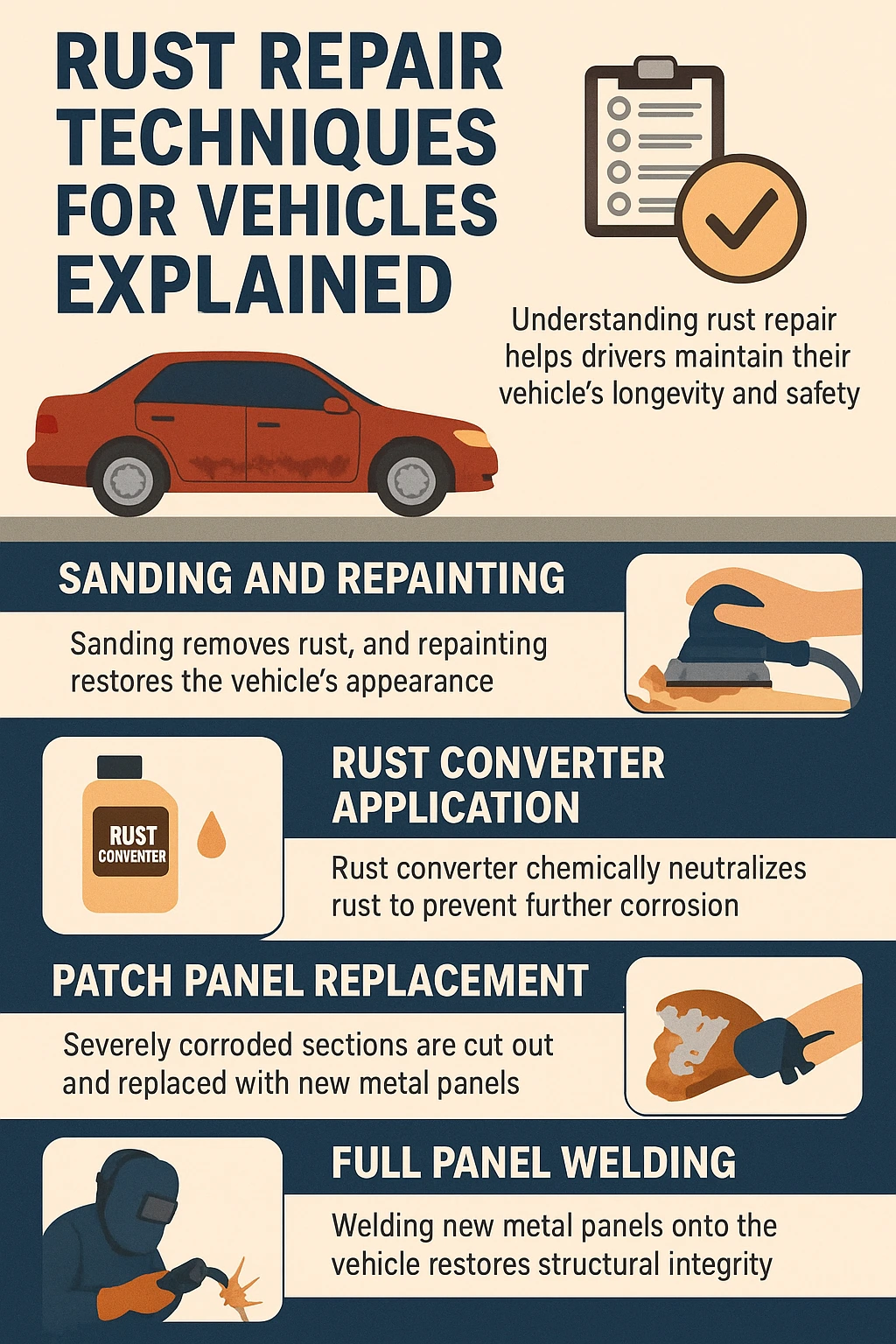
The most effective Rust Repair Techniques for Vehicles include sanding and repainting, rust converter application, patch panel replacement, and full panel welding. The right technique depends on how deep the corrosion has spread.
2. How do I know if my vehicle needs professional rust repair?
If you notice bubbling paint, flaking metal, holes, weakened panels, or rust spreading beneath the surface, your car likely needs professional rust repair. These signs indicate that corrosion has moved beyond DIY-level fixes.
3. Can Rust Repair Techniques for Vehicles fix structural damage?
Yes—but only when performed by qualified technicians. Structural rust requires cutting out damaged areas and welding in new metal. It should never be handled with temporary fillers or paint alone, as this compromises vehicle safety.
4. How long do Rust Repair Techniques for Vehicles last?
High-quality rust repair can last 5–10 years or more if done correctly, especially when paired with proper sealing, priming, and undercoating. Longevity also depends on climate, driving habits, and maintenance.
5. Are rust repairs covered by insurance?
Insurance typically does not cover rust damage unless it directly results from a collision. However, collision-related rust repair may qualify. It’s best to check your policy or speak with your repair specialist.
6. What’s the cost of professional Rust Repair Techniques for Vehicles?
Costs range from $150–$400 for light surface rust, $500–$1,500 for moderate repairs, and $2,000+ for structural rust restoration. Get a detailed, itemized quote to understand parts, labor, and paint-related fees.
7. How can I prevent rust after repairs?
To prevent rust from returning, wash your vehicle regularly, apply rust-proof undercoating, repair paint chips immediately, and inspect high-risk areas—like wheel wells and the undercarriage—every season.