
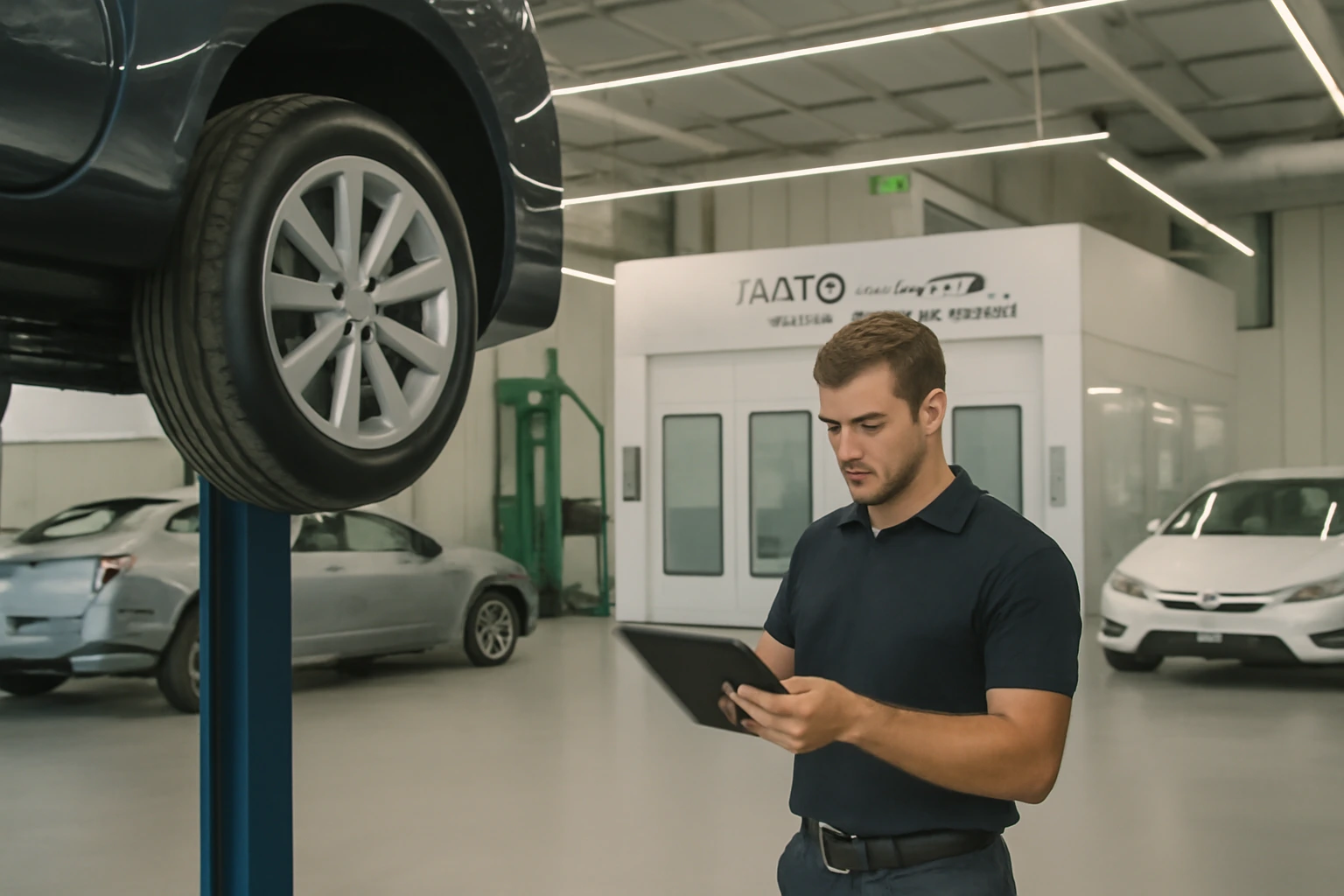
Auto Body Repair Services 2025 are redefining the way Dallas drivers restore their vehicles—combining advanced technology, expert craftsmanship, and a strong commitment to safety and satisfaction. Understanding auto body repair in 2025 means recognizing smarter diagnostics, faster turnaround times, and eco-friendly repair practices that deliver both quality and peace of mind. Here are the essential insights every Dallas driver should know for hassle-free, high-quality repairs.
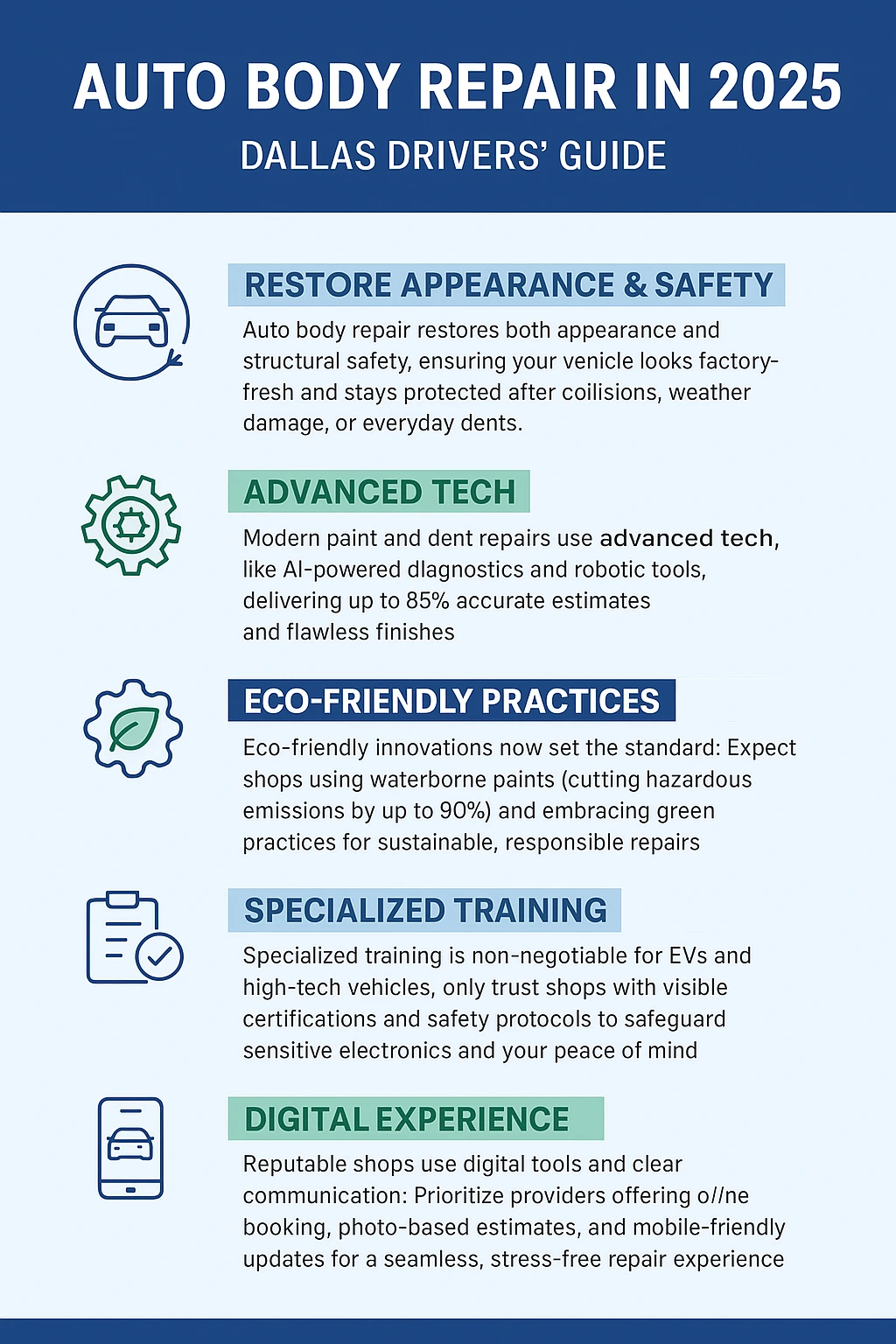
- Auto body repair restores both appearance and structural safety, ensuring your vehicle looks factory-fresh and stays protected after collisions, weather damage, or everyday dents.
- Modern paint and dent repairs use advanced tech, like AI-powered diagnostics and robotic tools, delivering up to 95% accurate estimates and flawless finishes—even on rare or luxury vehicles.
- Eco-friendly innovations now set the standard: Expect shops using waterborne paints (cutting hazardous emissions by up to 90%) and embracing green practices for sustainable, responsible repairs.
- Specialized training is non-negotiable for EVs and high-tech vehicles; only trust shops with visible certifications and safety protocols when repairing electric or advanced models to safeguard sensitive electronics and your peace of mind.
- Repair costs have increased in 2025, with paint pricing up 7.4% and luxury/EV services costing up to 15% more, so always ask for transparent, itemized estimates before approving work.
- Reputable shops use digital tools and clear communication: Prioritize providers offering online booking, photo-based estimates, and mobile-friendly updates for a seamless, stress-free repair experience.
- Trustworthy providers guarantee their work with written warranties, detailed documentation, and proactive guidance—ensuring your satisfaction long after you drive away.
Choosing the right auto body shop means prioritizing expert craftsmanship, sustainability, and complete transparency—explore the full article to discover how to protect your investment and drive with confidence.
Introduction
A fender bender on Central Expressway. Hail that leaves your hood peppered with dents. Or maybe a mystery scratch at your favorite Dallas shopping center. If you’re a driver in North Texas, chances are you’ve faced the surprise—and stress—of unexpected vehicle damage.
But here’s the kicker: over 80% of Dallas drivers will need auto body repair at least once every three years. In 2025, that repair doesn’t just fix up blemishes—it directly impacts your vehicle’s safety, resale value, and even your daily peace of mind.
How do you separate a quick patch-up from truly professional repairs? The difference isn’t just cosmetic. Top-tier service means:
- Clear, honest estimates so you’re never left guessing
- High-tech diagnostics for pinpoint accuracy and reliable outcomes
- Skillful craftsmanship that restores both form and function
And with changes in vehicle technology—think aluminum body panels, EV batteries, and eco-friendly paints—the right repair shop does more than cover up damage. It protects your investment by using the safest, most sustainable, and precise methods available.
You shouldn’t have to be an expert to get transparent pricing or trustworthy service. Whether you’re comparing estimates, wondering how auto body repair has changed, or deciding when to act after a minor scrape, you deserve answers that are clear and actionable.
In the next sections, you’ll find out what sets quality auto body repairs apart in 2025, which industry innovations actually matter for your car, and how Dallas drivers can confidently choose a service provider they can trust.
Let’s start by clarifying exactly what auto body repair covers—and why paying attention early can make all the difference for your car and your wallet.
Understanding Auto Body Repair: Scope and Necessity
Auto body repair focuses on restoring your vehicle’s exterior and structure after it suffers damage, making it distinct from mechanical repair that targets the engine or internal systems.
Think of auto body repair as the process that brings your vehicle back to looking—and driving—as good as new.
What Sets Auto Body Repair Apart
- Auto body work covers the paint, panels, frame, bumpers, glass, and visible components.
- Mechanical repairs fix parts like the engine, transmission, or brakes.
- For Dallas drivers, auto body service means correcting visible damage that affects both appearance and safety.
Core Goals: More Than Just Looks
Quality auto body repair serves three main objectives:
- Restore appearance after dents, scratches, or major collisions
- Maintain resale value by preventing rust or long-term surface damage
- Ensure structural safety, especially after serious impacts
“Expert auto body repair isn’t just cosmetic—it’s essential for your vehicle’s long-term safety and value.”
When Do You Need Auto Body Repair?
Picture this: you’re parking at NorthPark Center, and a stray shopping cart leaves a deep scratch. Or maybe hail dents your hood during a Texas storm.
These are clear cases when specialized repair makes all the difference.
Common triggers for body repairs:
- Collisions (even low-speed fender benders)
- Weather events—like hail, flooding, or falling branches
- Minor impacts (shopping carts, debris, curb scrapes)
- Everyday wear and tear (sun fading, small chips)
“If your vehicle has visible damage, unusual gaps between panels, or trouble closing doors, it’s time to visit a trusted auto body specialist.”
Recognizing Signs Your Vehicle Needs Attention
Key signs include:
- Mismatched paint shades or faded spots
- Noticeable dents, creases, or scratches
- Lights, doors, or bumpers that aren’t aligned
- Moisture inside headlamps or trunk
- Rust spots or bubbling paint
Industry Standards: What Should You Expect?
Reputable shops operate on a foundation of:
- Transparent pricing—always request a detailed estimate up front
- OEM-approved parts and advanced tools for precise repairs
- Certifications from groups like I-CAR and ASE
- Clear communication at every stage of repair
- Warranties backing workmanship and materials
Dallas-area leaders, like Auto Clinique, combine high-tech diagnostics and customer-first service to deliver results that exceed expectations—every time.
Professional auto body repair isn’t just about looking good—it’s about protecting your investment, your safety, and your peace of mind. Spot damage early, ask the right questions, and always choose certified experts for reliable, lasting repairs.
Core Auto Body Repair Services in 2025
Paint Correction and Refinishing
Paint correction and refinishing are at the heart of modern auto body repair. Whether you’ve got a tiny chip or need a full respray after a major collision, quality paintwork protects your car both visually and structurally.
New color-matching technologies ensure repairs that are virtually seamless—even on rare finishes. Shops in Dallas now use computer-assisted color libraries for precise matches, meaning your car always leaves looking factory-fresh.
Paint prices have jumped 7.4% in 2025, driven by global supply issues and the move to premium, eco-friendly formulas. Key factors include:
- Raw material costs
- Energy prices for low-VOC and waterborne paints
- Labor and spray booth operation
Shops are switching to waterborne and low-VOC paints, which reduce hazardous emissions by up to 90%. You’ll notice less odor, a faster repair timeline, and fewer environmental impacts—these sustainable paints are now the industry standard.
“Advanced color-matching blends restoration with artistry. Today’s finishes look fresh for years, not just months.”
Dent and Scratch Removal
From grocery store dings to parking lot scrapes, dent and scratch removal has become both faster and more precise.
Leading techniques now include:
- Paintless Dent Repair (PDR): Best for minor dings where paint isn’t broken.
- Traditional Filler Repair: Required for deep dents or when the paint is damaged.
- Robotic and AI-assisted systems: Automate dent location, shaping, and finishing, delivering up to 35% more accuracy.
Not all scratches are created equal:
- Surface scratches can often be polished out with specialized compounds.
- Deep gouges require filler, sanding, and repainting for a flawless surface.
“Picture this: a technician uses AI scanning to pinpoint a dent’s exact depth, then a robotic tool smooths it out while you watch in the waiting area.”
Panel Alignment and Frame Straightening
Precision counts when it comes to frame and panel alignment after a collision. Even a slight misalignment can compromise both safety and value.
Shops now use:
- Laser measurement systems (accurate to 1mm)
- 3D scanning for real-time before-and-after comparisons
Repair options include:
- Panel repair if the structure is mostly intact
- Panel replacement for severe bends, rust, or major impact
Structural repairs often use proprietary clamps and high-strength bonding for a true factory-level fix. This makes a real difference in both appearance and safety—especially after major accidents.
“Laser-guided repairs mean accidents don’t leave a mark—on your car’s performance or your peace of mind.”
Carefully selecting services that use modern tools and transparent pricing will help your vehicle look better, last longer, and hold its value—making every visit to a quality auto body shop an investment, not just a repair.
Innovations and Advanced Technologies Shaping the Industry
AI-Powered Damage Assessment and Diagnostics
Auto body repair in 2025 relies on AI systems that assess vehicle damage with up to 95% precision—meaning faster, fairer estimates for you.
AI scans photos and sensor data to identify damage areas, then generates:
- Accurate repair estimates within minutes
- Digital reports for seamless insurance claims
- Recommendations that are transparent and backed by data
Imagine driving into the shop, having your vehicle scanned, and instantly seeing a breakdown of costs on your phone—with no surprises.
“AI-powered diagnostics mean no more guesswork—just objective results you can trust.”
Robotics and Automation in Repair Processes
Robotics are transforming both quality and safety in repair.
Shops now use robotic arms for:
- Panel forming that re-creates factory curves
- Sanding and welding with millimeter accuracy
- Consistent finishes, even on complex metals or composites
“Robots never get tired—expect flawless welds and perfectly smooth surfaces, every time.”
This shift also reduces technician injuries by keeping them out of hazardous zones, while every job gets finished to exacting standards.
Imaging, Scanning, and Augmented Reality
Repair teams deploy 3D laser scanners and augmented reality (AR) headsets to visualize every dent and ripple.
Technicians use these technologies for:
- Damage mapping at up to 1 mm precision
- AR overlays that guide structural repairs, step by step
- Cycle times have dropped by as much as 40%, so your car spends less time in the shop
Picture this: a technician adds AR goggles, and real-time repair instructions appear right atop your car’s surface.
“Augmented reality isn’t science fiction—it’s your assurance that hidden damage won’t go untreated.”
Repair has never been faster, clearer, or more customer-focused.
For anyone seeking trusted auto body repair, these innovations guarantee you’ll receive quicker, more reliable estimates and safer, factory-quality results—all with full visibility from start to finish.
Material Science, Paint Innovations, and Sustainability
Repairing Modern Vehicle Materials
Vehicle bodies are evolving fast, mixing traditional steel with aluminum, carbon fiber, and high-strength composites.
Shops must handle these cutting-edge materials using:
- Cold repair technology that reshapes panels without breaking or burning off critical protective coatings
- Aerospace-grade adhesives and bonding techniques to create joins often stronger than the original metal
Picture this: your car’s aluminum panel is dented in a parking lot. Instead of heat or welding, Dallas technicians use cold forming and high-tech adhesives, ensuring the factory shield stays intact.
“Modern materials demand modern skills—what worked yesterday won’t work on tomorrow’s cars.”
Paint System Breakthroughs
Today’s paints do more than cover flaws—they actively protect your investment.
Breakthroughs include:
- Smart paints with self-healing surfaces that vanish small scratches under sun or heat
- Hydrophobic, nano-ceramic coatings that repel water and shrug off day-to-day wear
- Lower-curing paints that speed up repairs and cut shop energy use for a greener result
- Advanced color-matching systems so your vehicle looks brand new, not mismatched
Shops report curing times are now up to 30% faster, thanks to new paint formulations—meaning your car gets back to you sooner, looking flawless.
“Imagine watching dings and scratches fade away with sunlight—your car’s finish truly taking care of itself.”
Eco-Friendly Practices
Eco-conscious consumers are pushing the industry to act—and the results are clear.
Repair shops are embracing:
- Waterborne paints that reduce hazardous VOC emissions by as much as 90% compared to older solvent paints
- Robust recycling for leftover paint, metals, and plastics
- Full compliance with recycling and disposal regulations, making safety and sustainability the standard
Shops highlight their achievements online, knowing that “green” repairs are a top priority for 2025 Dallas car owners.
“Switching to waterborne paints has the same environmental impact as planting hundreds of trees—one job at a time.”
For Dallas drivers, modern body repairs mean safer, longer-lasting results that respect your wallet and the planet. If you value both high tech and high integrity, ask your shop about smart paints, cold repair options, and their latest sustainability credentials before you book.
Specialized Repairs for Electric and High-Tech Vehicles
Electric Vehicle (EV) Body Repair Protocols
Electric vehicles bring a new set of challenges to auto body repair.
Every EV contains complex high-voltage battery systems beneath the floor, reinforced frames, and sensitive electronics, making even minor repairs a highly specialized task.
Body shops need:
- Technicians with EV-specific certifications—standard auto repair training isn’t enough.
- Insulated tools and diagnostic equipment made for handling high-voltage circuits.
- Special isolation zones and battery storage protocols to prevent shocks and fires during repairs.
If a Tesla Model 3 comes in with collision damage, picture this: Before a panel is even removed, the battery is isolated, high-voltage connectors are locked away, and every technician is suited up for safety.
A simple misstep? That could mean dangerous voltage exposure—safety can’t ever take a backseat with EVs.
Shops equipped for EVs display this immediately, with clear certifications visible and protocols part of their daily process.
“Not every repair shop is ready for your EV. Specialized training and tools are your car’s first line of defense.”
Repairs for Luxury, Hybrid, and Advanced Technology Vehicles
High-tech vehicles—think BMW hybrids or an Audi e-tron—make body repairs anything but routine.
Repair costs are up to 15% higher for luxury or advanced models, driven by:
- The use of aluminum, carbon fiber, and composites, requiring unique repair adhesives and methods.
- Integration of sensors, cameras, and Advanced Driver Assistance Systems (ADAS) directly into body panels—each must be carefully recalibrated after repair.
- Matching not just the paint, but the precise finish, curve, and contour of high-value exteriors.
Technicians use laser-guided alignment systems and digital calibration tools to ensure every panel fits and every feature—from adaptive cruise to collision sensors—works flawlessly after a repair.
“One missed sensor recalibration, and your luxury vehicle’s smartest safety features might let you down.”
When you drive away, every subtle curve and embedded tech should perform just as it did in the showroom.
What This Means for Your Next Repair
If you own an EV, luxury, hybrid, or tech-packed model in 2025, make sure your chosen repair shop:
- Can explain their specialized training and safety protocols.
- Has experience with modern materials and integrated safety systems.
- Shows transparency on costs—which start higher due to materials and technology, but offer priceless peace of mind.
The right shop doesn’t just restore your vehicle—they protect its future performance and safety.
Choose wisely, because in the world of high-tech vehicles, expertise is everything.
Cost Structure, Trends, and Industry Data for 2025
Factors Influencing Repair Costs
Understanding the full price of auto body repair starts with breaking down where your money goes.
- Labor: Skilled technician time remains the largest chunk, especially with advanced repair tools and materials.
- Parts: OEM and specialty components—common in luxury and electric vehicles—can push prices higher.
- Materials: Paint costs have soared by 7.4% in 2025, increasing final bills for even minor touchups.
- Technology Use: Shops using AI diagnostics, 3D imaging, and robotic systems may charge extra, but deliver faster, more precise repairs.
If you drive a luxury vehicle or an EV, expect up to 15% higher costs due to advanced materials and extra technician certification.
As technician shortages continue, high demand can lengthen wait times and nudge labor rates up—”Rising costs reflect the rapidly evolving skills needed to fix modern vehicles.”
Typical Cost Ranges for Core Services
Here’s a fast snapshot of 2025 repair costs in Dallas and similar markets:
- Paint Repair: $650–$2,500 depending on the size and depth of the damage.
- Dent Removal: $125–$900, ranging from paintless dent repair to deeper bodywork.
- Frame Straightening: $800–$3,500, depending on vehicle type and degree of structural misalignment.
Two key factors raise costs:
- Vehicle type: Repairing composites, aluminum, or carbon fiber drives prices up.
- Extent of damage: More affected panels or deeper gouges will boost labor and material needs.
Consider repair vs. replacement for larger issues—replacing badly damaged panels can be more cost-efficient than layering repairs.
Picture this: a minor scrape on a standard sedan costs less than $1,000, but hail damage on a luxury SUV with aluminum panels could run $4,000+.
Insurance and Payment Considerations
Your insurance plan often determines which repairs get approved and how smoothly the process goes.
- Filing claims starts with digital photos or AI-based shop estimates.
- Insurers may recommend preferred providers or give you freedom of choice, but seek shops open about costs and processes.
- Reputable body shops give clear, upfront estimates and detailed invoices—never settle for vague billing.
Transparent, honest billing is your best safeguard—”A trustworthy shop explains every charge so you’re never left guessing.”
A quick review:
Knowing what drives auto body repair costs lets you shop smart and advocate for yourself. Always look for transparency, clear estimates, and repair options tailored to your car and budget. With prices rising and technology evolving, partnering with a reputable provider ensures your car’s value and safety are protected every step of the way.
Finding and Choosing a Reputable Auto Body Repair Provider
Identifying Trustworthy Service Providers
Not all auto body repair shops are created equal—certification, experience, and transparency set the best providers apart.
Look for facilities that display industry-recognized certifications (like I-CAR Gold Class or ASE), employ experienced technicians, and maintain clean, professional environments.
When you visit or call a shop, ask these key questions:
- What certifications do your technicians hold?
- Can you share a detailed, itemized estimate before work begins?
- Do you guarantee your repairs and paintwork?
Check reviews on platforms such as Google and the Better Business Bureau for feedback about honesty, quality, and timeliness.
Mos reputable shops will offer written guarantees and clear, upfront pricing.
“A truly professional auto body shop will treat your questions as routine, not as a nuisance.”
Digital Tools and Enhanced Customer Experiences
Top repair shops in Dallas are making use of digital tools to increase convenience and build trust.
Look for service providers that offer:
- Online booking and appointment scheduling
- Digital estimate platforms—often with photo-based, same-day assessments
- Virtual consultations for damage review and repair updates
These tools save you time and improve clarity at every step.
Many leading shops now provide digital progress reports, live chat updates, and easy-to-understand, mobile-friendly billing—all part of a seamless, customer-focused experience.
“Picture this: booking your repair from your phone in minutes and tracking your car’s fix in real time—auto body care that fits your life, not the other way around.”
Warranties, Guarantees, and Customer Protection
A reputable auto body provider stands behind their work with transparent warranties and solid documentation.
Expect:
- Written warranties on repairs (often 1-year minimum for paintwork, lifetime for certain parts)
- Clear documentation of all procedures and parts used
- Guidance on what to do if issues arise post-repair
The best shops are proactive—explaining every guarantee and ensuring you understand your rights before you even hand over your keys.
“When your repair is complete, you should walk away with absolute confidence—not unanswered questions.”
Choosing a provider means more than just finding a nearby shop; it’s about transparency, digital convenience, and a promise you can trust. Prioritize clear communication, strong warranties, and service that fits your expectations.
Learn more about automotive safety standards from the National Institute for Automotive Service Excellence (ASE).
Conclusion
Navigating the world of auto body repair in 2025 is all about protecting your vehicle, your investment, and your peace of mind with solutions that combine advanced technology and personal service.
The right repair shop will not only restore your car’s look and safety but also offer a straightforward experience founded on transparency, expertise, and customer-focused care.
—
Key Takeaways:
- Spot issues early: Address visible damage, misaligned panels, or unusual paint gaps as soon as you notice them to avoid bigger headaches later.
- Ask the tough questions: Ensure your chosen shop is certified, uses advanced diagnostic tools, and commits to transparent pricing before any work begins.
- Prioritize sustainability: Choose providers using eco-friendly paints and responsible recycling—future-proofing both your car and the environment.
- Leverage digital tools: Take advantage of online estimates, progress updates, and virtual consultations for a smooth, efficient repair process.
- Insist on clear warranties: Only trust shops that stand behind their repairs with documented guarantees and open communication.
—
Ready to take action?
- Schedule a professional assessment if you spot any signs of exterior damage or notice gaps in your vehicle’s fit and finish.
- Compare repair shops by researching certifications, technology use, and customer reviews before committing.
- Review your insurance coverage and ask questions about digital estimate options and shop recommendations for maximum value and peace of mind.
—
Your vehicle deserves more than just a quick fix—it needs a partner dedicated to quality and your satisfaction.
Investing in expert auto body repair isn’t just smart; it’s essential for driving with confidence, protecting your vehicle’s value, and staying safe on the road.
Let every repair bring you closer to a car you’re proud to drive.
Choose expertise. Expect transparency. Enjoy the journey.
For more details on specialized diagnostics and precision repairs, explore our Rust Repair Techniques for Vehicles Explained
FAQs
1. What are Auto Body Repair Services in 2025?
Auto Body Repair Services in 2025 refer to advanced repair solutions that combine AI-powered diagnostics, eco-friendly materials, and skilled craftsmanship to restore a vehicle’s appearance and safety after accidents or wear. Modern shops use smart tools and sustainable paints to ensure long-lasting, flawless results.
2. How have Auto Body Repair Services evolved by 2025?
By 2025, auto body shops now rely on AI-driven diagnostics, robotic precision tools, and 3D laser scanning to deliver more accurate estimates and repairs. These innovations make the process faster, more transparent, and better for both your car and the environment.
3. How much do Auto Body Repair Services cost in 2025?
The cost of Auto Body Repair Services in 2025 typically ranges from $600 to $3,500, depending on the severity of damage, vehicle type, and materials used. Luxury and electric vehicles may cost 10–15% more due to specialized components and advanced materials. Always request a detailed, itemized quote before starting work.
4. Are eco-friendly Auto Body Repair Services available in 2025?
Yes — most reputable repair centers in 2025 now use waterborne paints and low-VOC materials, reducing harmful emissions by up to 90%. This means your car looks brand-new while minimizing environmental impact. Learn more about sustainable automotive practices at the U.S. Environmental Protection Agency (EPA).
5. Can Auto Body Repair Services handle electric vehicles (EVs) in 2025?
Absolutely. Certified providers have specialized training and tools to safely repair electric and hybrid vehicles. They follow strict safety protocols when handling high-voltage systems, ensuring both technician and vehicle protection during repairs.
6. How do I choose a reliable Auto Body Repair Service provider in 2025?
Look for certifications such as I-CAR Gold Class or ASE, transparent pricing, and digital progress updates. For trusted, expert care, explore our Specialized Auto Repair Services: Complete Guide — your first step toward choosing a reliable repair partner.
7. What technologies improve Auto Body Repair Services in 2025?
Technologies like AI image analysis, robotic paint application, and AR-guided frame alignment are transforming repairs. These innovations enhance precision, reduce turnaround time, and ensure safety standards for every vehicle model.
8. Why should I invest in professional Auto Body Repair Services in 2025 instead of DIY fixes?
Professional Auto Body Repair Services ensure safety, precision, and long-term value that DIY fixes can’t match. Certified technicians use specialized equipment to maintain structural integrity and finish quality — protecting both your vehicle’s resale value and your peace of mind.