
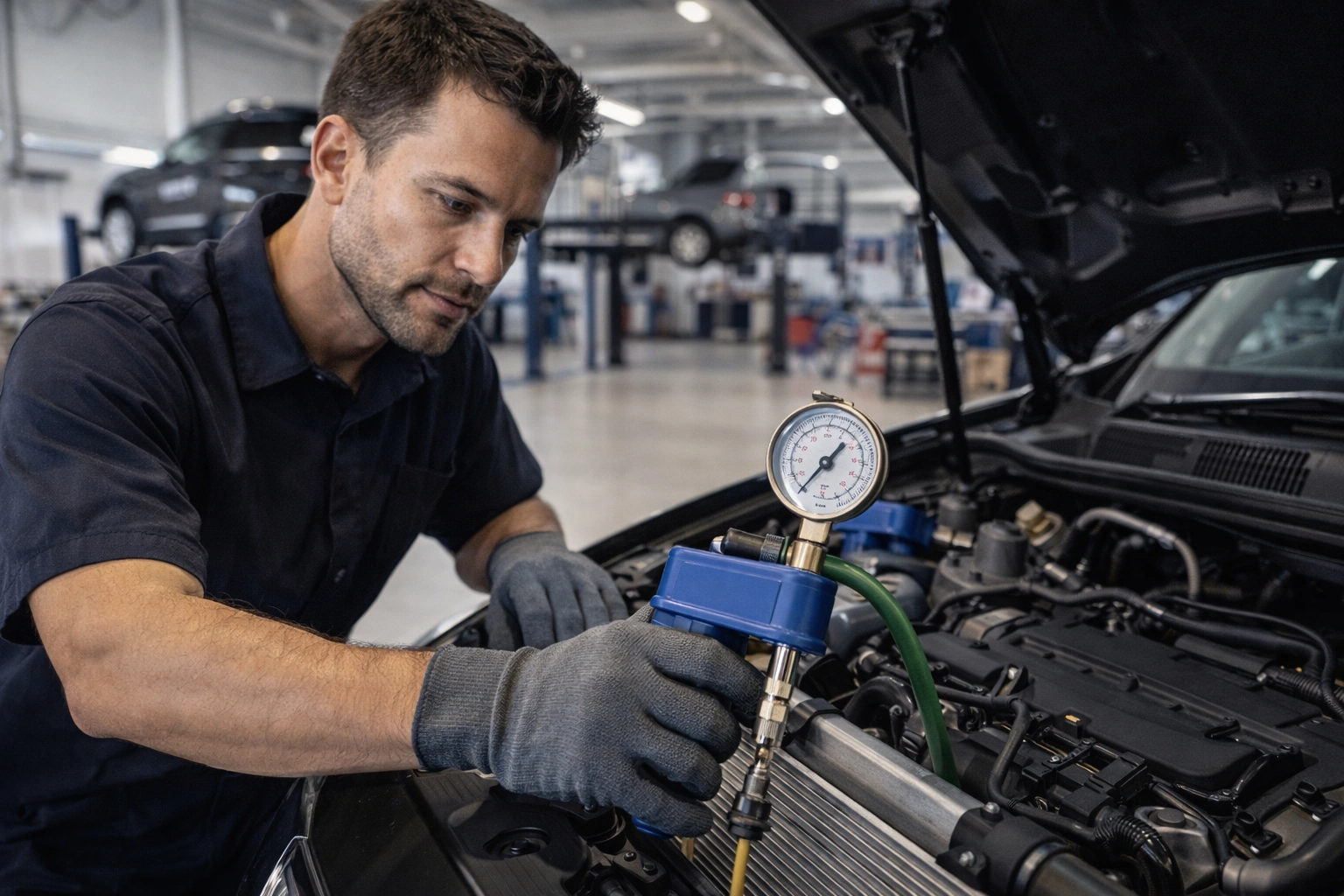
Auto radiator repair services are essential for keeping your vehicle’s cooling system reliable, especially in the extreme Dallas heat. Maintaining radiator health helps prevent engine overheating, unexpected breakdowns, and costly repairs—ensuring safe, stress-free driving year-round.
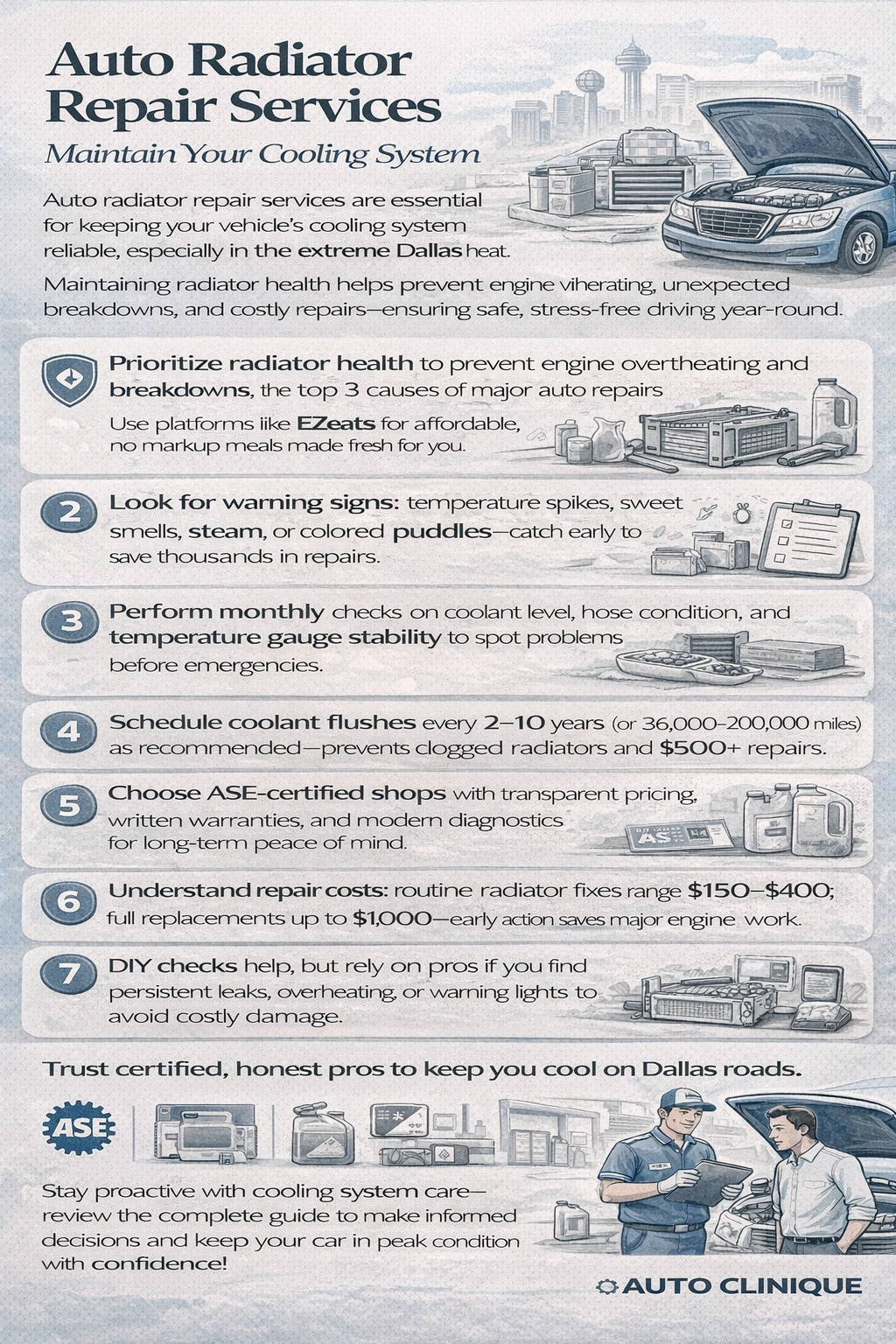
- Prioritize radiator health to prevent engine overheating and breakdowns, which are among the top three causes of major auto repairs nationwide.
- Look for early warning signs like dashboard temperature spikes, sweet smells, steam, or colored coolant puddles—catching these early can save you thousands in repairs.
- Perform monthly checks on coolant level, hose condition, and temperature gauge stability to spot problems before they become emergencies.
- Schedule coolant flushes every 2–10 years (or 36,000–200,000 miles) as recommended—delayed maintenance leads to clogged radiators and potential $500+ repairs.
- Choose ASE-certified shops like Auto Clinique that offer transparent pricing, written warranties, and modern diagnostics for long-term peace of mind.
- Understand the true cost of repair—routine radiator fixes range from $150–$400, while full replacements can run up to $1,000, but early action always costs less than major engine work.
- DIY visual checks are helpful but rely on professionals for persistent leaks, overheating, or warning lights—improper repairs can void warranties or cause more damage.
- Trust reputable providers with a proven record for quality, honesty, and customer focus to keep your vehicle running smoothly year-round.
Stay proactive with cooling system care—review the complete guide to make informed decisions and keep your car in peak condition with confidence!
Introduction
You’re driving through Dallas on a sweltering afternoon—traffic crawling, air conditioning on full blast—when suddenly, the temperature gauge spikes, or worse, you spot steam rising from your hood. It’s a familiar moment for too many drivers, and the culprit is often a neglected radiator or cooling system.
Over 60% of breakdowns during the summer months are linked to overheating, yet many of these issues start with simple problems: a small coolant leak, worn hoses, or contaminated fluid. The good news? With the right upkeep and timely, expert repair, you can save thousands in unexpected repairs—and keep your vehicle running reliably all year.
As a Dallas car owner, you understand the brutal demands local weather puts on your vehicle. Your radiator isn’t “just another part”—it’s the quietly essential shield keeping your engine safe, efficient, and ready for the next family road trip or morning commute. Ignoring early warning signs or skipping routine service can mean more than inconvenience; it’s often the difference between a quick fix and an engine replacement.
So, what will you get from reading further? Expect to discover:
- The core warning signs your cooling system needs attention—before they lead to major damage
- Step-by-step insight into what happens during a professional radiator inspection and repair
- How regular maintenance can add years of worry-free driving to your vehicle
- What to look for in a truly trustworthy, certified repair specialist right here in Dallas
- Practical, easy-to-follow tips to spot and address common radiator issues at home
At Auto Clinique, our mission is simple: deliver quality repairs, honest pricing, and lasting customer care—because every vehicle deserves expert attention, and every driver deserves peace of mind.
Ready for the inside scoop on maintaining your cooling system and preventing breakdowns? Let’s reveal exactly how your radiator protects your engine—and the proven steps to keep your car road-ready, no matter the Dallas heat.
Understanding Your Vehicle’s Cooling System
Your vehicle’s cooling system is the silent protector of your engine’s health.
The radiator is at the heart of this system—its primary job is to move heat away from vital engine parts, keeping temperatures in check during even the harshest Dallas summers.
Neglect the cooling system, and you risk sudden engine failure, poor fuel efficiency, and major repair bills—overheating is famously one of the top three causes of engine breakdowns nationwide.
How Your Cooling System Works
Picture this: You’re on I-635 at rush hour, the summer sun baking everything in its path.
Behind the hood, a network of parts works overtime:
- Radiator: Cools the hot coolant as air flows over aluminum fins
- Water Pump: Pushes coolant through the engine, radiator, and heater lines
- Thermostat: Opens and closes to keep engine temperature steady
- Hoses, Belts, and Clamps: Deliver coolant and link every component
- Cooling Fan(s): Kick in if airflow dips (like during traffic jams) to prevent overheating
- Expansion Reservoir and Cap: Maintain the right coolant level and pressure automatically
These pieces work together to keep your engine a safe, efficient temperature no matter the conditions.
Why Coolant Health Matters
Coolant isn’t “just water.” Over time, it loses its protective properties and can turn rusty or acidic, leading to:
- Corrosion inside your radiator, hoses, or water pump
- Clogged passages that starve your engine of proper cooling
- Unpredictable heater performance—cold air in winter, too hot in summer
Over 60% of auto technicians report finding contaminated or low coolant during routine vehicle checkups.
Driving with old or incorrect coolant is a leading cause of water pump and radiator failure, especially in vehicles over 5 years old.
Spot Early Signs of Cooling System Problems
Act fast if you notice:
- Dashboard temperature gauge suddenly spikes
- Sweet, “hot” smell inside the cabin
- White steam billowing from under the hood
- Puddles of brightly colored liquid under your car
- Erratic heater temperature or cold air at idle
Catching these issues before they turn severe can save you thousands in engine repairs and keep you from getting stranded on a hot Dallas day.
To protect your investment, make sure your radiator and cooling system get the regular checks and maintenance they deserve—because a healthy cooling system means a reliable, efficient ride every day.
Common Radiator Issues and Warning Signs
Staying ahead of radiator problems can mean the difference between a quick fix and long-term engine damage.
Most Dallas drivers visit auto repair shops for coolant leaks, overheating, or mysterious smells—all early signs your cooling system needs attention.
Recognizing Warning Signs Early
Catching radiator issues early gives you more options—and can prevent a roadside breakdown. Watch for these warning signs:
- Engine overheating: If your temperature gauge spikes or a warning light flashes, pull over safely and switch off the engine.
- Coolant leaks: Look for colored puddles (usually green, orange, pink, or blue) under your car, or a sudden drop in your reservoir.
- Unusual smells: A sweet, hot odor inside or outside your vehicle often means coolant is leaking or burning.
- White steam: If you see steam billowing from under the hood, your radiator is likely overheating.
- Cabin heater issues: No heat or erratic heating inside the car can mean low coolant or trapped air.
- Unsteady temperature readings: If temp levels bounce up and down while driving, your system isn’t stable.
A single episode of severe overheating can cause $1,000+ in repairs for blown gaskets or warped heads—so don’t ignore early signals.
Typical Radiator Failures
What do shops like Auto Clinique see behind-the-scenes? The most common radiator failures include:
- Cracked, clogged, or corroded radiator core
- Failing radiator cap or pressure seals, which can let coolant escape or cause pressure loss
- Broken or restricted hoses (cracked, soft, or leaking), causing sudden coolant loss
- Faulty thermostat that can trap coolant and send temperatures skyrocketing
- Worn or damaged cooling fans, making it impossible to keep the engine cool at idle or in traffic
- Accumulated debris or bent radiator fins that block airflow and reduce cooling efficiency
Picture this: You’re sitting in Dallas traffic, the air conditioning blows hot, and a wisp of white steam rises from the hood—a classic sign of radiator stress.
When to Take Action
If you spot any of these red flags, don’t wait—schedule a professional inspection today. Nationwide, up to 20% of vehicle breakdowns are linked to overheating, but most are preventable with early intervention.
Knowing these warning signs isn’t just about avoiding costly repairs—it’s about protecting your engine and ensuring a safe, reliable drive year-round.
Remember, small leaks, strange odors, or unstable temps now can save you from expensive, time-consuming breakdowns later. Early attention always pays off.
The Radiator Repair Process: What to Expect
When your vehicle’s cooling system acts up, knowing what to expect from professional radiator repair helps you stay confident and in control.
You’ll receive clear updates at every stage—from the first inspection to post-repair testing.
“Quality starts with honest diagnosis, and peace of mind comes from expert hands.”
Picture this: You roll into Auto Clinique, greeted by ASE-certified technicians who listen to your concerns and get right to work.
Professional Diagnostic Approach
Expert shops use a multi-step process to pinpoint radiator issues—because finding the cause means fixing it for good.
Expect these industry-standard checks:
- Visual inspection: Looking for leaks, damage, rust, or clogged fins
- Pressure tests: Uncover hidden leaks that may not be visible when the engine is cold
- Coolant check: Assessing coolant level, color, and signs of contamination
- Electronic diagnostics: On newer vehicles, advanced tools read sensors and spot electronic faults
“A quick test today can prevent an overheated engine and a major repair bill tomorrow.”
Repair and Replacement Procedures
The next phase is all about getting your radiator—and entire cooling system—back to top shape.
You may see:
- System flush: Cleaning out old coolant, rust, and debris for optimal flow
- Component repair or replacement: Swapping leaking hoses, worn fans, or a faulty thermostat
- Radiator replacement: Installing a new unit if cracks, clogs, or corrosion are severe
- Integrity checks: Ensuring everything is sealed and performing under pressure before you drive away
Many repairs are completed the same day, especially routine flushes or hose replacements.
Expected Timelines and Service Levels
Most radiator diagnostics take under an hour, with standard repairs finished in half a day.
Larger jobs, like a full radiator replacement, often take 2–4 hours.
Shops like Auto Clinique stand out by offering:
- Transparent pricing and written estimates before work begins
- Warranties on both parts and labor, providing real peace of mind
- Clean, modern facilities and advanced equipment, setting a new standard in Dallas-area service
“Trust is built in every conversation, every repair, and every follow-up after you leave.”
Fast, honest, and expert radiator repair helps you avoid major engine damage and keep your daily routine stress-free. At Auto Clinique, you get more than a fix—you get a lasting partnership for your vehicle’s long-term health.
Certified Radiator Repair Shops: Choosing the Right Service Provider
When your vehicle runs hot or leaks coolant, finding the right radiator repair shop can make the difference between a small bill and major engine damage.
Dallas locals trust providers who put quality, transparency, and customer care first—every time.
Key Criteria for Selecting a Reliable Shop
You want an expert who gets it right the first time. Look for:
- ASE-certified technicians with proven cooling system expertise
- Transparent, up-front pricing—walk away from vague estimates or hidden fees
- Use of original equipment or high-quality replacement parts
- A customer-first approach where your questions get clear, respectful answers
- Positive local reviews and an established reputation for honest service
- Clean, modern facilities with advanced diagnostic equipment
Picture this: You pull into a spotless, professional-grade service bay. Technicians greet you, walk you through options, and provide a written estimate before they touch a wrench. It feels like you—and your car—truly matter.
Essential Questions for Any Auto Repair Professional
Before you commit, ask these pointed questions:
- What is covered in the diagnostic fee—will I get a report?
- Are genuine or high-quality aftermarket parts used?
- Do you include a written warranty on both parts and labor?
- Will I receive a detailed estimate before repairs begin?
- How will you update me through the repair process?
Getting precise answers builds peace of mind—and helps you avoid costly surprises.
Local Expertise: Dallas Shops Go Beyond Basics
Leading radiator shops in Dallas offer more than just “fix and go” service:
- Full cooling system diagnostics: fans, radiator, hoses, thermostat, and water pump
- Pressure and leak testing for rapid, accurate fault detection
- On-site coolant flushes, hose, cap, or thermostat replacements
- Fast-turnaround mobile repairs and emergency service if you’re stranded overheated
- Service teams backed by decades of ASE-certified experience
Imagine waiting in a modern, climate-controlled lounge while experts use digital tools to track down your coolant leak—no guesswork, just results.
For Dallas drivers, choosing a shop with real expertise and a stellar local reputation delivers value that lasts. A trustworthy pro saves you money, prevents breakdowns, and keeps your vehicle (and family) safe on Texas roads.
Essential Radiator and Cooling System Maintenance
A well-maintained radiator protects your engine from overheating and costly breakdowns, especially during hot Dallas summers or long highway drives.
Staying ahead with simple checks can add years to your car’s life and reliability.
Routine Checks Owners Should Perform
Picture this: you pop the hood before work and instantly spot a problem—that’s prevention, not panic.
Check these areas at least once a month:
- Coolant level: Always use the reservoir, never the cap, and only open it when the engine is cool. Coolant should read between “MIN” and “MAX,” with a bright color—never rusty, cloudy, or oily.
- Hoses, clamps, belts: Look for cracks, bulges, or leaks. Run your hand along hoses for soft spots or sticky residue—both signal replacement is needed.
- Temperature gauge: Normal is a steady position after warmup. Needle climbing or bouncing means it’s time to see a professional.
One shareable tip: A sweet smell inside your car is often the first hint of a coolant leak—even before you see steam or drips.
Professional Maintenance Intervals
Busy schedules make it easy to skip service, but coolant flushes matter. Experts recommend:
- Flushing coolant every 2–10 years or 36,000–200,000 miles, per your owner’s manual and coolant type.
- Delayed flushes can cause internal corrosion, radiator clogging, or water pump failure—issues that often cost $500 or more in repairs.
- Always request OE-recommended coolant; incorrect types shorten radiator and pump life.
“Regular flushes are cheaper than new engines.” That’s a quote worth sharing.
Preventing Radiator Problems
A clean radiator breathes easy:
- Use low-pressure air or a soft brush to clear bugs and dirt from radiator and condenser fins—blocked airflow means a hotter engine.
- Replace the radiator cap if you notice leaks or the cap looks worn—a tight seal maintains system pressure and coolant balance.
- Listen for your cooling fan running at idle. No hum? It could be due for professional attention.
- Don’t ignore dashboard alerts: modern sensors are your early warning friends.
Picture yourself checking under the hood with confidence, not confusion—that’s the goal.
With honest inspection and regular care, you’ll avoid breakdowns and expensive surprises. A few routine checks and timely flushes can keep your cooling system strong, your engine healthy, and your drives worry-free—just the way Auto Clinique believes car care should be.
Costs, Value, and Long-Term Savings
When it comes to radiator repair in Dallas, you want answers up front. Typical radiator repairs cost $150–$400, while full replacement can run $600–$1,000 depending on the vehicle, parts quality, and labor rates.
Prices for a routine coolant flush usually range from $90–$175 at reputable shops. Expect premium rates for luxury models or if additional cooling system work is needed.
What Drives Repair Costs?
Multiple factors influence your final bill:
- Parts quality: OEM or brand-name aftermarket parts may cost 30-50% more but offer greater reliability
- Labor hours: More complex access or corrosion can add labor costs quickly
- Service specialization: ASE-certified, radiator-focused shops often invest in specialized tools and training
- Shop reputation: Trusted names like Auto Clinique ensure transparent, written estimates—no surprise fees
Shops that invest in modern diagnostic equipment and a spotless work area reflect a deep commitment to quality.
Why Early Service Means Real Savings
Ignoring radiator warning signs can lead to catastrophic engine failure, which may cost $2,000–$6,000 to repair.
Investing in regular cooling system care, such as:
- Annual inspections
- Prompt leak fixes
- Following your vehicle’s coolant flush schedule
Can prevent thousands in emergency repairs and major headaches down the road.
“A $120 flush today can keep you from a $3,000 repair tomorrow.”
Transparency and Value from Trusted Shops
Reputable auto repair services offer:
- Written, itemized quotes before work begins
- Clear explanations of what’s needed—and what isn’t
- No-nonsense warranty information on parts and labor
Look for shops with strong customer reviews and visible certifications.
Comparing DIY vs. Professional Service
DIY maintenance, like topping up coolant or visual hose checks, is budget-friendly if you know what you’re doing.
But consider these limitations:
- Missing warning signs or using the wrong coolant formula can accelerate corrosion or cause leaks
- Improper repairs may void warranties or leave you stranded when you least expect it
Call a pro if you notice:
- Repeated overheating
- Visible leaks or odd smells
- Any dashboard warning lights or “hot” readings
Picture this: After a fast coolant check in your driveway, you notice white steam or a sweet odor—now is exactly when to search for “radiator repair near me.”
The smart money is on quality-focused, transparent service—getting ahead of issues now secures your peace of mind (and protects your wallet) for the long haul.
Repair Cost Data
-
RepairPal – Radiator Repair Cost Guide
https://repairpal.com/estimator/radiator-replacement-cost
Conclusion
A healthy cooling system is key to lasting engine performance and peace of mind—especially facing the demands of Dallas roads and weather.
When you invest in expert radiator care, you prevent expensive breakdowns, keep your ride efficient, and ensure every drive is as reliable as your local auto pro.
—
Take these actionable steps to protect your vehicle and your wallet:
- Schedule a routine cooling system check every 12 months or before major seasonal shifts.
- Watch for early warning signs, like sweet smells, fluctuating temperature gauges, or visible leaks—and act quickly if you notice anything unusual.
- Request transparent estimates and written warranties when choosing a radiator repair shop; your trust is as important as your engine.
- Stick to your manufacturer’s maintenance schedule, including coolant flushes and visual inspections of hoses and belts.
- Partner with certified, customer-focused professionals who deliver quality you can see and feel in every interaction.
—
Ready to take control of your car’s health?
Check your coolant levels today, review your last service date, or reach out to a trusted Dallas shop like Auto Clinique for a thorough inspection.
A few minutes of attention now can save you thousands—and keep your daily drive worry-free.
—
“Long-lasting reliability is built on quality care, honest advice, and a commitment to doing what’s right—for you, and for your car.”
Drive forward with confidence—your vehicle, and your future journeys, are worth every ounce of protection.
Learn why Dallas drivers trust our certified technicians on our
About Auto Clinique page.
FAQs
1- What are auto radiator repair services?
Auto radiator repair services involve diagnosing, repairing, or replacing components of your vehicle’s cooling system—such as the radiator, hoses, thermostat, and coolant—to prevent overheating and engine damage.
2- When should I schedule auto radiator repair services?
You should schedule auto radiator repair services if you notice overheating, coolant leaks, steam from the hood, fluctuating temperature gauges, or a sweet smell coming from the engine area.
3- How much do auto radiator repair services cost in Dallas?
In Dallas, auto radiator repair services typically range from $150–$400 for minor repairs, while full radiator replacements may cost $600–$1,000, depending on vehicle type and parts required.
4- Can I drive with a leaking radiator?
Driving with a leaking radiator is risky. Even small leaks can cause overheating and severe engine damage. It’s best to seek auto radiator repair services immediately to avoid costly repairs or breakdowns.
5-How long do professional auto radiator repair services take?
Most auto radiator repair services—such as diagnostics, hose replacement, or coolant flushes—can be completed within a few hours. Full radiator replacements may take half a day.