

A structured, thorough post-repair quality control checklist is essential to ensure every vehicle leaves your shop safe, flawless, and ready for the Dallas roads. Prioritizing transparency, precision, and customer trust sets your service apart and prevents costly comebacks.
- Rigorous post-repair inspections reduce comebacks by up to 70% and are proven to prevent hidden defects, missed safety issues, and customer dissatisfaction.
- Step-by-step digital checklists ensure every aspect—panel alignment, electronic systems, and paint finish—meets both OEM and industry standards like IATF 16949 and FMVSS 208.
- Photo documentation and technician sign-offs not only support warranty claims and insurance audits, but also build customer trust through complete transparency.
- Dedicated QC staff and continuous training separate quality assurance from quality control, creating clear accountability and eliminating oversight.
- Advanced tools like DVI apps, AI error detection, and live customer updates streamline workflow and offer real-time confidence in every repair.
- Thorough mechanical, electronic, and safety feature checks catch issues—from loose bolts to sensor failures—before they become expensive liabilities.
- Consistent road tests using controlled routes validate ride quality, handling, and ADAS system performance, delivering true peace of mind on delivery.
- Investing just 30–90 minutes per QC pays off by reducing warranty claims, minimizing comebacks, and strengthening your reputation for Expert Auto Repair, Trusted Service.
Implementing these best practices ensures your quality control checklist delivers lasting reliability, customer satisfaction, and trusted results—mile after mile. Dive into the full article for actionable QC frameworks and tools to elevate your shop’s standards today.
Why a Post-Repair Quality Control Checklist Matters
Imagine reclaiming your freshly repaired car—only to spot a subtle paint mismatch or, worse, receive a dashboard warning light days later. For too many Dallas drivers, sloppy post-repair checks turn expert fixes into new frustrations, undermining trust where it matters most.
Every year, up to 1 in 6 vehicles is returned to the shop for undetected repair flaws that could have been avoided with a thorough final inspection. At Auto Clinique, we know that a missing checklist step isn’t just a glitch—it’s a breach of safety, value, and your peace of mind.
That’s why post-repair quality control isn’t an afterthought for us—it’s our promise to every customer:
- You leave with a safer, fully road-ready vehicle—nothing overlooked, from sensor calibrations to seamless paint.
- Transparent checklists document each fix, so you see exactly what’s been inspected, repaired, and verified.
- Fewer callbacks, fewer surprises—just pure driving confidence backed by expert eyes.
As Dallas roads and car tech become more complex, the stakes—and your expectations—have never been higher. Whether you own a family sedan, work truck, or performance import, reliable quality control is what transforms a good repair into a lasting investment.
In the sections ahead, you’ll discover:
- Why a structured post-repair checklist is critical for safety, satisfaction, and legal compliance
- The step-by-step process that top auto shops use to spot issues before they become headaches
- Practical tips for visual, mechanical, and electronic inspections that keep your car’s value and your loved ones protected
Every detail checked, every standard met—because at Auto Clinique, Expert Auto Repair, Trusted Service isn’t just a tagline; it’s our commitment to you.
Curious how one final quality control step could make all the difference for your next repair? You’ll find out exactly why safety and satisfaction start long before you turn the key.
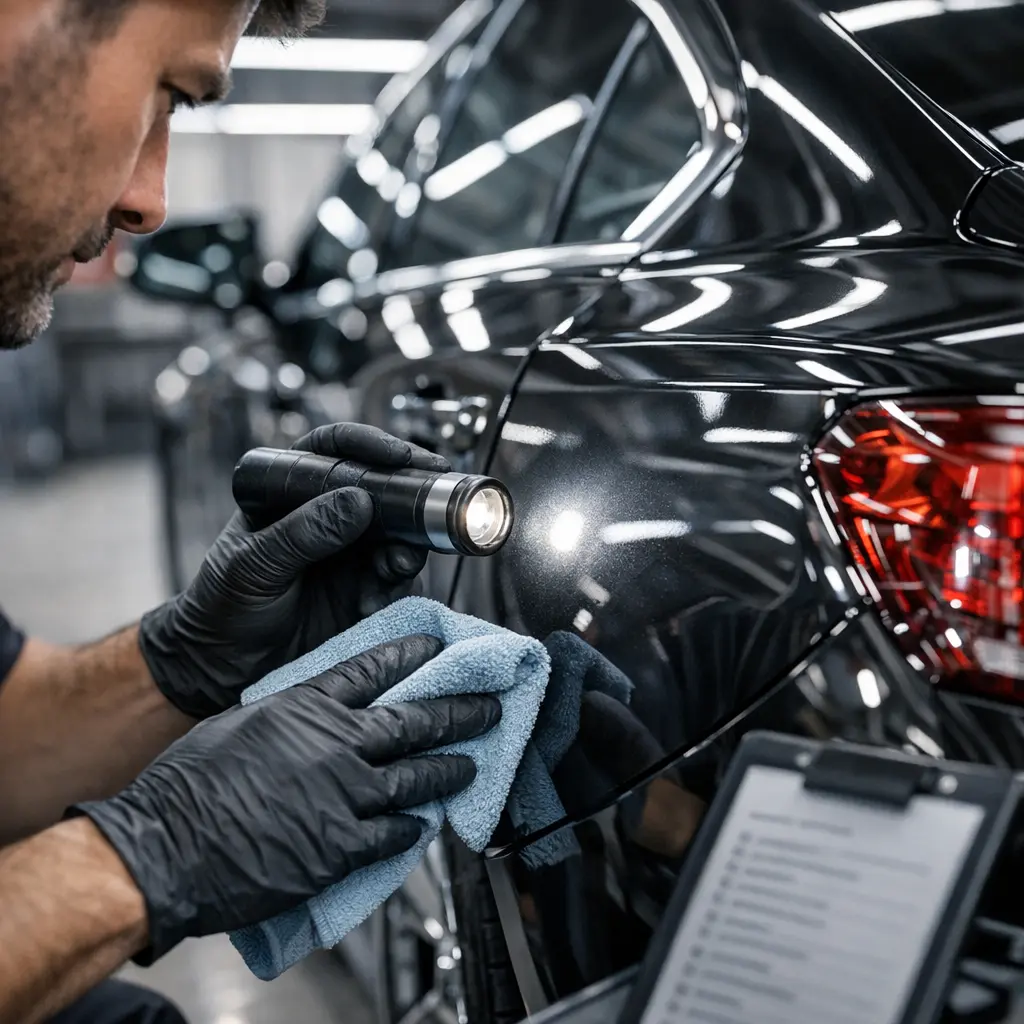
The Importance of Post-Repair Quality Control
A structured post-repair inspection is the difference between a repair that feels seamless and one that disrupts your life with avoidable issues.
For every vehicle owner in Dallas, it’s not just about looking good—it’s about safety, lasting value, and peace of mind.
Let’s break down why post-repair quality control is not optional but essential.
Why Every Step Matters
Missing a single checklist step can lead to:
- Customer dissatisfaction from visible flaws or functional issues
- Safety hazards if parts, fasteners, or safety systems aren’t verified
- Costly “comebacks” that mean extra days without your car and higher shop expenses
Picture this: you pick up your vehicle after a collision repair, and a week later, a paint bubble appears or a sensor fails. These small lapses can spiral into:
- Increased warranty claims—1 in 6 returns are due to overlooked post-repair issues
- Negative reviews that can last online forever
- Hidden defects that impact accident safety or resale value
“A detailed post-repair inspection prevents those dreaded call-backs and keeps your car—and reputation—safe.”
More Than Just Looks: Legal and Safety Risks
Failing QC could mean:
- Non-compliance with standards like IATF 16949 or FMVSS 208
- Legal liability from unrepaired airbags or compromised welding
- Loss of insurance partnerships for repeat violations
In today’s market, shops that skip final checks fall behind. According to industry research, thorough QC reduces repeat repair costs by up to 35%.
“Every overlooked flaw is a potential lawsuit, a lost customer, or a dent in your bottom line.”
https://theautoclinique.com/wp-content/uploads/2026/02/c6af6c2a-967c-4e4e-a4d8-ac3603a5d2dc.webp
Trust Built on Transparency and Integrity
At Auto Clinique, integrity and customer focus guide every inspection.
Our transparent QC process:
- Shows every customer exactly what’s been checked, fixed, and verified
- Strengthens trust—because you know your vehicle is road-ready and safe
- Supports honest pricing, with no surprises or last-minute add-ons
“Clear quality checks are how we make expert auto repair feel personal and reliable.”
When quality control is prioritized, the result is a vehicle that feels—and functions—like new. The real takeaway? QC isn’t just part of the process; it’s a promise to every vehicle, every time.
Framework for Post-Repair Quality Control
A structured post-repair quality control process is the heart of trusted auto body service.
Every successful repair starts with clear, thorough documentation—think pre-repair photos, original work orders, and a written record of all damaged areas. This foundation helps ensure every promised fix is verified at delivery.
Step-by-Step Quality Control Process
Directly after paint or body repairs are finished, quality control kicks off with a series of standardized checks.
Shops like Auto Clinique follow a reliable, step-based workflow to prevent anything from slipping through the cracks:
- Reference all original documentation, including:
- Pre-repair photos and inspection notes
- Manufacturer guidelines and insurance requirements
- Use digital vehicle inspection (DVI) apps to create and complete live checklists for:
- Repair area verification
- Parts installation and fitment
- Paint blending and finish consistency
Consistent use of checklists ensures nothing gets missed, protects against costly “comebacks,” and streamlines audit preparation.
Key Phases of Final Inspection
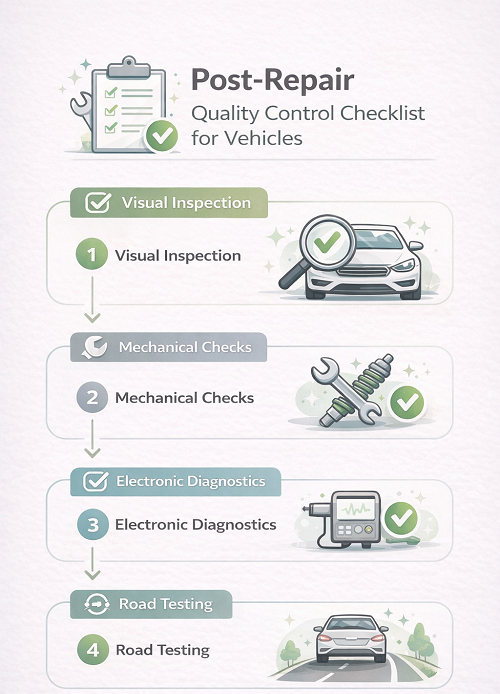
To avoid skipping crucial steps, the process is broken down into four sequential inspection phases, each requiring sign-off:
- Initial Visual Review: Look for panel straightness, gap uniformity, and obvious flaws.
- Mechanical and Functional Evaluation: Confirm fasteners, hardware, fluid levels, and system operations.
- Cosmetic Checks: Inspect for paint match, overspray, trim reinstallation, and surface quality.
- Road Test Validation: Drive the vehicle and check for abnormal noises, warning lights, or handling issues.
Each phase is marked as “passed” in the DVI app, creating a trackable digital trail.
Aligning with Manufacturer and Insurance Requirements
Industry-leading repair shops don’t just rely on experience; they rigorously match each repair to OEM and insurer benchmarks.
- Check benchmarking against IATF 16949 (defect prevention), ISO 9001 (consistent inspection), and FMVSS/UNECE safety standards.
- Digital records allow quick proof of quality for warranty claims, customer questions, or regulatory audits.
“Quality isn’t a final polish; it’s every careful checkpoint along the way.”
Visual and Process-Driven Scenarios
Picture a technician moving down a digital checklist—measuring gaps, snapping photos, confirming torque specs, and uploading results before a manager signs off. This transparent, multi-step approach delivers confidence to both staff and customers.
A robust, sequential quality control system minimizes mistakes, guarantees every benchmark is met, and demonstrates the integrity Dallas customers expect from expert auto repair. Thorough documentation and a phase-based inspection are your two most reliable tools for delivering trusted results—every time.
Comprehensive Vehicle Area Verification
A thorough Post-Repair Quality Control Checklist requires complete verification of every repaired vehicle area before delivery. Detailed inspections help identify hidden defects, confirm repair accuracy, and ensure the vehicle meets both safety and cosmetic expectations.
Visual and Structural Inspection
The heartbeat of any top-tier repair job is a thorough inspection of every repaired or replaced panel, frame rail, and welded joint.
Begin with a detailed walk-around and zero in on:
- Panel alignment: Confirm even gaps and flush fit with neighboring body lines—picture the satisfying “click” when a door closes just right.
- Structural components and welds: Use OEM specs to check that seams, welds, and reinforcements are solid, with no cracks, rough edges, or missed spots.
- Measurement tools/templates: A digital gap gauge or alignment template quickly reveals hidden deviations the eye might miss.
For paint, look from different angles under bright light and inspect for:
- Paint match, blend, and finish: Colors should be seamless; gloss consistent with the original finish.
- Defects such as overspray, peeling, or orange peel texture—a single spot can signal a rushed job.
- Visible issues like dust nibs, runs, or distinct paint edge lines.
A single misaligned panel or rough weld can undo the trust built by a flawless paint job.
Documentation and Parts Verification
Never underestimate the power of clear records. At Auto Clinique, every repaired area is cross-referenced against the original estimate, photos, and technician notes.
Check off these essentials:
- Inspect installed parts for authenticity—OEM or approved alternatives only.
- Ensure all fasteners, clips, and seals are present and correctly positioned.
- Identify any replaced parts that legally belong to the customer and prepare them for return.
Document with precision:
- Photograph each verified section for traceability—an industry trend that nearly 85% of Dallas auto shops now follow.
- Review signatures or technician sign-off at every checkpoint, not just the final delivery.
Think of your documentation as the “receipt for excellence”—ready for insurance audits or manufacturer questions.
Actionable Takeaways
- Use a physical or digital checklist—skipping even a single step risks a costly comeback.
- Insist on photos and verification at every phase to build customer trust and meet legal standards.
- Share “before and after” panels visually; customers love seeing tangible proof of care.
Systematic area inspections don’t just catch defects—they elevate your reputation and keep customers returning. For every Dallas driver, it’s the difference between ordinary and “wow, they truly cared for my car.”
Functional and Performance Checks
Mechanical Systems Assessment
When a vehicle leaves the body shop, every bolt, seal, and fastener should feel like it just came off the factory line.
A single missed connection or loose bolt can turn a simple repair into a safety risk, so start by checking all:
- Fasteners, gaskets, and seals for tightness and secure fit
- Replacement hardware for compliance with original manufacturer specifications
- Suspension, steering, and brakes, ensuring each system operates smoothly and quietly
Small details like correct torque values and leak-free gaskets are what separate expert auto repair from the rest.
You’ll want to:
- Check all fluid levels (oil, coolant, brake, and power steering)
- Run systems for abnormal noises or resistance
- Engage seatbelts, test airbags, and verify all sensor-based safety features using a formal checklist
“Picture this: Every key safety feature, from your ABS to your airbags, responds immediately—because a trained eye confirmed nothing is left to chance.”
Electrical and Electronic Systems Testing
Today’s vehicles pack more technology than ever, and each feature deserves a spot on your post-repair checklist.
You should perform a system sweep of:
- Headlights, brake lights, turn signals, and interior illumination
- Automatic windows, sunroofs, and electronic mirrors
- Infotainment, navigation, and wireless charging modules
- Advanced safety systems (blind-spot detection, backup cameras, lane keeping)
For cars packed with high-tech features, some shops now run EMC (ISO 11452) or environmental tests (ISO 16750) to verify that repairs won’t disrupt electronic communication or sensor performance.
Always scan the dash for warning lights or stored diagnostic trouble codes:
- Resolve any alerts before delivery
- Document findings and clear codes using shop-approved diagnostic tools
“One diagnostic scan can reveal a hidden issue you can’t see—but your customer will thank you for catching.”
The Essential Takeaway
A rigorous mechanical and electronic functional check not only keeps your shop’s work bulletproof, but reassures your customer that their vehicle is safe and ready for Dallas roads.
Shareable insight: “Every completed checklist means one more worry-free drive—and one stronger reputation for your repair team.”
A structured, transparent QC process is the difference between a quick fix and a trusted repair.
Paint, Cosmetic, and Detailing Evaluation
A professional Post-Repair Quality Control Checklist must include a detailed paint, cosmetic, and detailing evaluation before vehicle delivery. Even structurally perfect repairs can fail customer expectations if paint quality, finish consistency, or detailing standards are overlooked.
Paint Quality and Blending
Every quality repair starts with a close look at the paint finish—the part everyone sees first.
Checking color consistency is essential: even the smallest shade difference can disrupt a seamless look. Stand six feet back and walk around the vehicle in natural daylight to spot discrepancies in hue, depth, or gloss.
A high-quality finish should offer a uniform gloss, free from any dull areas or odd reflections. Use tools like gloss meters when needed, but trust your eyes—customers sure will.
Spotting a flawless blend means you’ll see no obvious “edge” or boundary where new paint meets the old. Acceptable blending should make the repair invisible from any angle.
Watch for these common defects:
- Runs or sags – Drips indicate poor application
- Orange peel – A bumpy, uneven appearance instead of smooth glassiness
- Dust nibs – Tiny grit stuck under the clear coat, rough on touch
- Edge lines – Faint borders where masking tape was left too long
“A well-blended panel is practically invisible—poor blends are the first thing any customer will notice.”
Exterior and Interior Detailing
Finishing touches mean more than just a wash. Double-check for even the slightest residue left behind.
A clean vehicle says everything about a shop’s standards—invest 15–30 extra minutes here and you’ll boost first impressions.
Inspect all these areas before delivery:
- Residue removal – No polish marks, compound dust, or sanding traces
- Complete polishing – Uniform shine across door jambs, trunk gaps, and all visible edges
- Trim and emblems – Proper reinstallation, aligned and securely attached
- Overspray check – Run a hand over glass, rubbers, and plastics for texture changes; overspray feels rough
- Contamination – No paint dots, smears, or tape lines on windows, light lenses, or interior panels
- Protected areas – Verify glass, lights, trim, and rubbers show no new scratches or residue
Picture this: A customer runs their hand along the painted edge—smooth, glossy, no bumps or gritty spots—then smiles and tells friends about the flawless finish.
The Value of Detail-Driven Quality Checks
A rigorous paint and detailing inspection is your last, best chance to catch the small stuff before it becomes a big deal.
Shops that prioritize this step see fewer comebacks and more five-star reviews.
Customers remember—and talk about—the moment their car looked showroom-perfect again: “That fresh, just-repaired shine makes it feel brand new.”
In short, if you want your work to stand out, invest as much effort in the little details as you do in the big repairs. That’s quality you can see and trust.
Road Test and System Validation
A complete Post-Repair Quality Control Checklist is not finished until the vehicle passes a controlled road test and full system validation. Even after successful visual inspections and structural repairs, real-world driving conditions are essential for identifying hidden problems that static inspections may miss.
Controlled Conditions for Absolute Confidence
A thorough road test is the critical final step before returning your car after repairs.
Our experienced testers use a controlled route—carefully selected for city, highway, and stop-and-go segments—mirroring real Dallas driving conditions.
Picture this: your vehicle glides onto the familiar loop as our technician listens for even the faintest unusual sound.
We only sign off when every detail is inspected under authentic, day-to-day stresses.
Road Test Checklist: What Experts Examine
Every post-repair road test follows a checklist to ensure precision and safety:
- Vehicle handling: Does the car track straight and feel predictable on turns and lane changes?
- Ride quality: Any excessive harshness, vibrations, or unusual feedback over bumps?
- Braking: Is the stopping power smooth and balanced? Any noises or pedal pulsing?
- Noise/vibration: Are there rattles, whines, or wind leaks not present before the repair?
- System calibrations: For tech-heavy vehicles, Advanced Driver-Assistance Systems (ADAS) and safety features are tested for correct function; think lane keep assist, adaptive cruise, collision warning.
The goal is zero surprises and zero warning lights—just safe, smooth performance.
“Schedule a road test after every major repair—the difference between a great job and a comeback is in the details.”
Final Validation: Results and Rechecks
After the drive, technicians:
- Document the outcome with notes and, if needed, photos—creating a transparent record for every customer.
- Address new findings—any squeak, warning light, or subtle flaw is investigated on the spot.
- Immediately reinspect under-hood areas for leaks, confirm fluid levels, and scan for error codes or check engine lights.
Every vehicle must meet both OEM benchmarks and our own strict shop standards before keys return to your hand.
This process translates directly to fewer future issues—industry data shows thorough post-repair checks can cut comebacks by up to 40%.
A professional road test is more than a spin around the block—it’s our commitment to your safety, vehicle longevity, and the peace of mind you expect from Dallas’ most trusted auto repair team.
Aligning with Automotive Quality Standards
A professional Post-Repair Quality Control Checklist is only effective when it aligns with recognized automotive industry standards. Modern automotive quality assurance systems use globally accepted repair protocols to improve safety, consistency, compliance, and long-term vehicle reliability.
Industry Standards That Drive Quality
When it comes to post-repair quality control, industry standards turn routine checks into reliable results.
Shops committed to safety and customer satisfaction should align daily practices with globally recognized protocols used by leading repair facilities.
These standards ensure every vehicle leaves the shop as safe, precise, and dependable as when it first rolled off the line.
The most relevant post-repair QC standards include:
- IATF 16949 – Focuses on defect prevention, process efficiency, and supplier quality across automotive repairs
- ISO 9001 – Supports consistent, documented quality checks for repeatable excellence and trust
- ISO 26262 – Covers functional safety in electrical/electronic systems, crucial for new vehicle tech
- FMVSS 208 – Governs crashworthiness and occupant protection, a legal requirement for delivery in the U.S.
- AIAG CQI-15 – Ensures welding meets strict OEM durability and safety benchmarks
- VDA 6.3/6.5 – Audits for process consistency and product traceability at every QC stage
What the Standards Mean for Your Car
Each standard shapes everyday shop routines:
- Checklists and inspection templates are modeled after IATF 16949 and ISO 9001, so nothing is missed.
- Welding inspections for body panels follow the CQI-15 and VDA 6.5 process, using measurement tools for even the smallest deviations.
- Vehicles with advanced driver-assistance systems (ADAS) get safety verifications guided by ISO 26262, including electronic diagnostics and sensor tests.
- To meet FMVSS 208 and UNECE rules, repairs are validated for crash safety, sometimes requiring specific component or seatbelt checks.
Picture this: A repair technician snapping photos of their completed work, documenting every step in a digital app, and running a live diagnostic scan—all as part of robust, standardized compliance.
Real-World Application and Trends
Today’s Dallas repair shops routinely use digital vehicle inspection (DVI) apps to document compliance and provide transparent records for insurance and warranty audits.
- Over 80% of leading U.S. body shops now use electronic documentation to support post-repair audits and customer transparency.
- Shops that rigorously apply IATF 16949 have 20-30% fewer repeat repairs, cutting costs and boosting reputation.
- Modern QC trends include using AI defect-detection, machine vision, and real-time feedback for process improvement.
“Every signature on your QC checklist is a promise—we meet or exceed the world’s toughest standards.”
“Professional post-repair inspections are your frontline defense against missed defects and surprise comebacks.”
Adhering to recognized QC standards doesn’t just keep you compliant—it sets the stage for trust, durability, and customer peace of mind with every repair. This commitment makes the difference between a routine fix and a repair you can rely on, every mile ahead.
Implementation Best Practices for Quality Control
A reliable Post-Repair Quality Control Checklist depends on more than inspection forms alone—it requires trained teams, clear accountability, and consistent quality standards across every repair stage. Strong automotive quality assurance systems help repair facilities reduce costly errors, improve workflow efficiency, and maintain customer trust.
Team Roles and Training
A clear distinction between quality assurance and quality control sets the foundation for reliable repairs.
- Quality assurance is process-focused, ensuring every repair step follows standardized best practices from the start.
- Quality control is inspection-focused, examining each completed repair for accuracy before the customer receives their vehicle.
For lasting results, designate dedicated QC staff—separate from the team that performed the actual repairs—and document inspection sign-offs for every car.
- Assign individual responsibilities for final checks to prevent overlooking key steps.
- Provide continuous training in OEM repair procedures, current industry standards, and insights from customer satisfaction surveys.
Picture this: A technician walks the final checklist with a tablet, referencing photos from both pre- and post-repair, ensuring every step matches the shop’s promise.
“Quality control is more than a checklist—it’s peace of mind delivered with every vehicle.”
Leveraging Technology and Digital Tools
Embracing technology transforms quality control from a routine task into a competitive advantage.
- Use digital checklists for methodical assessments and photo documentation for audit trails; nearly 80% of leading shops now use DVI apps for transparency.
- Advanced options like machine vision defect detection, AI-driven error prediction, and integrated shop software minimize human error and streamline reporting.
- Connect customers with real-time post-repair status updates and feedback tools via digital platforms for total transparency.
Visualize a live notification ping on your phone—“Your vehicle has passed its QC check and is ready for pickup”—complete with progress photos.
“Transparency and technology build trust—every step should be clear both inside the shop and out.”
Continuous Improvement and Customer Focus
Quality control isn’t a finish line; it’s a loop of ongoing improvement that puts customers first.
- Routinely analyze QC data and inspection trends to refine shop processes and eliminate recurring mistakes.
- Confirm every customer interaction matters: integrate post-delivery calls or surveys, turning each review—positive or constructive—into actionable insight.
- Stand by your brand’s promise: honest pricing, open communication about any new repair needs, and making sure every vehicle leaves better than when it arrived.
Consider a Dallas family returning for their annual inspection—not because of an issue, but because they trust your commitment to quality.
“Every post-repair checklist is a promise delivered—done right, it’s why customers come back and refer friends.”
Proactive team roles, cutting-edge tech, and continuous improvement form the backbone of effective post-repair QC. By making each process transparent and always prioritizing customer trust, you anchor your shop’s reputation for quality and integrity—mile after mile.
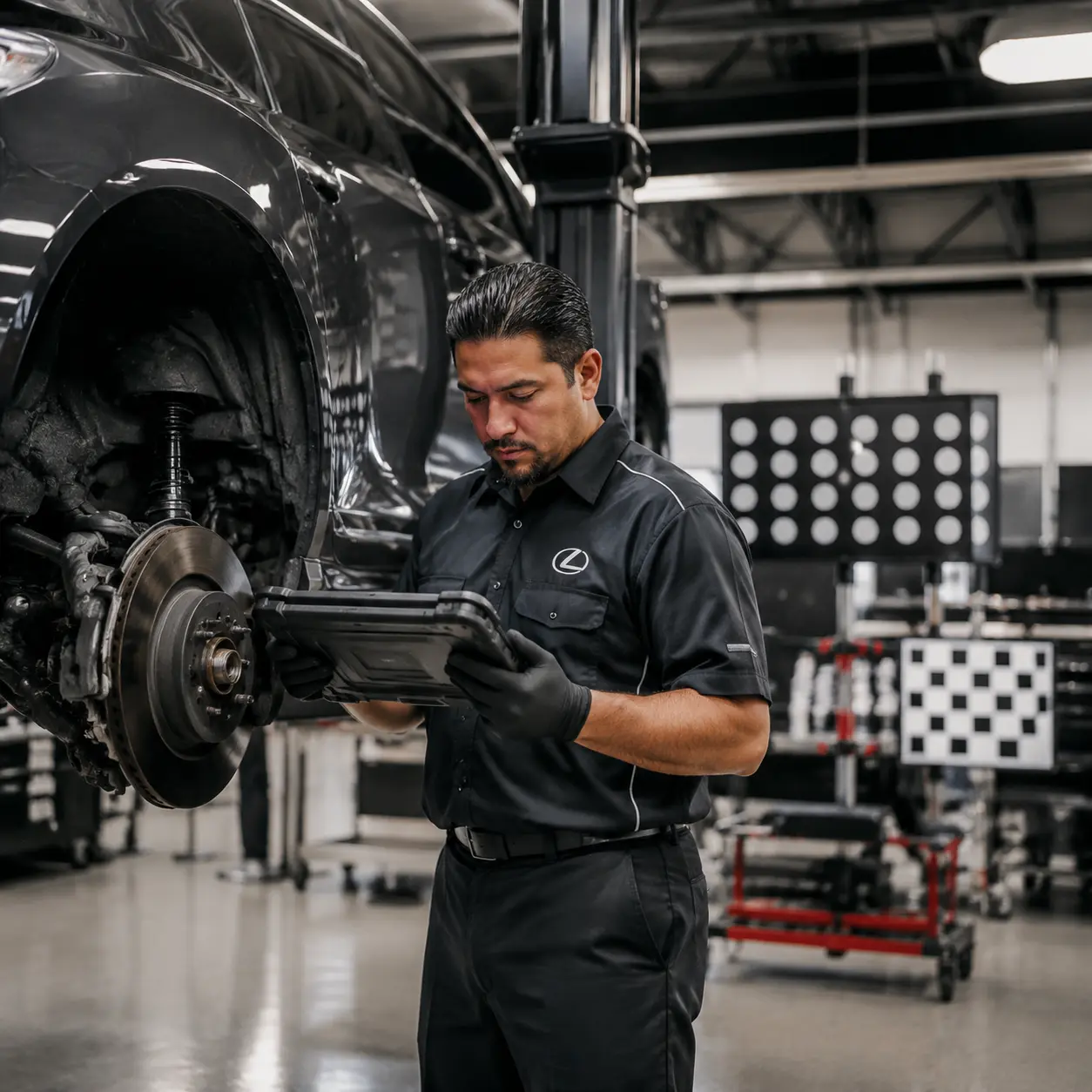
Cost, Time, and Efficiency Considerations
A strong Post-Repair Quality Control Checklist protects both workflow efficiency and repair accuracy. In modern auto body repair quality control, balancing speed with precision is essential because rushed inspections often lead to expensive comebacks, customer dissatisfaction, and failed vehicle safety inspection after repair procedures.
Balancing Quality with Workflow
In post-repair quality control, speed and precision must work together—never compete.
A thorough inspection after refinishing typically adds 30-45 minutes per vehicle for a basic review, and up to 90 minutes for complex repairs involving electronics or frame work.
Picture this: A sedan delivered ahead of schedule because a rushed final check missed an unplugged sensor—resulting in a costly comeback and, often, a lost customer.
To maintain efficiency without cutting corners, leading shops in Dallas:
- Use digital vehicle inspection (DVI) apps for checklist speed and instant data capture
- Assign QC checkpoints in the workflow so each tech verifies only what’s within their expertise
- Schedule dedicated “QC windows” at the end of each job, avoiding last-minute scrambles
- Build in cross-checks for critical tasks, especially structural and safety system areas
According to industry research, an extra $30–$50 per repair in post-repair QC is common, but the return is big: Shops see up to 70% fewer warranty claims and dramatically fewer comebacks when final inspections are consistent.
“Investing twenty extra minutes today often saves several hours—and a customer’s trust—tomorrow.”
Avoiding Common Pitfalls
Rushed handovers and overlooked details cause most post-repair headaches.
The most commonly skipped QC steps include:
- Hidden welds that are improperly finished or left unsealed
- Electronic subsystems with lingering diagnostic codes
- Hard-to-inspect zones like wheel wells, underbody, or behind trim
To reduce miss rates and protect your reputation:
- Use a second set of eyes: Have a tech unfamiliar with the file perform the final check
- Rotate periodic “blind audits” led by management to spotlight process gaps
- Encourage techs to slow down on “repeat” jobs—they’re often rushed due to routine
Quick tip: “Slow is smooth, smooth is fast.” Quality isn’t accidental—it’s intentional at every step.
A proactive approach—using checklists, digital tracking, and peer review—turns QC from a last-minute hurdle into a brand-building asset. Prioritize consistency, document each inspection, and your promise of Expert Auto Repair, Trusted Service gains more value with every vehicle delivered.
National Highway Traffic Safety Administration (NHTSA)
Conclusion
A thoughtful, thorough post-repair quality control process is more than a checklist—it’s your promise of safety, value, and total peace of mind every time you get behind the wheel.
By prioritizing precision at every stage, you ensure that each repair endures, enhances trust, and delivers unparalleled satisfaction for Dallas drivers.
Key Takeaways for Immediate Implementation:
- Adopt digital or physical QC checklists to guarantee nothing gets overlooked in your process.
- Document every repair step and verification with photos and technician sign-offs for transparency and accountability.
- Schedule a structured road test after each major repair to catch hidden issues before they become headaches.
- Align every inspection with top industry standards, such as IATF 16949 and ISO 9001, for unmatched reliability.
- Foster a culture of continuous improvement by using customer feedback and team training to refine your approach.
Next Steps:
- Walk through your current post-repair process—identify one area where you can tighten QC today.
- Start using a digital vehicle inspection app and photograph each inspected area for stronger documentation.
- Share your commitment to rigorous QC with customers—use transparency as a competitive advantage.
- Schedule team training on the latest quality and safety standards to keep your entire shop ahead of the curve.
Your investment in meticulous quality control transforms routine repairs into lasting trust. Every verified detail, every transparent step, and every commitment to excellence sets you apart as Dallas’s go-to for expert auto repair.
“Quality isn’t just in what you fix—it’s in what you prove, document, and deliver. Show your customers and your team that your standard is nothing less than excellence—every car, every mile, every time.”
For a deeper look at collision safety planning, explore our guide on vehicle safety standards after auto repair.
FAQs
What is a post-repair quality control checklist?
A post-repair quality control checklist is a structured inspection process used after vehicle repairs to verify safety, performance, appearance, and compliance with OEM and industry standards before delivery to the customer.
Why is a post-repair quality control checklist important?
It helps identify hidden defects, prevent safety issues, and reduce costly comebacks. A proper post-repair quality control checklist ensures the vehicle is road-ready, compliant, and meets customer expectations.
What areas are covered in a post-repair quality control checklist?
A complete checklist typically includes:
-
Visual and structural inspection
-
Mechanical and electronic system checks
-
Paint quality and cosmetic evaluation
-
Safety system validation (airbags, ADAS, sensors)
-
Final road testing and performance verification
How long does a post-repair quality control inspection take?
Most inspections take 30–45 minutes for standard repairs and up to 90 minutes for complex collision or electronic repairs. This time investment significantly reduces future repair issues.
Can a post-repair quality control checklist reduce comebacks?
Yes. Shops that consistently follow a documented post-repair quality control checklist report up to 70% fewer comebacks, along with fewer warranty claims and higher customer satisfaction