
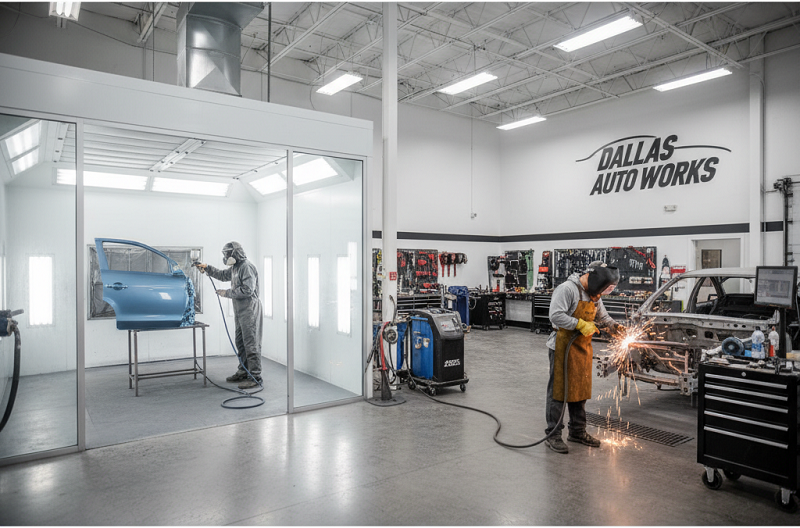
Choosing the right paint and body repair tools is the foundation of safe, long-lasting, and professional auto service. Whether you’re a Dallas DIYer or running a full shop, quality equipment and strong organization set you apart. Here are the most actionable insights for achieving expert results and repeat customer trust:
- Invest in core tool categories—hand tools, air tools, welding equipment, painting gear, and safety essentials—to ensure reliable, professional repairs every time.
- Prioritize durable, ergonomic hand tools and maintain them with regular cleaning and organized storage for longer tool life and fewer replacement costs.
- Upgrade to air and power tools like sanders and grinders for faster, more precise repairs, and always maintain your compressor system for consistent performance.
- Leverage specialized welding and frame straightening equipment for larger structural repairs, and add paintless dent repair tools to efficiently fix minor dings and hail damage.
- Select high-quality paint equipment—including HVLP spray guns, inline filters, and paint booths—for consistently smooth, showroom-ready finishes.
- Implement essential safety measures with protective gear—NIOSH-approved respirators, gloves, steel-toe boots, and auto-darkening helmets—to safeguard both your team and investments.
- Organize your workspace with rollaway toolboxes and shadow boards to streamline workflow and reduce costly mistakes, emphasizing a clean, professional shop environment.
- Choose tools based on frequency of use and shop needs, favoring reputable brands and warranty coverage; regular maintenance and smart upgrades maximize value and performance.
Mastering your tool arsenal and shop setup is the fastest path to top-tier results, customer trust, and lasting repair quality. Dive into the full article for detailed checklists and expert tips to take your auto repair game to the next level.
Why Paint and Body Repair Tools Matter for Professional Results
Ever wondered why one Paint and Body Repair job lasts for years while another starts peeling or rusting after only a few months? The difference almost always comes down to the quality of the paint and body repair tools, auto body repair equipment, and professional repair methods used behind the scenes.
In a city where roads throw daily challenges at your car, a minor fender bender or dent is never far away. Dallas drivers know the sting of seeing their vehicle less than perfect. But here’s the reality: The right gear is your ticket to safe, seamless, and long-lasting repairs, whether you’re a hands-on owner or trust a shop to handle it all.
If you’ve ever felt unsure which tools are actually essential, and which are just upsells, you’re not alone. Choosing wisely means:
- Top-notch quality you (and your passengers) can count on
- Efficient, precise repairs—getting your car back on the road, looking better than ever
- Total transparency, so you know exactly where your investment goes
At Auto Clinique, we believe honest workmanship starts with honest, reliable tools. It’s about more than fixing what’s broken—it’s about restoring your peace of mind, one panel at a time.
This guide breaks down the essentials every Dallas vehicle owner or shop should know, focusing on:
- Foundational hand tools for safe, effective repairs
- Power and air tools that speed up the job without sacrificing precision
- Specialized equipment for complex bends, paintwork, and paintless dent fixes
- Critical safety gear to protect both people and property
- Shop organization methods that save time and prevent mistakes
You’ll see how investing in the right equipment reflects our core values: quality, integrity, and a customer-first approach. Each recommendation comes backed by years of shop-floor expertise and a deep commitment to trusted, transparent service.
Ready to discover how a well-equipped garage (or professional shop) delivers repairs that stand the test of Dallas’ busiest roads? Let’s take a closer look at the foundation of any successful paint and body job—the right tools, in the right hands.
Understanding the Fundamentals of Paint and Body Repair Tools and Equipment
Successful paint and body repair starts with the right tools—period. Your toolkit decides if repairs are safe, durable, and professional grade, whether you’re working in a garage at home or running a full Dallas shop. Think of it this way: high-quality tools are the foundation of reliable results and long-term customer trust.
A complete repair setup is built around five core tool categories:
- Hand Tools: Your day-to-day essentials for disassembly, prep, and finishing
- Air Tools: Power-driven options for fast, high-precision work
- Welding & Structural Equipment: For repairs that go beyond surface-level fixes
- Paint & Finishing Equipment: The secret to showroom-ready paintwork
- Safety Essentials: Protecting people and property, every single step
Choosing the right tools isn’t just a technical choice—it’s an act of quality, integrity, and genuine customer care. Home workshops might start with the basics, but larger shops need advanced gear like welders and paint booths for consistent, high-caliber results.
The tools you choose become a statement: “We value honest work and safe repairs, every time.”
Professional Paint and Body Repair depends on choosing the right auto body repair equipment for every stage of the restoration process.
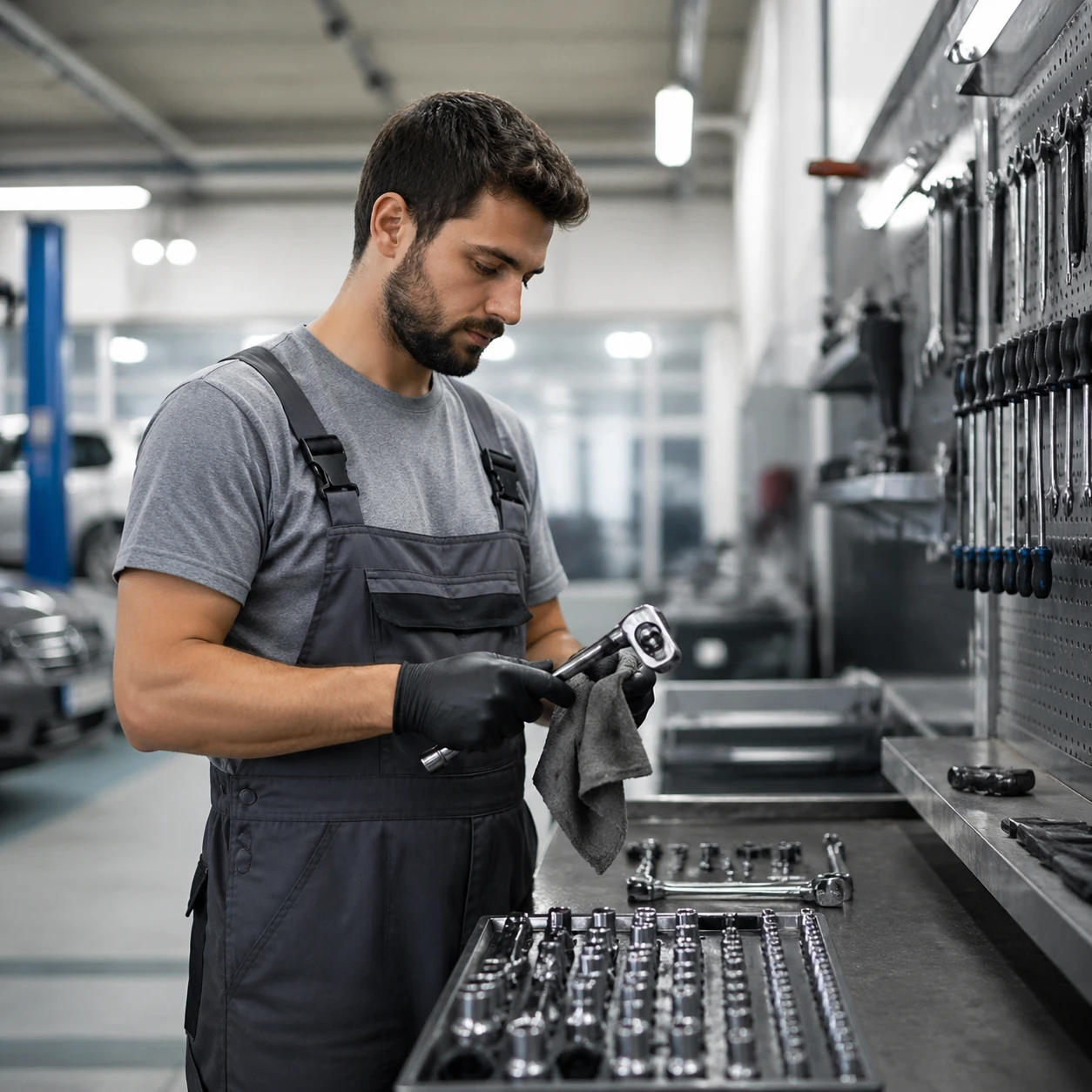
Imagine a classic socket set in your hand—the starting line for any true bodywork. Hand tools are the backbone of disassembly, panel removal, and precision prep.
Core hand tool categories include:
- Socket sets (metric/standard), wrenches, and screwdrivers for every bolt and fastener
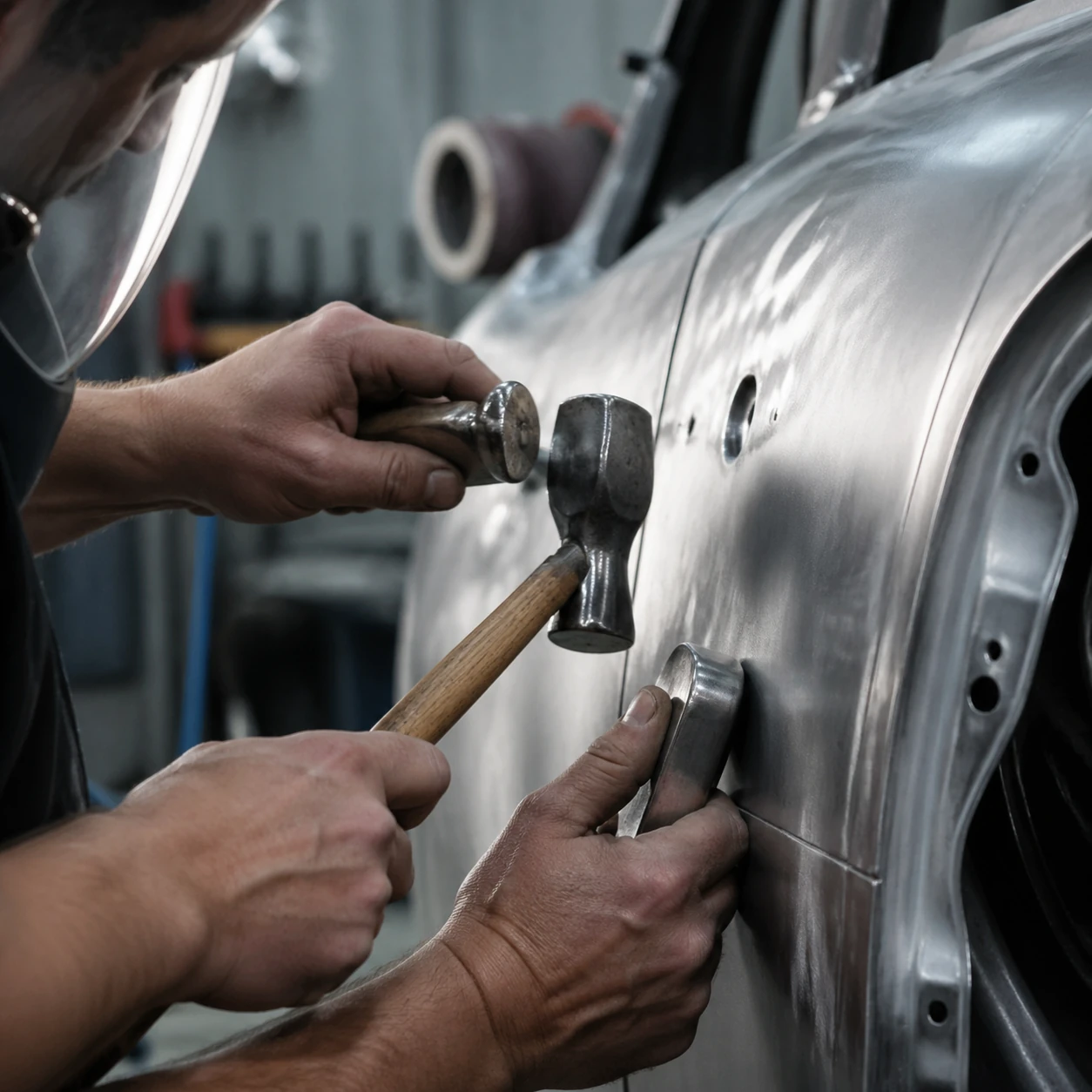
- Hammers, dollies, and spoons to contour, flatten, and shape metal
- Pliers, chisels, trim tools, putty knives, and punches for tasks big and small
For home use, a basic set is plenty for minor dents and repairs. Professional shops, however, invest in expanded toolkits that handle any job, from detailed trim work to frame adjustments.
Always select hand tools that are:
- Built for durability (for longevity and fewer replacements)
- Ergonomic (preventing daily hand strain)
- Designed with safety features (anti-slip, insulated grips)
Regular cleaning, dry storage, and smart organization—like magnetic tool boards or rollaway boxes—directly extend each tool’s lifespan.
“Clean tools are safe tools—your prep today is your protection tomorrow.”
Air and Power Tools: Enhancing Efficiency and Precision
In modern Paint and Body Repair shops, an air compressor system powers essential collision repair tools that improve precision, speed, and finish quality.
Must-have air and power tools for paint and body repair include:
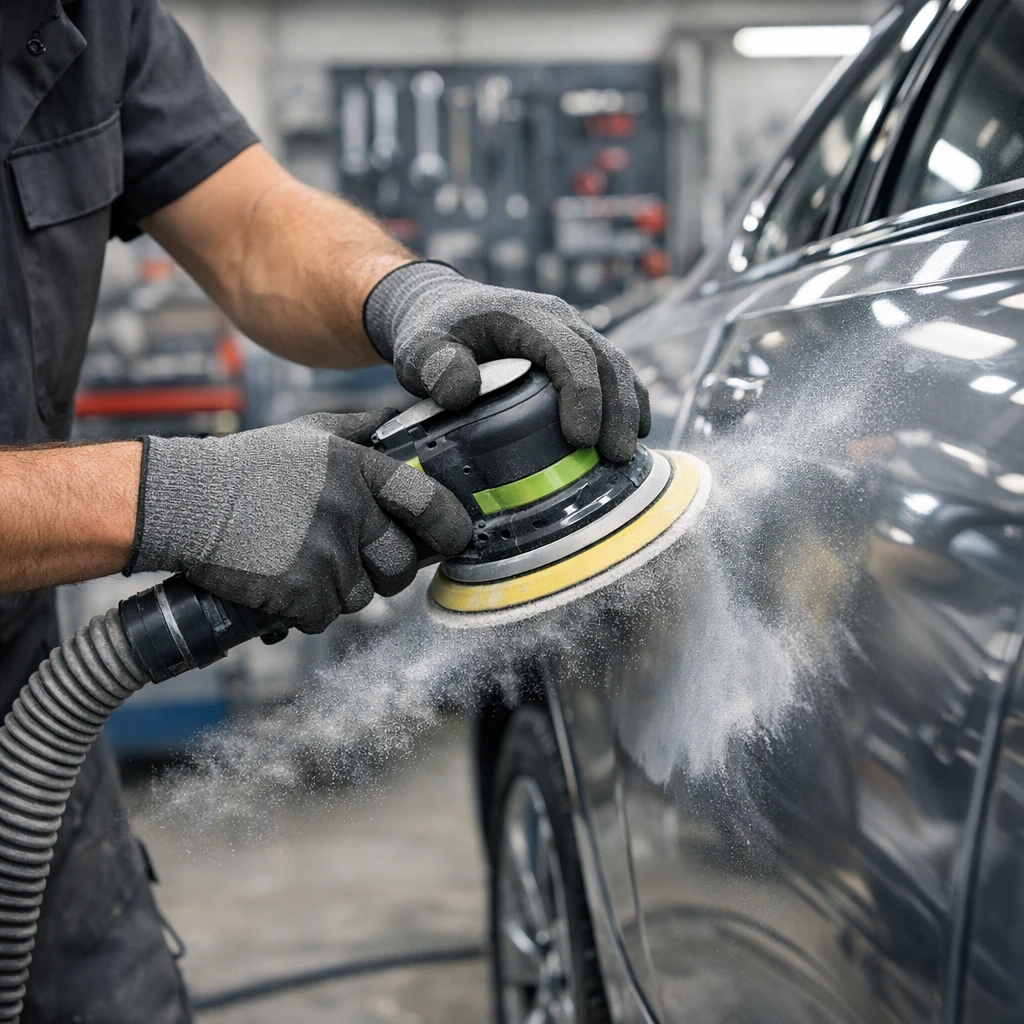
- Sanders (DA/orbital, rubber block), grinders, and cutoff wheels for shaping and smoothing
- Air hammers, drills, air ratchets, and the all-important mini sandblaster for tough-to-reach spots
Key system requirements:
- An air compressor with at least a 50-foot hose and adjustable pressure
- Reliable accessories: safety couplers, blow guns, and dust masks at every station
Home shops can tackle spot repairs with compact combo tools. For large panel work, investing in heavy-duty sanders and grinders ensures even finishes and precise bodylines.
Don’t overlook tool care: Regular lubrication, calibration checks, and scheduled filter changes keep performance high and reduce costly breakdowns.
“Power tools are your shortcut to expert results—but only when maintained like a pro.”
Efficient paint and body repair means matching your tool kit’s scale to your project, storing tools smartly for quick access, and always prioritizing safety and customer satisfaction. With the right equipment, every repair becomes a signature of quality and integrity.
Specialized Equipment for Structural Repair and Paintless Dent Techniques
Professional Paint and Body Repair shops rely on advanced welding equipment, frame straightening systems, and paintless dent repair tools to restore structural strength and factory-quality appearance after collision damage.
Welding and Frame Straightening: Advanced Structural Solutions
When a collision bends a frame or cracks the body, welding and frame straightening are your ticket back to safety and alignment.
Picture this: A customer arrives with a creased fender and rails slightly out of spec—forward-thinking shops lean on these key solutions:
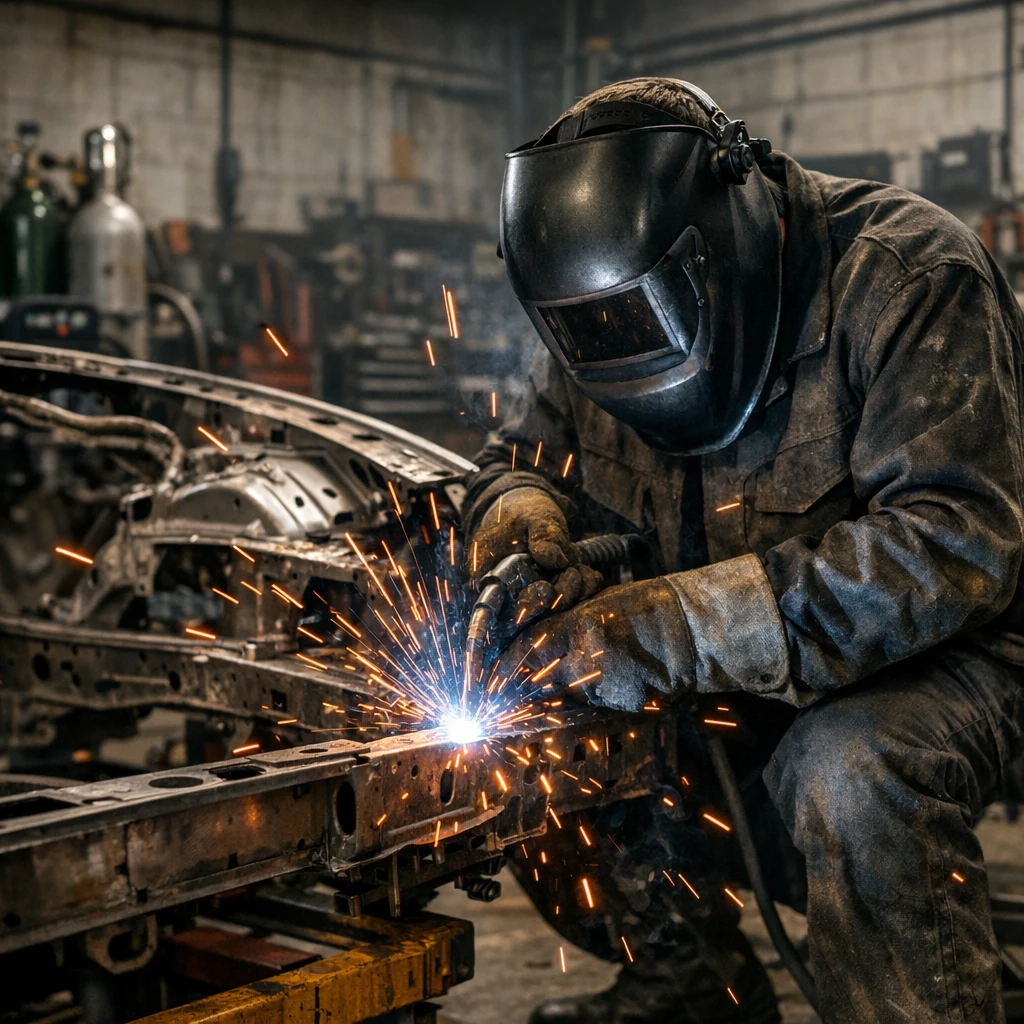
- MIG welders: The standard for sheet metal repair—fast, clean, and cost-effective for most collision panels.
- TIG welders: Engineered for aluminum or precise welds on custom jobs, offering control professionals swear by.
- Spot welders: Perfect for OEM-style joints and factory-finish panel restoration.
- Stud welders/Unispotters: Attach pulling pins for dent removal without cutting, keeping repairs minimally invasive.
- Rivet guns: Secure panels or frames where welds can’t reach or where heat is a concern.
For alignment, frame straightening systems have surged in sophistication—think:
- Pullers with hydraulic power for muscle work.
- Computerized measuring tools for pinpoint accuracy within a millimeter.
- Laser-guided alignment systems, now standard in shops that demand 5-star safety ratings every time.
Safety is non-negotiable—auto-darkening helmets, voltage testers, and localized ventilation keep technicians protected every step.
“Precision welding doesn’t just fix metal—it restores trust on the road.”
Paintless Dent Repair (PDR): Minimally Invasive Restorations
For modern Paint and Body Repair work, paintless dent repair tools are the preferred solution for removing minor dents and hail damage without repainting.
Imagine a lightweight toolkit in your trunk for quick on-the-spot jobs. The essentials:
- PDR rods of varied lengths and tips—reach and massage dents out from inside.
- Suction dent pullers that pop out surface impressions cleanly.
- LED inspection lights to reveal even faint imperfections.
- For tougher creases, add these:
- Body filler (Bondo) for any finish work.
- Flexible spreaders and fine sanding blocks.
When should you use PDR? It’s ideal for shallow dents where the paint is intact—think, a runaway shopping cart, not a major fender bender.
Current trends show more shops offering PDR as a first defense, estimating 30% shorter cycle times and up to 50% cost savings compared to conventional repairs.
“Great PDR turns a frustrating dent into a “nothing ever happened” moment, all before lunch.”
Making the Right Choices for Structural & Cosmetic Repairs
Selecting the right equipment means matching the solution to the size and style of damage—frame machines for structure, PDR for surface perfection. Shops and serious DIYers elevate results by investing in quality tools and practicing safety first.
Master these essentials, and every repair becomes another opportunity to deliver quality, integrity, and customer-focused results—the Auto Clinique promise in action.
Paint and Body Repair Equipment for Professional-Grade Finishes
Every professional-looking paint job starts with the right gear.
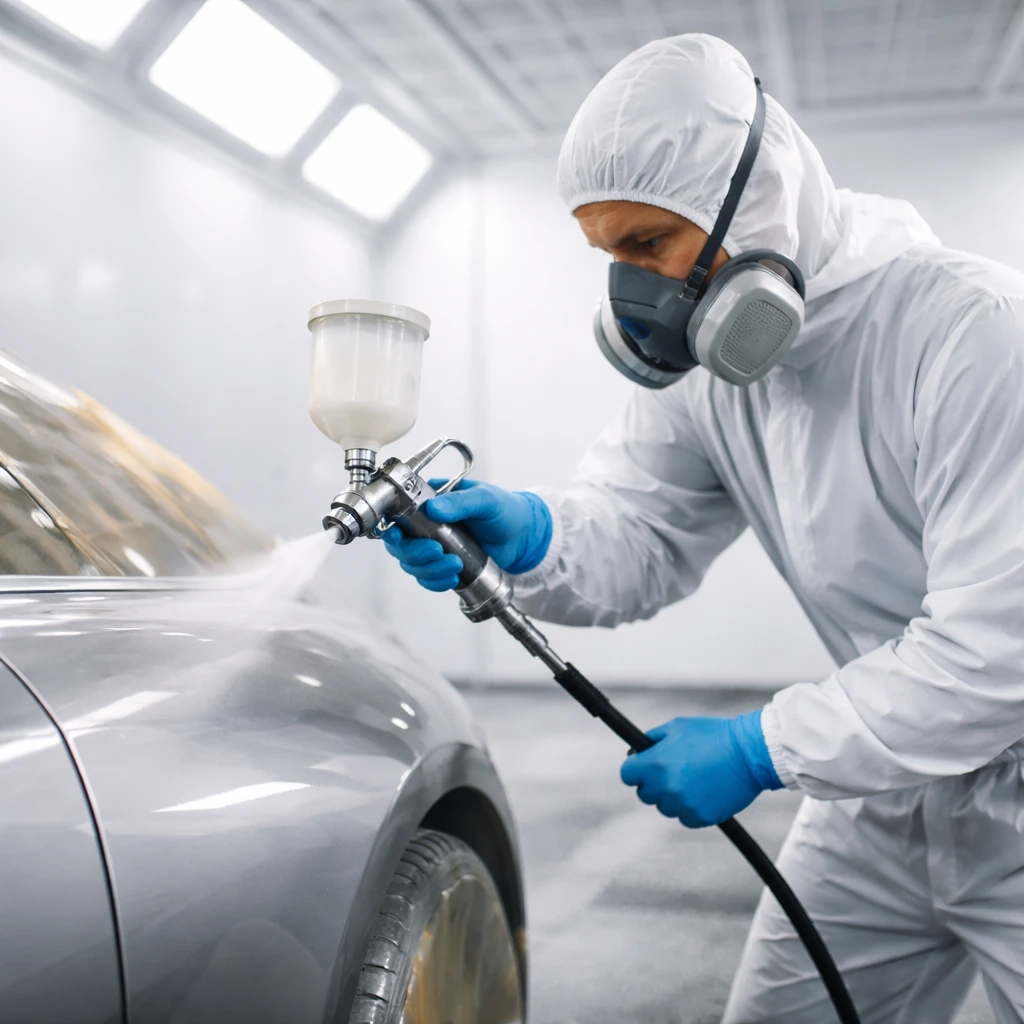
For both hobbyists and full-scale shops, high-quality spray guns are the heart of your painting arsenal.
- HVLP (High Volume Low Pressure) gravity feed spray guns work for primers, basecoats, and clear coats. Common tip sizes are:
- 1.3–1.5mm for base and clear
- 1.7mm or larger for primers
- Detail guns, with smaller tips, are perfect for touch-ups and tight areas.
A reliable air delivery system makes or breaks your results.
- Air hoses (3/8″ x 25-50 ft.) give you flexibility around the vehicle
- Inline air filters trap moisture—essential for a glass-smooth finish
- Paint booths or temporary spray setups control dust and overspray
A painter’s support tools can elevate your workflow:
- Paint shakers ensure even pigment distribution for true color
- Change out nozzles and tips to suit each product
- A dedicated spray gun cleaning kit extends equipment life and prevents costly hiccups
Just as important as your gear is protecting yourself and the workspace.
You’ll need:
- NIOSH-approved respirators for safe breathing under the mask
- Disposable paint coveralls and nitrile or latex gloves to shield skin and clothes
- Overspray goggles or safety eyewear provide essential eye protection
Tool maintenance is crucial—clean spray guns after every use, and inspect hoses and fittings for wear or leaks. Expect to spend $150–$700 on a quality spray gun; keeping it in top shape saves money and frustration.
Trends are reshaping how pros and DIYers paint.
Modern shops are switching to digital spray guns, which use digital pressure controls for pinpoint precision and reduced product waste. Demand for eco-friendly, low-VOC paints and greener prep chemicals is rising—expect cleaner air, fewer fumes, and better compliance with latest regulations.
Picture this: a spotless, well-lit booth, a freshly mixed coat swirling in your HVLP gun, and not a dust mote in sight. That’s the difference the right equipment makes.
Keeping your painting arsenal clean, organized, and up-to-date means each job shines—and your clients drive away impressed with a truly professional finish.
Paint and Body Repair Safety Equipment and Shop Organization
Proper Paint and Body Repair safety equipment and organized workspaces help reduce accidents, improve efficiency, and ensure every repair meets professional industry standards.
Safety Equipment: Protecting People and Property
Every paint and body repair shop starts with safety. Protecting your team—and your investment—requires a set of essential gear that’s as non-negotiable as the tools themselves.
Picture this: a busy Dallas garage, sparks flying and paint mist swirling. Without safety glasses, sealed respirators, and heavy-duty gloves, even minor errors can lead to serious injury or costly downtime.
Take action on these must-haves:
- Safety glasses or goggles for eye protection
- Ear protection (earmuffs or plugs) in high-noise areas
- Respirators, dust masks (NIOSH-approved) for all painting, sanding, and chemical work
- Gloves—mechanic, nitrile, and welding grades
- Coveralls (disposable suits with hoods) to block particulates
- Steel-toe boots for foot and drop protection
Welders need extra precautions:
- Auto-darkening helmets shield from arc flash
- Voltage testers double-check circuits before repairs begin
Proper safety saves more than costs—it’s the difference between a smooth, trusted experience and a risky, avoidable accident. “In safety, there’s no substitute for the right gear—every task, every time.”
Shop Setup and Organization: Keys to Efficiency and Reliability
A well-organized shop is a hallmark of quality and professionalism. Top repair shops use tools that are easy to access, clearly labeled, and always where you expect them.
- Rollaway toolboxes keep hand tools safe, sorted, and mobile
- Shadow boards provide instant tool inventory at a glance
- Rolling carts move your daily essentials along with your workflow
Think beyond storage—add these for everyday efficiency:
- Creepers to access tight spots under vehicles
- Magnetic pickup tools to grab dropped fasteners
- Extension cords and proper shop lighting for safety and visibility
Design your workspace for speed and safety:
- Set up clear work zones (prep, painting, welding)
- Use ventilation systems and spill containment trays
- Control access to hazardous areas with clear signage
When every wrench, hammer, and spray gun has a place, you cut down wasted minutes and costly mistakes. “An organized shop means repairs get done right the first time—on schedule, every time.”
Constant attention to safety protocols and thoughtful organization translates into faster repairs, fewer accidents, and top-tier results customers notice. In auto repair, a shop that feels safe and runs like clockwork is one where vehicles—and people—are truly cared for.
Selecting, Maintaining, and Upgrading Your Tool Arsenal
Evaluating and Acquiring the Right Tools
Choosing the right tools makes the difference between smooth repairs and constant headaches.
Beginner kits for home users often start with a basic socket set, body hammers, dollies, and a spray gun, keeping initial investment around $300-$600.
Shops or pros gradually add air sanders, welders, pneumatic tools, and computerized frame equipment, which can reach $10,000+ for a fully stocked setup.
When shopping, consider:
- Reputation of the brand (look for long-standing manufacturers)
- Warranty coverage (lifetime or multi-year on critical items)
- Responsive customer support for quick problem resolution
Prioritize purchases based on:
- How often you’ll use each tool
- Type of jobs you’re handling—spot repair or panel replacement
- Total budget available
“A single high-quality body hammer outlasts three cheap ones—choose quality and buy once.”
Maintenance and Longevity: Protecting Your Investment
Regular care preserves tool performance, safety, and value.
Adopt these best practices:
- Clean and dry tools after each use—wiping down metal parts prevents rust.
- Inspect and calibrate sanders, spray guns, and torque wrenches seasonally.
- Oil air tools according to manufacturer guidance (some after every session).
Guard against environmental damage by:
- Using rollaway toolboxes or wall-mounted boards to keep tools organized and off the ground
- Storing spray guns and delicate instruments in protective cases
- Controlling humidity in the workspace to halt corrosion
Upgrade tools when:
- Performance drops or repair results suffer
- Newer tech saves you significant time (think digital spray systems)
- Your business grows and requires more speed, power, or accuracy
Cost Considerations and Value Analysis
Knowing the true cost of ownership helps you plan smarter.
- Entry-level setups often run $300-$1,000; pro gear or custom tools can far exceed $20,000 over time
- Buy basics in bundles or kits for bulk discounts
- Shop reputable used tools—quality brands hold up well and can cost 30-50% less
- Consider tool financing or leasing for expensive shop equipment
For customers, transparency breeds trust: explain why investing in the right tools leads to safer, more durable repairs.
“Quality repairs start with quality tools, and every investment pays off on the road.”
Picture this: You stand at your organized workbench, every tool at your fingertips, confident your equipment will deliver professional results, whether it’s a Saturday touch-up or a major restoration. Choosing, maintaining, and upgrading your tool arsenal isn’t just shop talk—it’s your path to reliable, high-quality repairs and true customer trust every single time.
For workplace safety standards, follow the official OSHA workplace safety guidelines to ensure proper use of paint and body repair tools.
Choosing the Right Paint and Body Repair Equipment for Long-Term Success
Choosing the right tools isn’t just about fixing cars—it’s about delivering peace of mind, earning customer trust, and setting your shop apart as a true Dallas leader in quality and integrity.
Every investment you make in precision equipment, smart organization, and robust safety measures directly translates to stronger repairs and happier customers.
—
Key Takeaways You Can Act On Today:
- Prioritize quality tools—one reliable hammer or sander outperforms a dozen cheap ones every time.
- Protect your team and workspace with complete safety gear for every operation, no exceptions.
- Keep your toolkit organized and your equipment well-maintained to work smarter and avoid costly downtime.
- Upgrade strategically—choose new technology when it clearly improves speed, safety, or repair quality.
- Communicate the value of quality repairs to your customers—people notice craftsmanship and care.
—
Next Steps for Elevating Your Paint and Body Repair Experience:
- Audit your current shop setup—are your essential tools and safety equipment up to par?
- Invest in the highest-impact upgrades within your budget, focusing on tools you use most often.
- Set up a routine maintenance schedule—small daily habits prevent big future expenses.
- Educate your team on why quality, safety, and organization matter to every repair.
- Showcase your commitment—let customers see your professional space and state-of-the-art gear.
—
Excellence is never accidental—every great repair starts with decision, discipline, and the drive to be the trusted expert your customers rely on.
Your tools are more than just equipment; they’re the silent promise you make to everyone who hands you their keys. Set yourself apart, commit to best-in-class solutions, and let every job you complete be a reflection of your skill and integrity.
“Professional tools build professional results—let your work be the proof.”
FAQs
What are the most important paint & body repair tools?
The most important paint & body repair tools include hand tools, sanders, spray guns, welders, and safety equipment. For industry safety standards, review the OSHA workplace safety guidelines.
Can I use paint & body repair tools at home?
Yes, basic paint & body repair tools can be used for small DIY repairs, but professional-grade results often require advanced equipment and proper techniques. You can explore beginner-friendly methods in Family Handyman automotive guides.
What is the best spray gun for paint work?
HVLP spray guns are widely recommended for smooth, even finishes. For expert painting techniques, check PPG automotive paint resources.
How do I maintain paint & body repair tools?
Clean tools after each use, store them in dry conditions, and inspect regularly for wear. Following professional recommendations like NIOSH safety guidelines helps extend tool life and ensure safe usage.
When should I use welding equipment in body repair?
Welding tools are used for structural repairs such as frame damage or panel replacement.