
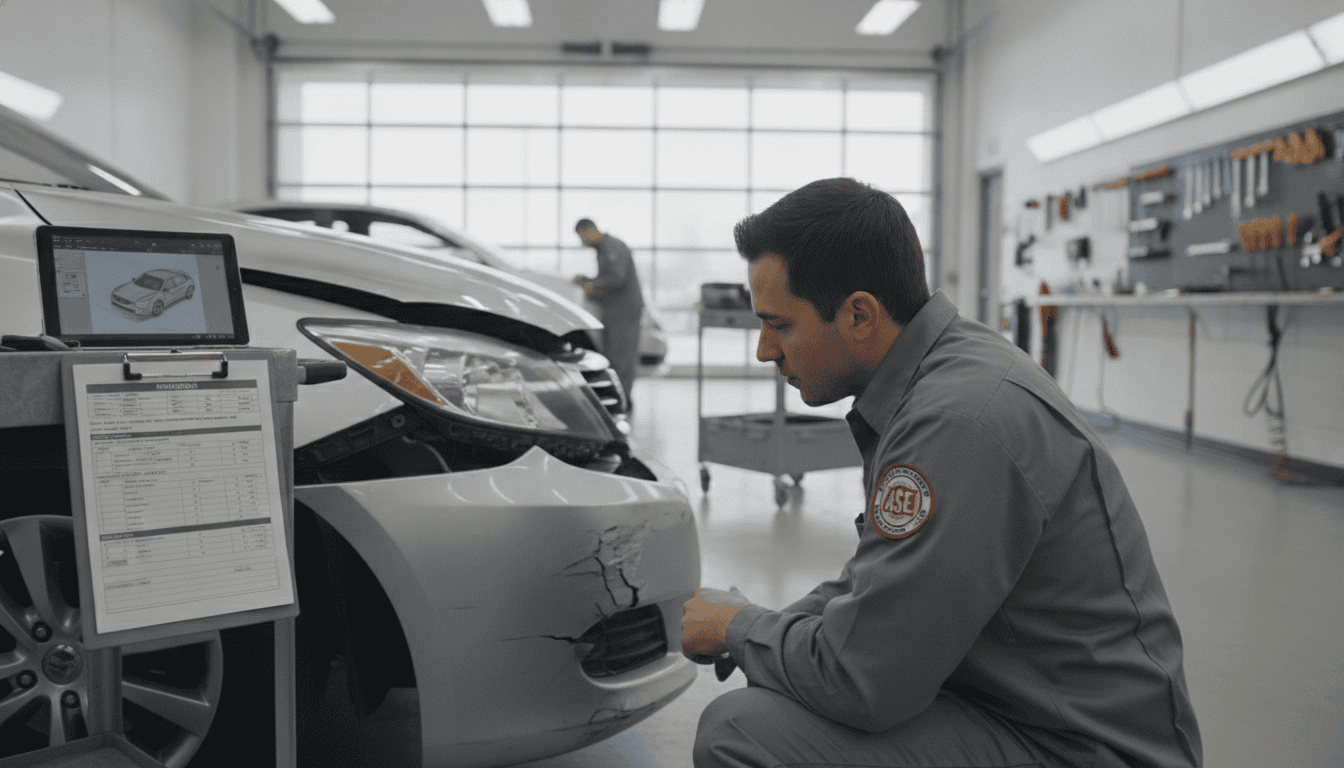
Filing a collision insurance claim in Dallas doesn’t have to feel like a second crisis on top of the first one. Knowing your rights and the real sequence of events turns a confusing process into a handful of clear decisions.
- You choose the repair shop, not your insurer — Texas Insurance Code Article 5.07-1 protects your right to pick any certified shop, DRP or not.
- Document everything in the first 24 hours — photos of the damage, the scene, and all parties involved make every later step faster.
- Your deductible is fixed, but your estimate isn’t — supplements are normal, not a red flag, once technicians open the panels.
- A DRP shop isn’t required — insurers recommend their network for convenience and cost control, not because you’re obligated to use it.
- Free estimates remove the guesswork — get one before committing to any shop or any repair plan.
- A written warranty protects you after the insurer moves on — ask what’s covered once the claim closes.
Keep these six points in mind and the rest of this guide will feel like confirmation, not new information.
Introduction
A fender-bender on the Dallas North Tollway shouldn’t turn into a second headache once the insurance paperwork starts.
Most drivers file a collision claim once, maybe twice, in a decade — so the process feels unfamiliar exactly when you need it to feel simple.
The claim itself follows a predictable sequence: report, document, submit, get an estimate, repair, close. Where things go sideways is usually the same handful of spots — not knowing you can pick your own shop, not understanding what a deductible actually covers, or getting surprised by a “supplement” nobody explained in advance.
Texas law gives you more control over this process than most drivers realize. You are not required to use whatever shop your insurer suggests, and you’re entitled to a repair that meets the standard your car had before the accident — not the cheapest version of it.
This guide walks through the Dallas-specific version of that process: what to do in the first hour, how deductibles and supplements actually work, and what changes once a shop offering full collision and body repair services is handling the repair and the insurance communication at the same time.
By the end, you’ll know exactly which steps are yours to control and which ones the insurer handles — so nothing about the next 2-3 weeks catches you off guard.
Filing a Collision Insurance Claim in Dallas: From Impact to Repair
The First 24 Hours: Documentation That Protects Your Claim
The first hour after a collision sets the tone for the whole claim.
Photograph everything before anything moves — vehicle damage from multiple angles, the accident scene, license plates, and any visible injuries.
Texas law requires a crash report within 10 days if the accident involved an injury or more than $1,000 in property damage and wasn’t already reported to police on scene. If police didn’t respond to the scene, you can request an official crash report (CR-3) directly through TxDOT once one’s on file — most insurers will ask for a copy before they’ll finalize a claim.
Exchange these details with the other driver on the spot:
- Full name and phone number
- Driver’s license number
- Auto insurance company and policy number
- License plate and vehicle description
Witness contact information matters more than most drivers expect. A witness statement can settle a fault dispute that would otherwise stall your claim for weeks.
When to Call Your Insurer vs. the At-Fault Driver’s Insurer
Notify your own insurance company first, regardless of who caused the accident — this isn’t optional, and it isn’t an admission of fault.
Your insurer needs a proof of claim form, a copy of the police report, and your account of what happened to open the file.
If another driver was at fault, you can also file with their insurer directly, but your own company is still your fastest, most reliable point of contact while the claim gets sorted out.
Filing with your own insurer under your collision coverage tends to move faster than waiting on the at-fault driver’s insurer to accept liability — their adjuster has no obligation to move quickly on a claim against their own policyholder, especially if fault isn’t immediately obvious.
That’s the trade-off worth knowing upfront: your own insurer moves faster but your deductible applies, while the at-fault driver’s insurer skips your deductible but moves at their pace and only pays out once they’ve accepted fault. Auto Clinique communicates with either insurer directly once you’re in for a repair, so you’re not stuck relaying messages back and forth yourself regardless of which path you choose.
Your Legal Right to Choose Your Own Repair Shop
What a Direct Repair Program (DRP) Actually Is
A Direct Repair Program (DRP) is a network of body shops that have a standing agreement with an insurance company — usually involving negotiated pricing, specific parts sourcing, and turnaround-time commitments.
Insurers steer claims toward these shops because it’s predictable for them, not because it’s required for you.
Nothing in a DRP agreement changes what you’re entitled to as the vehicle owner — the same quality standard, the same parts options, the same right to ask questions applies whether the shop is in-network or not.
Why Insurers Recommend DRP Shops — And Why You Don’t Have to Use One
DRP shops exist to control the insurer’s costs and timeline, not necessarily to get you the best repair.
Here’s what a DRP relationship typically includes:
- Pre-negotiated labor rates and parts pricing
- Agreed-upon repair timelines
- Specific part-type usage (OEM vs. aftermarket)
- Direct billing between the shop and insurer
None of that obligates you to repair there. You can request an independent shop, and a legitimate insurer will still process your claim — they just won’t have the same direct-billing shortcut in place.
Texas Insurance Code Protections You Should Know
Texas Insurance Code Article 5.07-1 is the rule that matters most here: insurers cannot restrict your choice of repair shop or dictate what parts get used in the repair.
This applies whether you’re the policyholder or a third-party claimant filing against someone else’s insurance.
The Texas Department of Insurance’s Consumer Bill of Rights backs this up directly — it confirms insurers can’t tell you what brand, age, or condition of parts to accept, and can’t refuse to pay a claim without a reasonable investigation first.
Auto Clinique works directly with insurance companies on claims every week — being outside a specific DRP network doesn’t slow down an ASE-certified, insurance-friendly repair.
How Your Deductible Works in a Collision Claim
Paying the Deductible vs. Waiting for Reimbursement
Your deductible is the fixed amount you agreed to pay out of pocket when you set up your policy — it doesn’t change based on the shop, the damage, or the estimate.
The math is simple: the insurer covers the approved repair cost minus your deductible, and you pay that deductible directly to the shop once repairs are complete.
If the other driver is found at fault, you may be able to recover your deductible from their insurer afterward — ask your adjuster about this option specifically, since it isn’t always offered upfront.
When You Might Not Owe a Deductible at All
Not every collision claim involves your deductible. If you’re filing against the at-fault driver’s liability coverage rather than your own collision coverage, your deductible typically doesn’t apply at all.
This distinction trips up a lot of drivers who assume every claim works the same way. It’s worth asking directly: “Is this going through my collision coverage or their liability coverage?” before assuming what you’ll owe.
Deductible at a Glance: Which Coverage Applies to You
Not sure which row applies to your situation? Ask your adjuster directly which coverage the claim is running through — it’s a two-minute question that answers most of what you’ll owe before repairs even start.
Supplements: Why Your Estimate Almost Always Changes
Common Hidden Damage Found After Teardown
A supplement is an additional request sent to the insurer once technicians find damage that wasn’t visible in the original estimate.
This isn’t a red flag or a sign something’s wrong — it’s the normal result of assessing damage that’s only visible once panels come off.
Common supplement triggers include:
- Frame or structural damage hidden behind outer panels
- Damaged sensors or wiring harnesses discovered during disassembly
- Additional corrosion or rust found once a panel is removed
- Mechanical components affected by the same impact
How Auto Clinique Handles the Supplement Approval Process
Once our technicians find something the original estimate missed, we document it, photograph it, and submit a supplement request directly to your insurer with the justification attached.
The insurer reviews and approves the supplement before we order the additional parts — this protects you from surprise costs and keeps the paper trail clean if you ever need to reference the claim again.
A driver drops their car off expecting a bumper repair, and the estimate lists one part. A week later, the shop calls to say they found frame damage behind it — that’s not a shop padding the bill, that’s the supplement process working exactly as it should.
What to Expect at Auto Clinique During an Insurance-Backed Repair
Free Estimates, Direct Insurer Communication, and the 1-Year Warranty
Every insurance-backed repair at Auto Clinique starts with a free, same-day estimate — no obligation, no pressure to commit before you’re ready.
Once you choose us, we handle the back-and-forth with your insurance company directly: submitting the initial estimate, following up on approvals, and filing any supplements that come up mid-repair.
Every repair is backed by a 1-year parts and labor warranty — a promise that outlasts the claim itself, regardless of which insurer was involved.
Timeline: From First Estimate to Final Quality Check
Most insurance-backed collision repairs move through the same stages, roughly in this order:

- Free estimate — same-day, in person or with photos
- Insurer approval — usually the fastest step when the estimate is complete and clear
- Parts ordering — OEM or aftermarket, depending on what your policy covers and what you request
- Structural and body repair — the bulk of the timeline for anything beyond cosmetic damage
- Paint matching and refinishing — computerized color matching to restore factory finish
- Final quality check — the same team that wrote the original estimate signs off before the car goes back to you, following the same post-repair quality control checklist on every job
Supplements can add a few days if hidden damage turns up, but they don’t restart the process — they simply run in parallel while other repair work continues where possible.
ASE and TechNet-certified technicians handle every stage, so the same team that gave you the original estimate is the one signing off on the finished repair.
Frequently Asked Questions
Do I have to use my insurer’s recommended repair shop in Texas?
No. Texas Insurance Code Article 5.07-1 protects your right to choose any certified repair shop — DRP or not — and the Texas Department of Insurance’s Consumer Bill of Rights confirms insurers can’t dictate the parts or vendor you use for repairs.
What if the other driver doesn’t have insurance?
Your own uninsured/underinsured motorist coverage, if you carry it, steps in here. This runs as a separate claim path from a standard collision claim, with its own rules for deductibles and payout.
How long does a Texas collision claim usually take?
Straightforward claims with no fault dispute and no supplement often resolve in 2-3 weeks from estimate to final repair. Disputed-fault claims or ones with significant hidden damage can run longer.
Will filing a claim raise my insurance rates?
It can, especially if you’re found at-fault — but a single not-at-fault claim often has a smaller impact than most drivers expect. Ask your agent directly how your specific policy handles it.
What happens if I disagree with the insurer’s repair estimate?
You can request a second inspection, get an independent estimate from your chosen shop, or ask for a formal appraisal. The Texas Department of Insurance’s Consumer Bill of Rights specifically protects your right to dispute a claim payment.
Conclusion
Filing a collision insurance claim in Dallas gets a lot less stressful once you know which parts of the process are actually up to you.
You control more of this than most drivers realize:
- Choose your own repair shop — Texas law protects that right, DRP or not.
- Understand your deductible before repairs start — ask whether liability or collision coverage applies to your specific claim.
- Expect a supplement, don’t fear one — hidden damage after teardown is normal, not a red flag.
- Get a free estimate before committing — it costs nothing and clarifies the whole process upfront.
- Ask what warranty coverage looks like — it should outlast the insurance claim itself.
Auto Clinique has handled insurance-backed collision repairs on Preston Road since 2007, working directly with insurers so you’re not stuck relaying paperwork between two companies on your own.
If you’re staring down a claim right now, start with a free estimate — call (972) 930-9995 or stop by 17921 Preston Road, and let an ASE-certified team tell you exactly what your car needs before you commit to anything.
The best time to understand your rights in a collision claim is before the adjuster calls — not after.