
Whether you’re a hands-on DIYer or looking for expert service in Dallas, understanding the facts about auto repair can save you time, money, and stress. Here are the most actionable insights from our comparison of DIY auto repair in Dallas and professional services—so you can confidently care for your car and drive every mile with peace of mind.
- DIY saves money on basic tasks like oil changes and air filters, often cutting labor costs by 50-80% for simple jobs.
- Professional repair shops offer expertise, speed, and warranties—ensuring safety and long-term reliability that DIY fixes can’t guarantee.
- Know your limits: Tackle only low-risk, straightforward jobs yourself and trust the pros with complex, safety-critical, or electronic repairs.
- Hidden DIY costs can add up fast—a single mistake can quickly turn a $20 project into a $300+ correction at the shop.
- Professional services protect you with warranty coverage on both parts and labor, giving you financial peace of mind if issues arise down the road.
- Investing in the right tools matters: Expect to spend $150–$300 for DIY basics; advanced shop equipment and certified training are built into the professional price.
- Your time has value: DIY is flexible but often takes 2–3 times longer than professional shops, where most common repairs are finished in under an hour.
- A balanced approach offers the best results—handle routine maintenance yourself but always consult experts like Auto Clinique for anything that impacts safety, electronics, or vehicle warranties.
Ready to make smarter auto repair decisions? Use these insights to weigh your options and check out the full guide for detailed scenarios, real Dallas numbers, and expert-backed recommendations!
Introduction
Ever stood in your driveway, wrench in hand, debating whether to tackle that mysterious dashboard warning light yourself—or hand over the keys to a trusted professional? You’re far from alone. More than 60% of Dallas drivers try at least one DIY repair a year, often lured by potential savings and sheer satisfaction.
But in a world where a single mistake can turn a $20 fix into a $300 problem, knowing when to wield the socket set—and when to call certified technicians—has never been more vital. Modern vehicles are marvels of engineering, with cutting-edge electronics and safety systems that can outsmart even the most determined weekend mechanic.
So, why does this decision matter? Because your time, money, and—most importantly—your safety are on the line. The right choice isn’t always about what you can do, but what’s smartest for your car and for you.
Here’s what you’ll gain as you explore the path ahead:
- A transparent look at the true cost breakdown for both DIY projects and professional repairs in Dallas
- Insights into when it’s safe and rewarding to go hands-on—and where expert service pays off
- A practical guide to the tasks you can confidently handle, and those best left to the pros
- Clear explanations of risks, warranties, and the conveniences unique to both approaches
At Auto Clinique, we believe in empowering every driver—with honest advice, expert craftsmanship, and the kind of integrity that means you always know what’s happening under the hood.
Navigating the choice between doing it yourself and trusting a professional doesn’t have to be overwhelming. Instead, think of it as your opportunity to make each repair a smart investment in your vehicle’s future, and your peace of mind.
Ready to see which approach fits your needs—and your next repair? Let’s compare the hands-on DIY path with the guarantee of expert service, starting with a clear definition of each.
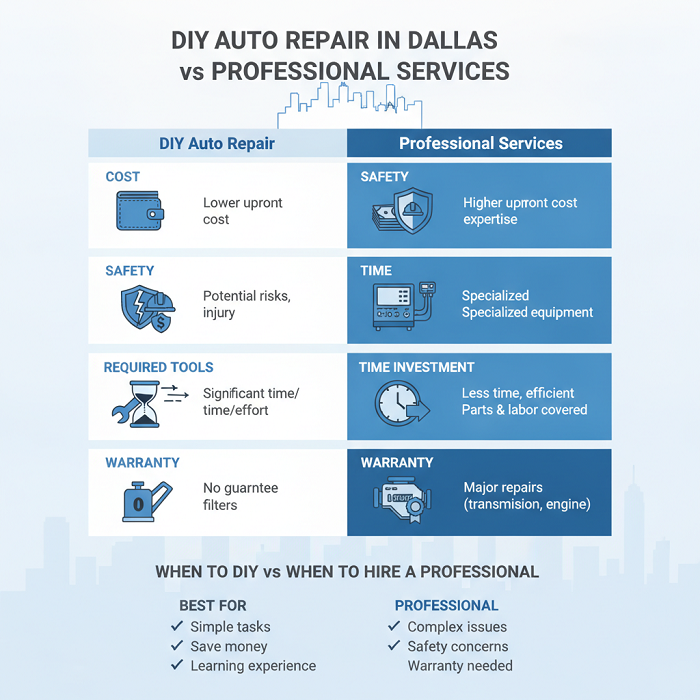
Understanding DIY Auto Repair and Professional Services
DIY auto repair means tackling car maintenance or repairs yourself—think oil changes, air filters, or swapping out wiper blades.
Professional auto repair services involve certified mechanics with specialized tools who diagnose and repair vehicles in a dedicated shop.
At first glance, DIY repair appeals for its lower labor costs, greater scheduling flexibility, and the personal satisfaction of fixing your own car.
On the flip side, professional shops provide expertise, faster diagnostics, warranty protection, and quality assurance–all with less risk.
Why Drivers Choose DIY vs. Professionals
Motivations for DIY include:
- Saving on labor costs (up to 50-80% for simple jobs)
- Flexibility to work on your own schedule
- Gaining hands-on knowledge and confidence
Motivations for professional repair include:
- Guaranteed expertise on modern, complex vehicles
- Access to specialty tools and fast turnaround
- Warranties covering both parts and labor
“Picture this: You change your own headlight in the driveway at your pace, but trust the pros when your check engine light starts flashing.”
For repairs involving engine diagnostics, brake systems, suspension, or transmission work, professional assistance often saves both time and money. Explore our Auto Repair Services Dallas guide to learn about certified repairs, maintenance solutions, and expert diagnostics available for Dallas drivers.
The Evolution of Auto Repair Approaches
In the past, many drivers were weekend tinkerers.
Today, more advanced vehicle technology means:
- DIY is best for basic maintenance like batteries, bulbs, and air filters
- Professional shops are essential for electronics, brakes, engines, and advanced diagnostics
For example, electronic systems repairs now require up-to-date scanning tools only professionals use.
Who Typically Chooses Each Approach?
The typical DIYer:
- Enjoys learning and hands-on projects
- Tackles repairs to save money or out of necessity
Professional-service customers:
- Value speed, convenience, and peace of mind
- Prioritize safety, vehicle longevity, or lack the right tools/space
“Doing it yourself can feel empowering—but sometimes, the smartest move is letting trusted experts handle what’s under the hood.”
Safety and Smart Decision-Making
Making informed choices about repairs is vital for:
- Protecting your vehicle’s lifespan
- Ensuring passenger and road safety
- Avoiding costly mistakes or warranty issues
Most Dallas drivers blend both worlds—handling simple tasks and leaving the rest to experienced teams like Auto Clinique.
The key takeaway: Empower yourself by understanding when to DIY for savings or speed, and when a professional’s expertise is the best investment in your car’s future.
Cost Analysis: DIY vs. Professional Repair
Before deciding whether to grab your toolbox or schedule an appointment, it’s important to understand the true cost of DIY Auto Repair in Dallas. While repairing your own vehicle can reduce labor expenses, hidden costs such as specialty tools, replacement parts, diagnostic equipment, and the value of your time can quickly add up. Comparing DIY car repair, professional auto repair services, and long-term maintenance expenses helps Dallas drivers choose the most cost-effective solution for every repair.
Cost Structure of DIY Auto Repair in Dallas
When you tackle DIY auto repairs, the bulk of your spending comes from a few key areas:
- Parts purchased individually—often at retail prices
- Tools and specialty equipment, from $30 for a basic wrench set to $200+ for a code scanner
- Time investment, which can range from 30 minutes to a full weekend depending on experience and project complexity
Big savings often come from cutting out labor charges—typically $80–$150 per hour at Dallas repair shops.
But hidden costs can sneak up:
- Mistakes may lead to damaged components or repeated part purchases
- Misdiagnosis can mean you buy unnecessary parts
- Unintended damage can turn a $20 DIY into a $300 professional correction
Picture this: Changing your own air filter for $15 takes 10 minutes, but a failed brake job could morph into hundreds in unexpected costs.
For effective DIY budgeting:
- Track each project’s total cost, including tools and potential re-dos
- Focus DIY efforts on low-cost, low-stakes tasks until you build skill and confidence
“Save big on basics, but know when a shortcut costs more.” This is the golden rule for DIY cost control.
Cost Structure of Professional Services
With professional auto repair, charges break down into:
- Labor rates (usually $80–$150/hour in Dallas)
- Parts, which may include a markup but benefit from shop bulk purchasing power
- Diagnostics and shop fees (from $50 for standard checks to $200+ for in-depth electrical work)
But these higher upfront figures often include:
- Warranties on parts and labor, covering you if something goes wrong
- Expert troubleshooting that prevents expensive missteps
- Accountability for quality, saving you from a “DIY do-over” bill
At Auto Clinique, you get transparent pricing, honest recommendations, and a warranty you can trust—clear numbers, no guesswork.
Every dollar you invest goes toward safety, guaranteed performance, and long-term savings.
“Pay once, avoid the redo, and drive home worry-free.” Consider this peace of mind part of the price.
Comparative Cost Scenarios
Let’s put real numbers to the test with Dallas-area prices:
- Air filter change: Do it yourself for $15 in parts; a shop charges $45–$60 (labor included)
- Battery replacement: DIY cost $60–$150; professional service $120–$250, but includes warranty support
- Brake pad swap: Kits cost $40–$80; shop prices run $160–$300+ with full inspection and guarantee
- Spark plug replacement: $25 for plugs, but newer engines may require special tools—a $120+ shop fee ensures correct installation
If you fix it right the first time, DIY saves money on simple swaps. But a single mistake can quickly erase those savings.
Remember: A failed DIY project often means paying both for lost time and the full shop price to clean up—and do-overs are costly.
The smartest path is a balanced approach: Tackle straightforward jobs to save, but trust complex or critical work to pros. This isn’t just about price—it’s about confidence on every drive.
Safety and Risk Considerations
Understanding the Stakes
When it comes to auto repair, safety isn’t optional—it’s critical.
The risks of handling car repairs yourself go far beyond frustration or lost time. Picture this: A bolt left loose on a brake caliper or a miswired airbag sensor can mean the difference between safe travels and a roadside emergency.
Common DIY risks include:
- Personal injury, from minor cuts to severe accidents
- Incorrect installations that compromise vehicle safety
- Voiding manufacturer warranties on expensive components
- Unintended damage to related systems, such as electronics or sensors
Some jobs, like airbag or brake repairs, or diagnosing complex electrical faults, require specialized knowledge and equipment—mistakes here can be costly and even life-threatening.
If a DIY fix fails and causes damage or an accident, your insurance may not cover the aftermath, and liability issues can quickly escalate.
In fact, a national survey showed that nearly one in five DIY auto repairs result in additional damage, highlighting the hidden risks behind well-intentioned fixes.
“Even a $20 part can become a $2,000 problem if installed incorrectly.”
Professional Safeguards
Entrusting your vehicle to a professional means tapping into a system built for safety, precision, and accountability.
Auto shops like Auto Clinique mitigate risk through:
- Trained, certified technicians who stay up-to-date on the latest vehicle technology
- Use of specialized tools and diagnostic equipment most DIYers don’t have
- Strict adherence to manufacturer specifications for every repair
The value of a warranty-backed repair goes beyond peace of mind; it provides concrete financial protection and reassurance if an issue arises after service.
Shops undergo regular third-party quality checks and follow local and national safety standards—each repair is double-checked, and any mistake is corrected at no extra cost to you.
At Auto Clinique, “Your vehicle’s safety is our number one priority. We believe the true value of our service isn’t just expert repairs, but the confidence you have every time you drive away.”
Key Takeaways
- For brakes, airbags, steering, and electrical work, expert service isn’t a luxury—it’s a necessity.
- DIY is best for low-risk, simple jobs; professional repair ensures safety and compliance for everything else.
- The smart choice is the safe choice: “If you’re unsure, leave it to the pros—it’s your safety on the line.”
Auto repair is more than a chore; it’s a responsibility. Informed decisions protect you, your vehicle, and everyone else on the road.
Tools, Equipment, and Skills: Setting the Standard
DIY Required Tools and Skills
Tackling your own auto repairs brings flexibility, but the right tools and knowledge make all the difference.
Most common DIY jobs—like replacing wiper blades, air filters, bulbs, or batteries—require basic tools you can find in any auto aisle. These typically include:
- Socket and wrench sets (average starter set: $50–$100)
- Screwdrivers and pliers
- Jack and jack stands
- Oil filter wrench
- Tire pressure gauge
- Funnel and drain pan
Expect an up-front tool investment of $150–$300 for basic tasks. Specialized projects quickly raise the cost.
Research, Guides, and Knowing Your Limits
Every project is a fresh challenge.
DIYers need to rely on:
- Digital repair guides or YouTube tutorials
- Manufacturer manuals for your specific make and model
- Community forums for troubleshooting tips
With each attempt, your repair skills build slowly—but so do the risks. Picture this: a simple battery swap goes smoothly, but diagnosing complex sensors without the right scanner can quickly overwhelm.
Know where to draw the line. A rule of thumb? If the repair manual includes terms you’ve never heard, or requires a tool you can’t find locally, it’s a signal to pause.
“Every confident DIY auto repair starts with one simple truth: know what you’re prepared for—and what could be more complicated beneath the hood.”
Professional Tools and Diagnostic Technology
Step into a modern shop and the difference is clear—professional equipment raises the bar.
Auto repair centers like Auto Clinique use:
- Computerized diagnostics and OBD2 scanners
- Precision brake lathes and alignment machines
- Advanced battery testers and programming tools
- Brand-specific calibration and coding devices
These tools can cost thousands and require ongoing technician training. Dallas-area trends show that over 70% of recent vehicles need specialized digital diagnostics to pinpoint electrical and sensor faults.
Technicians recharge their expertise constantly, with ASE certifications and hands-on training for every new system that hits the road.
“Speed, accuracy, and safety—professional tools don’t just finish the job faster, they guarantee it’s done right the first time.” Imagine a brake warning light swiftly diagnosed by a digital scanner, saving you hours of guessing.
At Auto Clinique, every investment—equipment or education—reflects a promise: your safety and your car never take a back seat.
The right tools and skills are your greatest asset in any repair. Small jobs and learning curves suit a DIY approach, but when technology or safety are at stake, trust advanced tools and expertise to keep your vehicle at its best.
Warranty, Guarantees, and Customer Support
One major difference between DIY Auto Repair in Dallas and professional repair shops is the level of warranty protection and ongoing customer support. While DIY repairs provide complete control over the repair process, they rarely include workmanship guarantees or labor warranties. Professional auto repair services in Dallas often back their work with warranties on both parts and labor, giving drivers added confidence and long-term peace of mind.
What DIY Offers
When you tackle car repairs yourself, shop warranties do not apply—you’re limited to any manufacturer part warranties.
This means that:
- If the part is faulty, you may get a replacement
- If your installation causes issues, labor or damage is not covered
- If a repair fails, you’ll likely pay for replacement parts and redo the work yourself
Mistakes in DIY repairs can lead to costly consequences—voided warranties, damaged components, or even more extensive repairs down the road.
Online forums and YouTube tutorials offer support, but their guidance is not guaranteed or personalized.
You’ll often find the right answers, but troubleshooting is a trial-and-error game:
- Advice varies in quality and accuracy
- Community members won’t be there if something goes wrong
- There’s no one to call if your fix causes a larger problem
Think of DIY as a learn-as-you-go adventure, but remember: when the stakes are high, so are the risks.
“DIY repairs can save money upfront, but there’s no safety net if something goes wrong—just more time, effort, and cost.”
Professional Promises
Choosing a professional shop unlocks a different level of protection and support.
Auto repair businesses like Auto Clinique provide:
- Comprehensive parts and labor warranties (many local Dallas shops offer 12-24 months coverage)
- Certified repairs: Your work is guaranteed by experts
- Post-service support and satisfaction guarantees—if a repaired part fails within the warranty period, the shop handles it
- Detailed follow-ups so you know exactly what was done, and what to watch for
Shops back their work with transparent policies and prioritize long-term vehicle health over short-term fixes.
Auto Clinique, for example, promises:
- Clear, honest guidance—from estimate to final hand-off
- Open-door communication if any issues arise
- A customer-first commitment: “Drive with confidence, knowing our guarantee is as solid as the work itself.”
“When you leave your car with a pro, you’re buying peace of mind—warranties, expertise, and support included.”
“Picture this: something goes wrong with your repair. With a shop warranty, you’re covered. With DIY, you’re on your own.”
In summary: DIY puts you in control but leaves you responsible for all outcomes; professional service delivers dependable warranties and expert support, helping keep your car—and your confidence—on the road.
Convenience, Time, and Scheduling Flexibility
Convenience plays a significant role when comparing DIY Auto Repair in Dallas with professional automotive services. Completing repairs at home allows you to work on your own schedule, but unexpected complications, missing tools, or incorrect parts can turn a quick job into an all-day project. Professional repair shops streamline the process with expert diagnostics, faster turnaround times, and scheduled appointments that minimize vehicle downtime.
Scheduling Your Own Repairs
DIY auto repair puts you in full control of your time and pace.
Whether you want to change your oil at 8 p.m. on a Sunday or replace wiper blades before work, the timing is entirely up to you.
There’s no need to coordinate with a shop’s availability or wait for an appointment—work on your own schedule.
But there’s a tradeoff.
- Simple tasks like battery or filter changes might take less than an hour.
- First-time DIY projects often run long—unexpected snags, confusing instructions, or missing tools can easily double or triple your estimated repair time.
- Scope creep is real: a quick brake job can spiral when you find a stuck bolt or stripped hardware.
On average, DIYers spend 2-3 times longer on repairs than seasoned pros, especially for unfamiliar jobs.
Picture this: You plan a quick Saturday morning fix, but end up driving a rental car for days while waiting on a specialty tool or part.
Shop Efficiency
Professional shops, like Auto Clinique, are designed for maximum efficiency.
- Diagnostics that take you hours can be completed by a trained tech in minutes.
- For everyday work, such as oil changes or tire rotations, a shop often finishes in 30-60 minutes.
- Larger jobs—think brake service or electrical issues—are handled with specialized tools and teamwork, minimizing downtime.
With priority scheduling and streamlined processes, customers spend less time waiting and more time on the road.
Auto Clinique’s approach is simple: minimize disruption and deliver trustworthy results the first time.
You can rely on:
- Transparent scheduling: Book online, get text updates.
- Same-day or next-day turnaround for most repairs.
- A commitment to quality, so you won’t need “do-over” fixes.
Choosing What Works for You
Instant control is the big win for DIY, but comes with longer downtime if things don’t go as planned.
Professional repair offers speed, convenience, and peace of mind—ideal when your time matters or the repair gets complicated.
Remember: “Time is money—even in the garage.”
For many Dallas drivers, combining DIY for minor tasks with professional help for complex ones delivers the best of both worlds—efficient care and peace of mind when it matters most.
Practical Guide: What To DIY—and What To Leave to Professionals
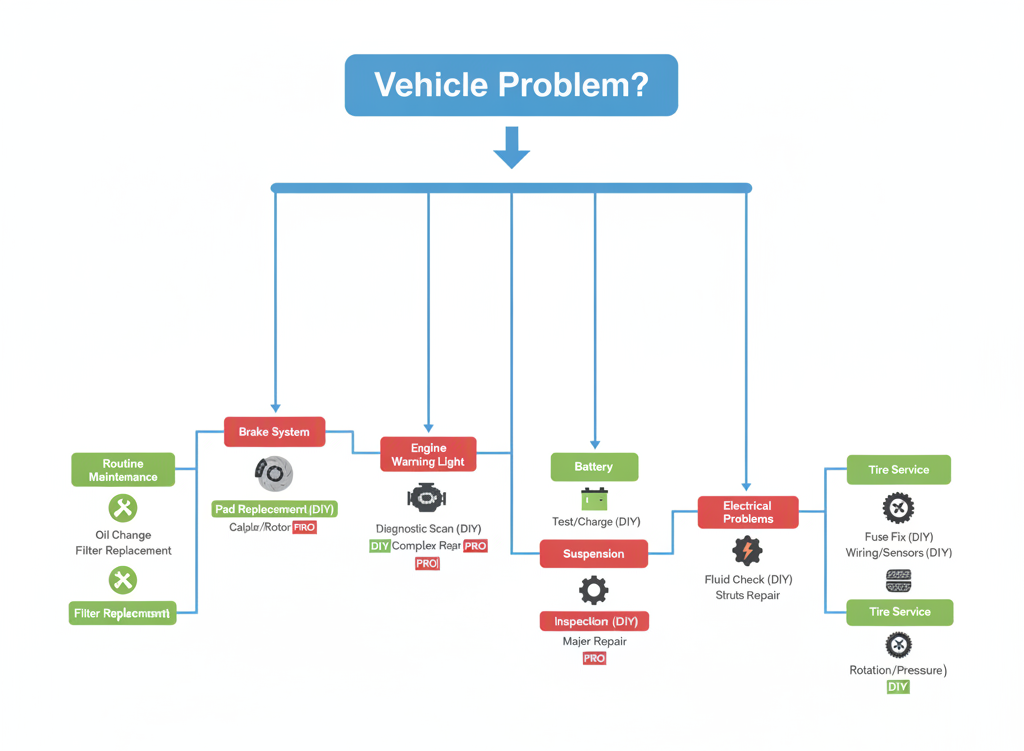
Not every repair requires a professional mechanic, but knowing where to draw the line is essential for successful DIY Auto Repair in Dallas. Routine maintenance such as replacing air filters, windshield wipers, engine oil, cabin filters, and batteries can often be completed safely at home with basic tools. More advanced repairs involving transmissions, engine diagnostics, suspension components, electrical systems, or brake hydraulics are generally best handled by experienced Dallas auto repair professionals to ensure safety, reliability, and warranty protection.
Jobs Suitable for DIY
Tackling simple car maintenance can be both cost-effective and rewarding for Dallas drivers. These are the tasks most vehicle owners can safely manage with basic tools and a little research.
- Oil changes: Save up to $60 per service—just be sure to dispose of oil responsibly.
- Air/cabin filter replacements: Typically a 10-minute job with parts under $20.
- Wiper blade replacement: Quick, tool-free, and essential for visibility.
- Small electrical (fuses, bulbs): Most bulbs/fuses swap in minutes for under $10 each.
- Battery swaps: Straightforward on most non-hybrid models; watch for coded resets.
- Tire rotations: With a jack and stands, it’s simple, but always follow safety steps.
Hybrid and EV owners: Many new models have components under dangerous high-voltage—leave batteries and electronics to experts.
DIY shines when you can follow a step-by-step YouTube video and finish in an afternoon, all with minimal risk.
“Picture this: Saturday morning, coffee in hand, knocking out an oil change and breathing new life into your ride—with real savings.”
Repairs Best Left to Professionals
Modern vehicles demand advanced expertise and specialty tools for many repairs—especially those tied to safety or tech.
- Brakes (pads, rotors, hydraulics): Incorrect fixes jeopardize your safety and others’.
- Steering and suspension: Precision is key; mistakes mean costly, even dangerous, outcomes.
- Airbag/SRS systems: In Dallas, shops see an uptick in SRS-related issues; DIY work can accidentally trigger deployment.
- Transmission service and repairs: Highly complex, requiring diagnostic tech and exact tolerances.
- Advanced electronics and calibration: Diagnosing check engine lights often takes shop-grade tools and certified training.
- Engine diagnostics and timing: Mistakes can damage valves, pistons, or leave you stranded.
Dallas shops report that over 50% of complex repair “redos” cost more than if left to professionals the first time.
If a job involves code readers, high-voltage, heavy torque, or any uncertainty, the safest bet is a trusted professional.
Key Takeaways
Save on routine maintenance jobs you know, but always trust experts with your safety or anything you can’t confidently finish in an afternoon.
When in doubt, reach out: “Your safety and vehicle’s health are worth the call.” Find the right balance—and keep your Dallas drive as smooth as possible.
If you’re still deciding whether your vehicle needs routine maintenance or a mechanical repair, understanding the difference can help you save time and money. Read our comprehensive guide on Auto Service vs. Auto Repair to learn when your car needs preventive servicing, when professional repairs are necessary, and how making the right decision can extend your vehicle’s lifespan while reducing unexpected repair costs. This guide complements everything you need to know about DIY Auto Repair in Dallas and choosing the right solution for your vehicle.
Weighing Satisfaction, Confidence, and Long-Term Vehicle Health
The feeling you get after fixing your own car is hard to beat—a real sense of accomplishment that makes you proud every time you turn the key.
DIY auto repair in Dallas brings:
- Learning new skills: Every oil change or air filter swap adds to your knowledge.
- Personal satisfaction: There’s a real win in knowing you tackled the task yourself.
- Cost savings: Simple repairs, like changing wiper blades or a battery, might cost 30-50% less when you handle them at home.
Peace of Mind vs. DIY Wins
On the professional side, customers enjoy confidence, safety, and vehicle longevity.
- Expert repairs mean issues are diagnosed right the first time—saving both time and cash down the road.
- Warranty protection covers parts and labor, reducing risk and surprise costs.
- Resale value is higher on cars with full service records and shop-verified maintenance, a detail buyers (and dealerships) notice right away.
Picture this: one missed step with brake pads or coolant could mean hundreds of dollars in damage. Yet, handing your car to trained hands means you get it back running right—no second-guessing or late-night garage sessions.
Finding the Middle Ground
Smart Dallas vehicle owners often mix and match approaches for the best results:
- DIY for routine, low-risk tasks: air filters, wipers, basic bulbs, or fluids
- Professional service for complex, safety-critical work: brakes, computers, steering, electrical, and anything unclear
This hybrid strategy means you control costs and skill-building—but never gamble on safety.
Think Long-Term: Partner with Confidence
Car repairs aren’t just about today—they’re about the road ahead. Prioritize quality parts and proper technique; your car will reward you with reliability and value.
At Auto Clinique, we’re your local partner for honest advice and expert, trustworthy repairs. Whether you want to handle simple fixes or need certified technicians for the big jobs, we’re here so you always drive with confidence.
A balanced approach—combining smart DIY and professional expertise—is what keeps your car, and your peace of mind, running strong for years to come.
Conclusion
Choosing between DIY auto repair and professional service isn’t just about fixing a car—it’s about driving with clarity, safety, and confidence. The smartest Dallas drivers know the real advantage is understanding which approach puts you, your wallet, and your vehicle in the strongest position for the road ahead.
Empower yourself with the right mix of hands-on know-how and trusted expertise; your car’s health, your safety, and your peace of mind are all worth it.
—
Here’s how you can take action today:
- Start small: Master routine basics like wiper blades or air filters, then decide what you enjoy (and where you want expert backup).
- Know your limits: When it comes to brakes, electronics, or anything safety-critical, call in certified pros—your wellbeing comes first.
- Track cost and time: Log both your DIY wins and hiccups; it will guide you toward the most cost-effective, smart repair decisions next time.
- Choose accountability: Leverage warranty-backed, professional repairs for complex jobs—don’t take chances when it counts.
- Stay proactive: Regular maintenance—DIY or professional—protects your investment, boosts reliability, and keeps you confident behind the wheel.
—
Ready for your next step? Assess your vehicle’s needs, pick one maintenance task to try yourself, and connect with Auto Clinique for expert care when it matters. Every smart decision keeps you moving forward—safely, efficiently, and with total confidence.
The road is yours—keep driving smart, and trust that the best repair decisions always begin with putting your safety first.
For additional maintenance recommendations and vehicle ownership advice, review the resources provided by AAA Car Care Tips. Their guides cover preventive maintenance, seasonal inspections, tire care, battery health, and safe driving practices that complement professional vehicle servicing.
FAQs
1. Is DIY Auto Repair in Dallas worth it?
Yes, DIY Auto Repair in Dallas can save money on routine maintenance such as oil changes, replacing air filters, windshield wipers, batteries, and cabin filters. However, complex repairs involving brakes, engine diagnostics, suspension, or electrical systems are usually safer and more cost-effective when handled by professional technicians.
2. Which repairs are safe for DIY Auto Repair in Dallas?
Most vehicle owners can safely perform basic maintenance like changing engine oil, replacing air and cabin filters, installing new windshield wipers, changing light bulbs, and replacing a battery. Always follow your vehicle manufacturer’s maintenance recommendations.
3. When should I hire a professional auto repair shop in Dallas?
You should visit a professional auto repair shop in Dallas whenever your vehicle requires engine repairs, transmission work, brake system repairs, steering or suspension service, electrical diagnostics, or advanced computer programming. These repairs require specialized tools and certified expertise.
4. Can DIY Auto Repair in Dallas void my vehicle warranty?
Routine maintenance performed correctly generally does not void your warranty. However, improper repairs or the use of incorrect parts may affect warranty coverage. Keep detailed maintenance records and use manufacturer-approved parts whenever possible.
5. How much money can DIY Auto Repair in Dallas save?
For basic maintenance, DIY Auto Repair in Dallas can reduce repair costs by eliminating labor charges. Savings typically range from $50 to several hundred dollars depending on the service. More advanced repairs, however, may become more expensive if mistakes require professional correction.
6. What are the biggest risks of DIY car repairs?
The biggest risks include personal injury, incorrect installation, damage to expensive vehicle components, failed inspections, and safety hazards. Modern vehicles also require specialized diagnostic equipment that most home garages do not have.
7. Do professional Dallas auto repair shops provide warranties?
Yes. Most reputable Dallas auto repair services provide warranties on both labor and replacement parts, giving customers additional peace of mind that DIY repairs cannot typically offer.
8. How do I decide between DIY Auto Repair in Dallas and professional service?
Consider the repair’s complexity, your experience level, available tools, safety risks, warranty implications, and the value of your time. Routine maintenance is often ideal for DIY, while major mechanical or electrical repairs are best left to experienced professionals.