
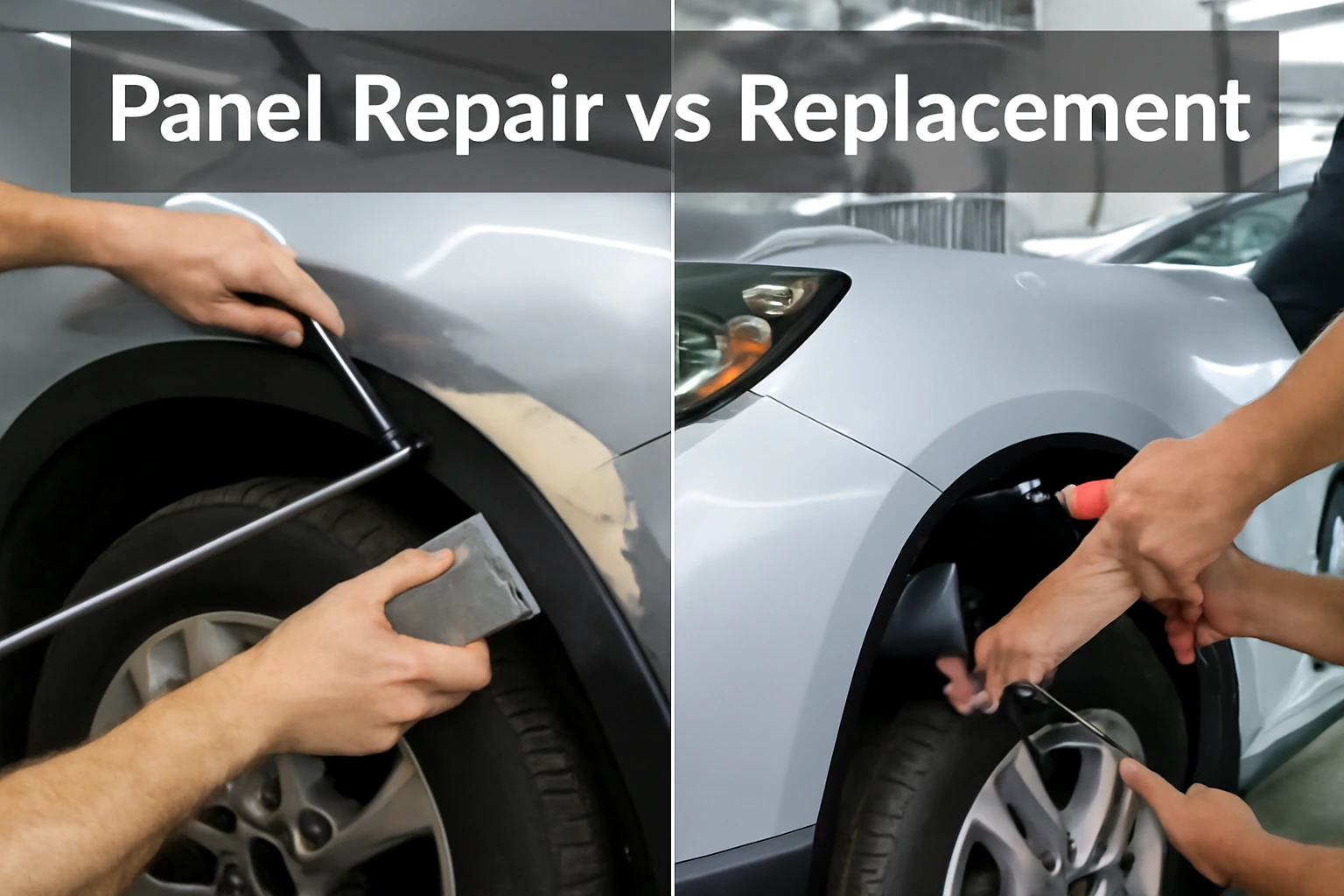
Panel Replacement vs Repair is one of the most important decisions Dallas drivers face when dealing with auto body damage. Choosing correctly can protect your safety, budget, and long-term vehicle value.
- Assess panel damage severity and location—Cosmetic dents or scratches are repair candidates, but structural or tech-heavy zones (like near sensors or airbags) often require full replacement for safety.
- Know your material for smarter choices—Aluminum and composite panels need specialized repair or replacement due to their unique properties; always get a professional assessment for modern vehicles.
- Balance cost, downtime, and quality—Repair typically saves $500–$3,000 and wraps up in 1–3 days, while replacement offers long-term reliability but may cost $1,200–$10,000+ with more downtime.
- Panel replacement ensures top-tier safety and future tech compatibility—New panels support advanced sensors, are warranty-backed, and meet current crash standards for ultimate peace of mind.
- Choose repair for minor, localized damage on newer vehicles—It’s the fastest, most affordable way to restore appearance and preserve factory fit and finish when the underlying structure is sound.
- Let insurance and expert advice guide your choice—Consult your policy and a certified body shop—some damages, especially those affecting safety, may demand replacement for compliance and coverage.
- Prioritize future-proofing when tech upgrades and regulations matter—Replacement panels integrate with evolving systems like lane-keep sensors and ADAS, keeping your car “inspection and resale ready.”
- Trust transparency and craftsmanship for a stress-free experience—At Auto Clinique, expect upfront estimates, certified work, and clear communication every step of the way.
Smart vehicle owners know: choosing the right repair path means greater safety, better value, and long-term peace of mind. Dive into the full article for in-depth guidance and discover how to keep your car looking sharp and future-ready with Dallas’ trusted experts.
Introduction
Ever spot a dent and wonder if it’s a quick fix—or a costly replacement waiting to surprise you? For Dallas drivers, body panel damage isn’t just about curb appeal—it’s about protecting your investment, your safety, and even your wallet.
From hailstorms that leave your hood pockmarked overnight to that mystery scrape in the parking lot, these moments force a decision: Should you repair your panel or replace it entirely? The right call can save you hundreds, preserve your car’s value, and prevent future headaches.
Here’s where things get interesting: Not all damage is as simple as it looks. Some issues—think rust creeping behind paint or cracks near critical sensors—go deeper than surface-level fixes. Others, like small dents or scratches, can be invisibly restored by skilled hands in hours.
When you know the difference, you gain three key advantages:
- Confidence in conversations with your mechanic—no more industry jargon confusion
- Clarity on cost and downtime, so you can plan around your life, not your repair
- Peace of mind that your car meets today’s safety standards, and won’t lose value on trade-in day
At Auto Clinique, we believe honest answers and expert care matter most. That’s why understanding your repair options—what’s possible, what’s smart, and what’s in your best interest—should be effortless.
So, how do you choose between repair and replacement with full transparency and zero regret? Up next, we’ll walk you through the types of panel damage, what they mean for safety and value, and how a trusted assessment sets the stage for every smart decision.
Understanding Auto Panel Damage and Its Impact
Types of Auto Panel Damage
Every vehicle owner faces the possibility of auto body panel damage, but not all damage is created equal.
The most common issues include:
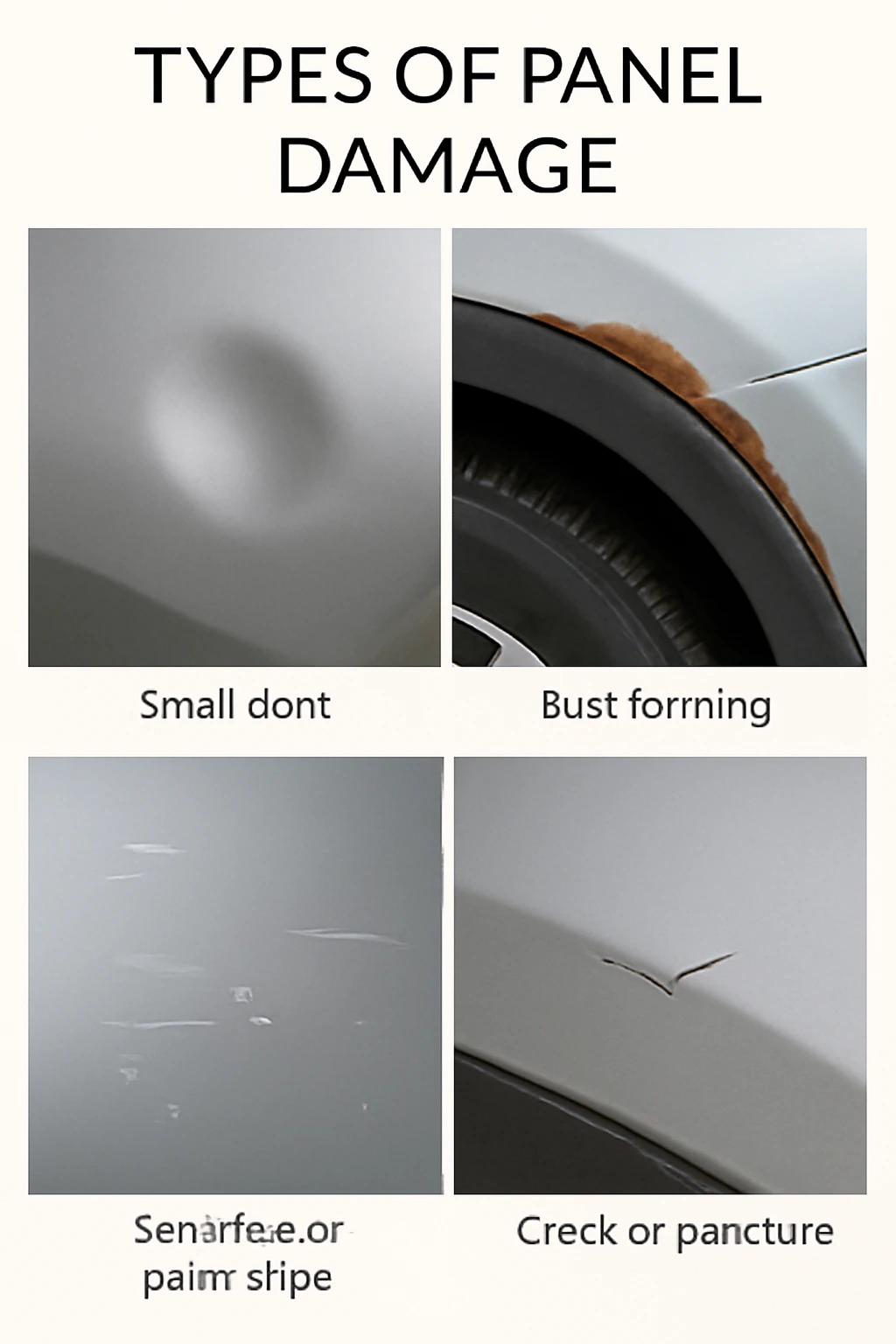
- Dents and dings from minor collisions or parking lot mishaps
- Rust and corrosion, often from road salt or older paint breakdown
- Tears or punctures caused by sharp impacts
- Structural compromise due to major accidents or frame misalignment
Picture this: a deep fender dent after a hailstorm, versus a quarter panel showing creeping rust along the wheel well.
How Severity and Location Shape Your Choices
The decision between repairing or replacing a panel usually starts with three questions:
- How severe is the damage—is it cosmetic or structural?
- Where is the panel located—does it affect doors, safety features, or vehicle aerodynamics?
- What’s the root cause—is it a one-time incident or ongoing wear?
Panels with deep creases or structural issues near airbags or sensor zones are much more likely to require full replacement. Minor, isolated scratches or dents? Often eligible for precise repair.
Material Matters: Steel, Aluminum, and Composites
Modern cars use a blend of materials, each responding differently to damage:
- High-strength steel panels are durable but tough to reshape after serious impact
- Aluminum panels resist corrosion but can tear, complicating repairs
- Composite or plastic panels (common on bumpers) may crack or deform, often needing replacement over repair
Trends show a steady shift toward lightweight composites and aluminum, making professional assessment essential for accurate repairability.
Real-World Impacts: Safety, Looks, and Value
Damaged panels do more than spoil your car’s appearance.
- Compromised panels affect crash safety and may interfere with advanced sensors (ADAS)
- Visible damage—no matter how small—drops resale value by up to 10%
- Insurance may only cover repairs that restore the car to pre-loss condition, influencing your options and costs
Here’s a quotable tip: “A well-repaired panel blends invisibly; a rushed job can become a future headache—choose wisely.”
Insurance and Decision Frameworks
Most insurance policies factor in:
- Age and mileage of the vehicle
- Type of damage (accidental, environmental, wear)
- Estimate for repair vs. replacement—if repairs exceed a certain % of the panel’s value, insurers may require replacement
Stay proactive: Always consult your insurance provider and a trusted body shop before making costly decisions.
In summary, understanding your panel’s material, damage type, and how it affects safety and value provides a clear path to smart repair or replacement—ensuring your vehicle gets the lasting attention it deserves.
Panel Repair: Methods, Benefits, and Limitations
Common Auto Body Panel Repair Techniques
Auto body panel repair starts with a detailed assessment of the damage to decide on the right technique.
Industry-standard methods include:
- Paintless Dent Repair (PDR): Gently massages minor dents from the inside, preserving the original paint—ideal for hail or parking lot dings.
- Plastic Filling: Applies durable fillers and smooths them to restore the contour after sanding—best for shallow dents and scratches.
- Welding and Reshaping: Used for torn, cracked, or warped metal; delivers strong repairs but may require repainting.
- Reshaping and Straightening: Mechanical presses return slightly bent panels to their original form, protecting structural integrity.
Not every method fits every situation—aluminum and composite panels often require specialized skills and equipment, while heavy creasing or structural compromise may make repair less viable.
Picture this: a fender with a shallow dent after a minor parking lot bump—PDR brings it back to flawless in a single afternoon.
Key Advantages of Repair
Car owners choose repair because it delivers value fast and affordably.
Top benefits include:
- Lower upfront cost: Typical panel repairs range from $100–$600 for minor damage, far less than full replacement.
- Quick turnaround: Many repairs take just hours, minimizing vehicle downtime.
- Preservation of factory fit and finish: Original panels often hold intricate shape and embedded safety features.
- Reduced hassle: Fewer permits, less paperwork, and minimal disruption to daily routines.
- In cases like localized dents on late-model vehicles, repair maintains both safety and code compliance.
As one customer described it, “My SUV was ready before lunch, and you’d never know it was hit.”
Drawbacks and Risks of Repair
Panel repair isn’t always the silver bullet.
Consider these risks:
- Recurring issues: Unresolved rust or hidden cracks can resurface months later.
- Shorter-term solution: Repairs on aging or structurally stressed panels may not last, especially if the panel flexes regularly.
- Compliance gaps: Some repairs might not meet manufacturer safety standards or modern tech upgrades (like parking sensors).
- Additional maintenance: Quick fixes sometimes lead to frequent shop visits and new costs over time.
Imagine using filler on a decade-old, corroded door—the rust could chew through again before year’s end.
Fast Insights for Every Dallas Driver
Knowing when repair adds value and when it’s just a quick fix can save you hundreds and keep your car on the road longer.
If your damage is minor, recent, and on a late-model vehicle, panel repair often preserves both appearance and safety—making it a smart, budget-friendly move.
Before deciding, ask your auto specialist: Could this panel need repeat work? Are all internal damages addressed?
A thoughtful repair now means fewer surprises—and a vehicle you’ll trust on every drive.
Panel Replacement: Procedures, Benefits, and Challenges
The Replacement Process Explained
When a panel is too damaged for repair, replacement is the safest path forward.
The process involves a series of careful steps:
- Thorough assessment of structural and cosmetic damage
- Sourcing new panels that match the vehicle’s specs and finish
- Careful removal of the damaged section
- Precision fitting and integration into the vehicle’s body
- Detailed painting, blending, and clear coating for a flawless appearance
- Final quality checks and finishing touches to ensure factory standards
Complex replacements may require technology recalibration—for instance, ADAS sensors and safety systems—which can add time.
In today’s vehicles, this process can take anywhere from a day for basic panels to over a week for more complex or technology-heavy jobs.
“Imagine your vehicle getting a new, safety-enhanced exterior—down to the last bolt, buffed and finished to outshine the original.”
Core Benefits of Panel Replacement
Panel replacement offers several crucial advantages:
- Enhanced safety—New panels are designed for current crash standards and airbag deployment
- Technology compatibility—Seamlessly supports advanced sensors, cameras, and future tech upgrades
- Long-term reliability—Reduces the risk of recurring damage, rust, or performance issues
- Manufacturer-backed durability—Most new panels include warranties and certified finishes
For owners planning to keep their car or boost resale value, a replacement means peace of mind and minimal future headaches.
“New panels bring your ride up to today’s safety and tech standards—a visible investment in your vehicle’s future.”
Limitations and Considerations in Replacement
However, panel replacement comes with important trade-offs.
Owners should consider:
- Higher upfront investment—Typical costs range from $1,200 to $10,000+ for premium or tech-loaded panels
- Greater disruption—Turnaround times can stretch several days, leaving you without a vehicle
- Additional complexity—Sensor recalibration, code compliance, and permit requirements may apply
- Insurance documentation—Replacement often impacts claims; comprehensive records are essential
Every step demands skilled hands—certified technicians, exact color-matching, and precision tools.
“High-quality replacement protects your investment, but it’s a process that requires time, budget, and expert oversight.”
When thinking about panel replacement, weigh the long-term reliability and top-notch safety against the initial cost and downtime. For Dallas car owners who want an upgrade that truly lasts, replacement is often the sharpest long-term move—delivering a car that looks better, performs safer, and stands strong for years to come.
How to Decide: Repair vs. Replacement Framework
Assessment Criteria for Informed Decisions
Choosing between panel repair or replacement starts with a clear assessment of your vehicle’s needs.
Key factors to consider include:
- Severity of damage: Is it localized (like small dents), or has it affected structure or safety?
- Vehicle age: Newer cars often benefit more from preservation, while older vehicles may require replacement.
- Panel location: Highly visible panels (hood, doors) usually require more careful consideration for aesthetics.
- Safety and repair history: Recurring issues or compromised crash zones tip the scale toward replacement.
- Owner goals: Are you focused on cost, quick turnaround, or maximizing future resale value?
Life-cycle cost analysis matters—repair might save you $500-$3,000 up front, while replacement ranges from $1,200 to $10,000+ but could ensure long-term reliability.
Always check manufacturer specs and warranty requirements. Some automakers require panel replacement for certain modern safety designs.
Real-World Scenarios and Decision Examples
Picture this: After a hailstorm, your car’s hood has several shallow dents but no paint breaks.
- Repair is typically faster (1-2 days) and costs much less ($200–$600).
- Replacement might take 3-7 days and bump costs into the thousands, especially if the hood has sensors.
Consider a fender collision:
- If there’s structural or sensor damage, replacement is often non-negotiable for safety.
- For cosmetic scrapes, a blend-and-repair is usually adequate.
Insurance policies play a major role—minor, localized repairs are commonly covered, while replacements may require adjuster approval or be mandated for compliance.
When Each Option Makes Sense
Use this quick decision matrix:
- Go Repair when damage is minor, the panel is new, and factory fit/finish is intact.
- Choose Replacement for panels older than 10-15 years, major corrosion, or when critical safety features or tech are involved.
Ask your technician:
- Is the repair a temporary fix, or will it restore full function?
- Will the panel still meet all current crash and safety standards?
- Will my warranty or insurance be affected?
Working with a certified auto body shop ensures transparent assessment and avoids costly mistakes. “An expert’s eye can often save you thousands—and hours off the road.”
Jumpstart your decision by weighing cost, safety, and your future plans. With expert guidance at Auto Clinique, Dallas owners always get honest recommendations tailored to their vehicles.
The key: Prioritize safety, value, and longevity—and don’t hesitate to ask your repair partner the tough questions before choosing your repair path.
Cost, Quality, and Customer Experience: What to Expect
Comparing Costs: Detailed Analysis
When it comes to panel repair, expect costs to range from $100–$600 for minor dents, scratches, or localized damage.
Complete panel replacement comes in higher, typically between $1,200–$10,000 depending on vehicle type, parts availability, and technology like sensors or cameras.
A few numbers every vehicle owner should know:
- Repair is nearly always less disruptive, with most jobs completed within 1–3 days
- Replacement often means lengthier downtime, especially if recalibration or rare parts are required
Don’t overlook hidden costs:
- Potential for recurring issues if root causes aren’t fully resolved with repairs
- More frequent maintenance needs for repaired panels versus new ones
- Insurance may cover higher percentages of replacements when safety is a concern
“If you’re weighing cost alone, repairs win. But if you want to avoid more work later, replacement might be smarter in the long run.”
Quality Outcomes and Longevity
Choose repair when you want to preserve your vehicle’s original fit and finish—restoring the car to its pre-damage appearance when the underlying issue is minor.
Replacement makes more sense for:
- Structural impact or safety-critical locations (such as doors, quarter panels, or frames)
- Integrating newer vehicle tech, including ADAS sensors and camera systems
Beware of these long-term risks:
- Repaired panels may lower resale value if visible imperfections persist
- Inferior repair work can mean more trips to the body shop and ongoing expenses
“The quality of the fix depends on two things: the method used and the hands that do the work.”
The Service Experience at Auto Clinique
At Auto Clinique, transparency and meticulous attention are non-negotiables.
Here’s our commitment, every time you visit:
- Clear, upfront estimates—so cost surprises never enter the picture
- Step-by-step updates and realistic timelines, so you’re never in the dark
- Use of certified parts, expert technicians, and a strong warranty on all work
We blend high standards with personalized care, ensuring Dallas drivers feel confident at every step.
“Picture this: A team that treats your car like their own, explaining options in plain language and never pressuring you into what’s not right for you.”
This means you always know what to expect—clear pricing, honest advice, reliable results—so your vehicle gets the quality attention it deserves, backed by trusted local service.
Future-Proofing Your Vehicle: Safety, Codes, and Technologies
How Modern Panels Meet Safety and Regulatory Standards
Today’s auto panels must do more than look sharp—they shield lives. New crash protection requirements mean panels are engineered as part of a vehicle’s safety “shell.”
When you’re replacing a panel, you’re upgrading more than the surface:
- Integrated reinforcements help absorb and redirect collision forces
- Placement affects the deployment and effectiveness of airbag systems
- Regulatory codes now demand panels meet specific strength, crumple, and corrosion standards
Choosing code-compliant panels isn’t just for safety—it’s required for maintaining your car’s resale value. A panel that matches new standards streamlines inspections and reassures future buyers.
“Your vehicle’s bones are as important as its engine. A structurally sound panel is your first defense on the road.”
Preparing for Tomorrow: Upgrades and Vehicle Technology Integration
Today’s vehicles rely on advanced sensors, radar, and cameras that are seamlessly built into body panels.
If you’re thinking future-proof, consider:
- Most new panels are designed for compatibility with evolving tech: think lane-keep sensors, 360-degree cameras, and electrification
- Repairing an old panel may fix the dent, but won’t support upcoming features or power demands
- Upgrading panels now ensures compliance as Texas and federal regulations adapt to EV and ADAS technology
Picture this: You’re backing up, and smart sensors embedded in your newly-replaced rear quarter panel automatically brake for a pedestrian you can’t see—protection new repairs can’t match.
“The right panel can transform your car from ‘just safe’ to ‘future-ready.’”
Making the Right Choice for Long-Term Peace of Mind
When deciding whether to repair or replace, start with these action points:
- Review vehicle age, tech integration, and goals for ownership
- Ask about upcoming safety regulations that could impact your vehicle’s legal standing or insurance coverage
- Always involve a certified body specialist who stays up-to-date with Dallas-area and national standards
Smart vehicle owners stay ahead by:
- Regularly consulting with experts about advances in panel technology
- Choosing replacement when long-term reliability and safety are top priorities
- Balancing upfront cost with the value of future protections and less-frequent repairs
“Choosing future-proof panels now means fewer surprises, better safety, and a vehicle that remains valuable year after year.”
Upgrading panels is more than a cosmetic fix—it’s a practical step toward staying safe, keeping your car compliant, and enjoying peace of mind every mile. Make your next repair not just a reaction, but an investment in tomorrow.
Conclusion
Making the right call between panel repair and replacement is about more than fixing a flaw—it’s about protecting your vehicle’s performance, safety, and future value.
By assessing your options with expert guidance, you ensure every mile is driven with confidence—whether your goal is immediate savings or a long-term investment in your car’s reliability.
—
Key Takeaways for Smart Dallas Drivers:
- Prioritize safety: Assess whether your panel damage affects structure or technology. When in doubt, choose the solution that keeps you—and your investment—protected.
- Weigh long-term value: Minor repairs are cost-savvy, but full replacements often pay off if hidden risks or tech upgrades are in play.
- Stay informed: Know your car’s materials and insurance requirements before deciding. Consult with a certified shop for clarity.
- Expect transparency: Choose a service provider committed to honest estimates and detailed, jargon-free communication.
—
Take Action Today
- Schedule a free, expert assessment at Auto Clinique—get straightforward guidance on your repair vs. replacement needs.
- Review your insurance policy so you’re not caught off-guard by what’s covered.
- Ask your technician about future-proof panel options—protecting safety today and preparing for tomorrow’s tech.
—
You deserve more than a quick fix—you deserve a solution that stands the test of time.
“Your vehicle isn’t just transportation—it’s your safety, your investment, and your peace of mind. Choose care as durable as your journey.”
Ready to take the next step? Let’s make sure every panel, and every drive, is truly built to last.
federal vehicle safety standards
FAQs
1. What’s the difference between panel replacement vs repair?
The main difference in panel replacement vs repair is the scope of work. Repair restores your existing panel using dent removal, fillers, or reshaping. Replacement installs a completely new panel, which is typically required when safety systems, sensors, or structural areas are damaged.
For a deeper explanation, see our guide on auto body repair services.
2. How do I know whether my damage needs repair or full replacement?
Choose repair for small dents, minor scratches, or shallow cosmetic damage. Replacement is the safer choice when the damage affects structure, sensors, airbags, or has deep creasing.
You can also compare situations in our Best Paint and Body Repair Near Me: Ultimate Guide 2025 to understand real examples.
3. Is panel repair cheaper than replacement?
Yes. Repair typically costs $100–$600, while replacement ranges $1,200–$10,000+ depending on the model and location.
If you’re budget-conscious, review our auto body service page for transparent estimates and cost breakdowns.
4. Does panel replacement affect my vehicle’s safety?
Absolutely. A damaged panel can compromise crash protection and interfere with ADAS sensors. Replacement ensures your car meets safety standards and performs correctly in an accident.
5. Will insurance cover panel replacement or repair?
Most insurers cover whichever option restores the car to pre-loss condition. If damage affects structure or technology, insurers may require replacement.
6. How long does panel repair vs replacement take?
-
Repair: 1–3 days
-
Replacement: 3–7 days or longer if recalibration is needed
Sensor-heavy panels (like those on newer models) add time.
7. Does panel replacement help resale value?
Yes. A new panel that’s properly color-matched and calibrated can protect resale value better than aging or repeatedly repaired panels.